By Special Correspondent
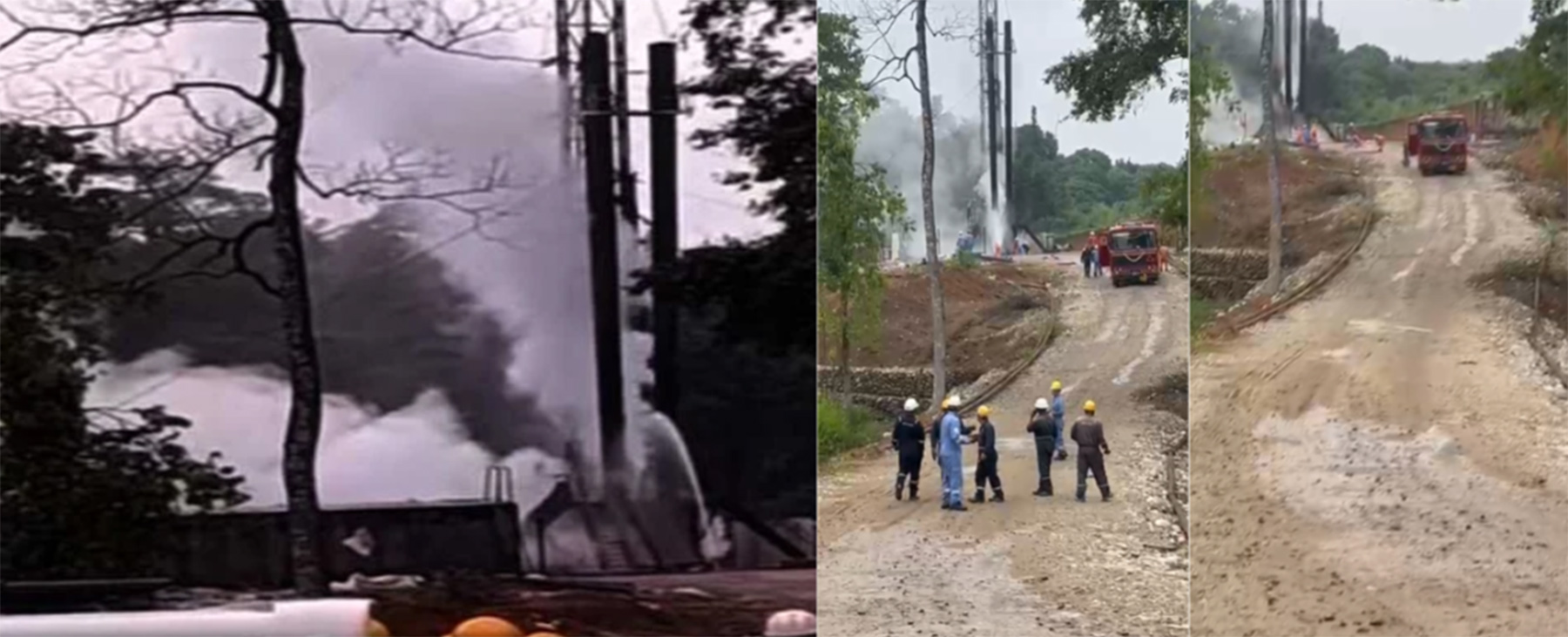
ITANAGAR, Nov 07: A team of foreign experts from the United States arrived on Friday to help control the massive blowout of Kharang Oil Field (KOF) in Changlang district, which has been spewing gas uncontrollably for past nine days, as reported by this daily in its November 3 edition.
These experts from US-based firm Cudd Pressure Control have been roped in by Oil India Limited (OIL) at the request of GeoEnpro Petroleum Limited (GEPL), the operator of the field.
The five to six-member team will join crisis management teams (CMTs) of OIL and ONGC, which are stationed at the site and bottling to contain the situation, according to GPEL sources.
The blowout occurred on October 30 at Well No. 78 when a functional fault developed in the Blowout Preventor (BOP), a critical safety device designed to seal wells and prevent uncontrolled release, during routine well closing operations. The failure of the BOP allowed high pressure gas to escape from the reservoir leading to the ongoing emergency.
“Due to incomplete closure and gaps in the BOP, high pressure gas flow has occurred,” said GPEL operations head Ravi Shankar Prasad, adding that teams are currently using Lost Circulation Material (LCM) pills followed by high density mud to bring the well under control.
Prasad had earlier characterised the leak as “non-toxic methane gas,” but experts had warned that methane is highly flammable and such incidents typically release multiple hydrocarbon compounds that pose significant fire hazards and air-quality risks to surrounding communities.
This is not the first such crisis in KOF. In 2015, a blowout at Well No 60 had triggered mass evacuation and it took over two weeks to cap ii. Following the incident, the state level monitoring committee had termed the disaster “man-made due to utter negligence and incompetence of the GPEL.
The latest blowout has reignited concerns over the safety standards and regulatory oversight in the region’s petroleum operations. Environmentalists and local residents have called for an independent inquiry into the root causes of recurring incidents and their long-term impacts on the ecologically sensitive area.
With around 40 development wells currently operating under the GPEL, KOF produces between 130 to 150 kilolitres of crude oil per day.
It may be recalled here that the KOF was discovered by OIL and it had drilled first exploratory well in 1968, but it was operational in 1975. Regular production from KOF commenced in 1983. The OIL had drilled total 36 wells till 1995 with total production was 265 barrels of oil per day (BOPD) as of 1995.
On 16.06.95, the KOF was awarded by the GoI under Production Sharing Contract (PSC) for further development of oil and gas field to a consortium comprising of OIL (40%), Jubilant Energy Kharsang Limited (25%), GeoPetrol International Inc. (25%), GPEL (10%).
However, the GEPL designated as KOF operator, when it took over, the field had total of 36 legacy wells drilled to depths ranging from 700-m to 3400-m along with related production facilities including Oil Collection Station (OCS), Custody Transfer Tank Farm (CTTF), pipelines etc.
After taking over the KOF from OIL, the consortium has drilled additional 34 development wells in the field. At present, total well count of KOF is 70 wells and present crude oil production is around 230 KL/day. GEPL is presently carrying out petroleum operations at KOF, according to the website.
Along with the crude oil, around 70-80 KL/day of formation water and around 50,000 m3/day of gas is being produced from the KOF. The crude oil produced from KOF is dispatched to Digboi refinery of Indian Oil Corporation Ltd. by road tankers/bowsers.
Associated gas so produced along with the crude oil from the KOF is used for meeting power, steam and domestic fuel requirement of the camp and some unused gas quantity is being flared.


 20