
- From a ‘seeker state to a ‘giver state’?
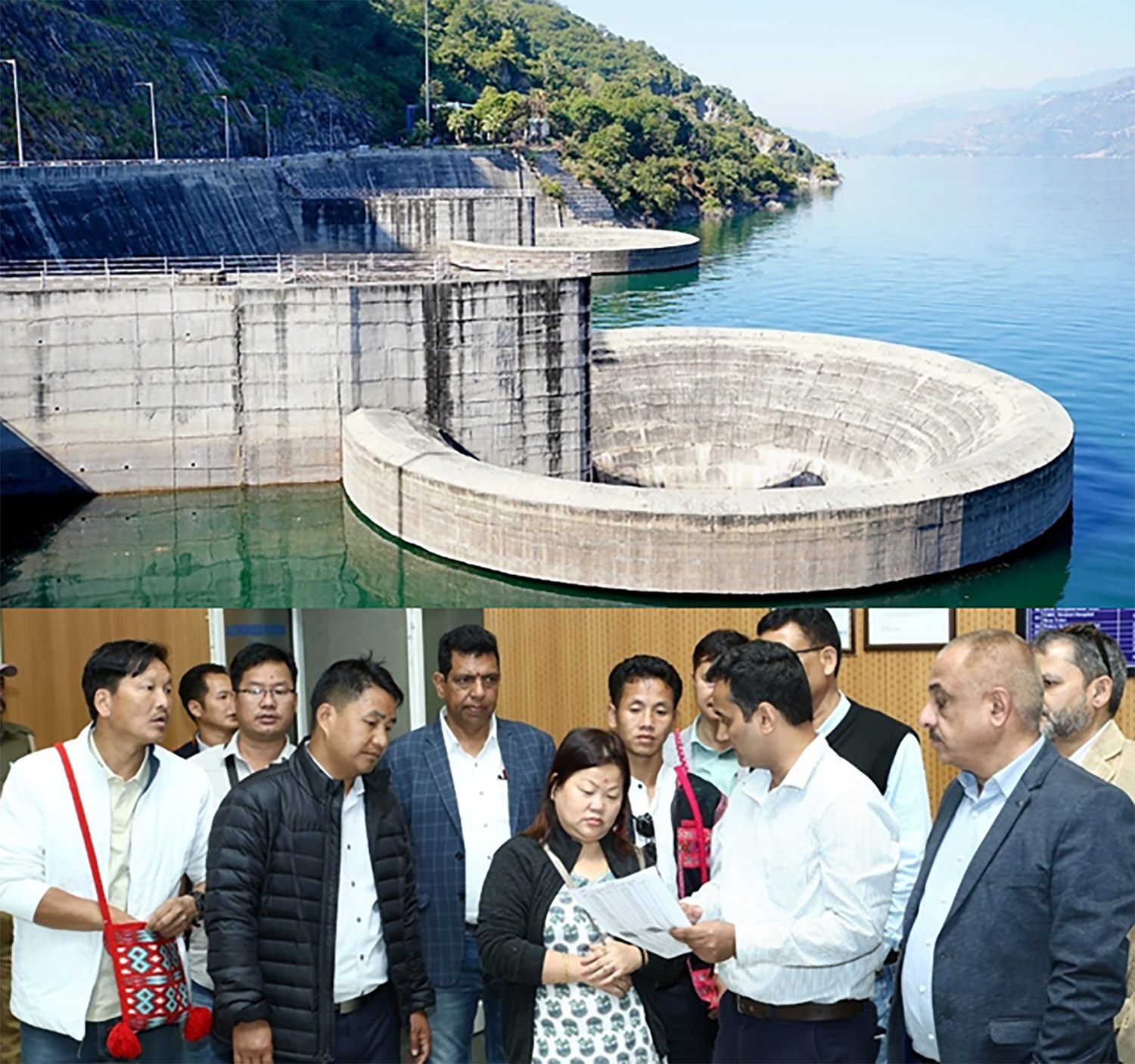
ITANAGAR, Nov 10: Women and Child Development Minister Dasanglu Pul,in a bid to ensure a more humane and inclusive approach to hydropower development, visited Tehri Dam in Uttarakhand on Monday to gain firsthand insights into Rehabilitation and Resettlement (R&R) policy adopted during its construction.
The visit, aimed at studying best practices for upcoming 1,200-MW Kalai-II Hydro Electric Project in Anjaw district, included interaction with senior officials of THDC India Ltd, led by chief technology officer L P Joshi, GM Vijai Sehgal, DGMs Mohan Singh Sirswal, Ganesh Bhatt & Nand Kishore, PR manager Manveer Negi andTehri district tehsildar Dhanveer.
The visit gave valuable exposure to land acquisition procedures, livelihood restoration programmes and socio-economic rehabilitation measures implemented at Tehri, one tallest and most complex hydropower projectsof India, Pul said, adding “The learnings from Tehri will be crucial in developing a socially responsible and sustainable R&R roadmap for Kalai-II project.”
Tehri Dam, a 260.5-metre-high rock and earth-fill structure on Bhagirathi River, generates over 1,000-MW power and regarded as an engineering marvel. The project, executed by THDC India Ltd, has been lauded for its large-scale resettlement and rehabilitation efforts.
Pul emphasised that Arunachal Pradesh’s hydropower growth should go hand in hand with community welfare and cultural sensitivity. “Development cannot come at the cost of people’s livelihoods. Our goal is to balance progress with compassion,” she said.
The Kalai-II HEP, proposed on Lohit River, is estimated to cost around ₹14,000 crore. During a recent public hearing by the Arunachal Pradesh State Pollution Control Board, over 350 villagers of 33 habitations took part and called for a robust R&R plan and transparent compensation measures.
Pul’s visit marks a significant step in aligning state’s ambitious hydropower agenda with sustainable and community-focused development practices. (PRO)
AONS adds: Minister Pul, particularly Chief Minister Pema Kahdnu, deserves appreciation for adopting “seeing is believing” principle asArunachal Pradesh with massive hydropower potential of over 58,000 MW, roughly 40% of India’s total potential and only 1% has been developed so far, is dubbed as ‘India’s future Power House’.
State’s mountainous terrain, numerous river basins and high annual rainfall pose challenges in tapping hydropower. Its potential is distributed across eight major river basins – Subansiri, Siang, Dibang, Lohit, Kameng and Tirap. The ongoing projects are 2,000 MW Lower Subansiri HEP and upcoming 2,800-MW Dibang Multipurpose Project.
The GoAP has declared 2025-2035 as “Decade of Hydro Power” to focus on harnessing this potential through both mega and smaller projects as the state holds the largest untapped hydropower potential in India to be called nation’s hydropower capital.
Hydropower is a key focus for the state’s economic development and sustainable growth. Some large reservoir-based projects are being built to store water during monsoons and to counter China’s dam projects on the Brahmaputra River, which could potentially affect downstream water flow.
Though, 14th Finance Commission abolished (90% grants, 10% zero-interest loans) for centrally sponsored schemes and tax concessions of 11 special category states, including Arunachal Pradesh, which due to strategic location, geographical and economic disadvantages is still provided with enhanced funding to bridge resource gaps. Once huge revenue earned on completion of these HEPs would end state’s dependence on the GoI for funds for its development.
Arunachal Pradesh from present ‘seeker state’ status could turn into a ‘giver state’ once its huge hydropower potential is tapped!


 20

