
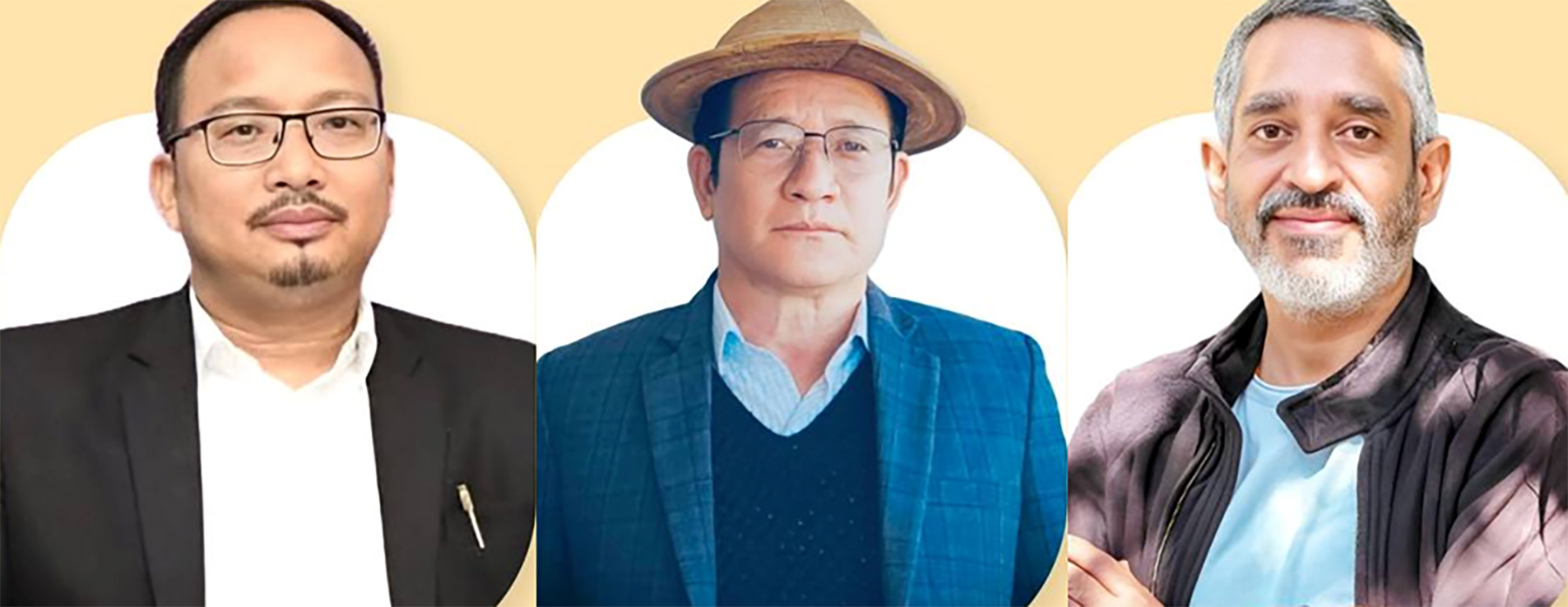
ITANAGAR, Nov 17: The National Press Day celebrations by media fraternity of Arunachal Pradesh on Sunday saw strong, introspective calls for media ethics, accountability and digital-age resilience, with Law and Legislative Minister Kento Jini urging journalists to uphold sincerity and truth.
Jini, speaking as chief guest, said a free press is “a responsibility, not a privilege”, stressing that Indian democracy derives its strength from an independent and ethical media.
He reminded journalists that verification, investigation and accuracy must remain the bedrock of reporting. Journalism, he said, should expose corruption, safeguard transparency and act as the constitutional fourth pillar of democracy.
Calling journalism, a “vulnerable profession” targeted through frequent defamation cases, Jini warned against misinformation, particularly during elections, saying misleading exit polls can erode public trust. “Clean and fair journalism must be the guiding principle,” he emphatically said.
IPR director Gejum Tali, who was guest of honour, underscored the need for stronger coordination between the media and the Govt’s communication systems. He urged journalists to uphold discipline, especially in digital domain where content spreads rapidly and can shape public perception instantly.
“The freedom of the press must walk hand in hand with responsibility. When institutions work together with honesty and restraint, public faith in journalism grows,” he said, assuring continued support of his department for strengthening media capacity and ethical practices.
This 61st National Press Day came at a time when artificial intelligence is transforming journalism, Arunachal Pradesh Union of Working Journalists (APUWJ president Amar Sangno said and termed it a “double-edged sword” that offers efficiency and new formats but also fuels deepfakes, misinformation and erosion of trust.
“Fake news travels from Tawang to Vijaynagar in minutes, but the truth often takes days,” he warned, stressing that journalists must rely on “boots on the ground and trust in the community”.
Sangno condemned recent publication of an interview with a minor victim in Mebo child-abuse case, calling it “insensitive and unethical”, and extended apologies on behalf of APC and APUWJ. He cautioned against self-styled media persons who “turn journalism into a nuisance”, and advocated that the profession should remain a platform for truth, not rabble-rousing.
Empathy should guide reporting, particularly for marginalised communities, he said, adding that audience also share blame for media’s decline: “When people choose drama over depth and clickbait over context, true journalism suffers.”
Sangno exhorted the GoAP to implement Arunachal Pradesh Electronic and Digital Media Advertisement Policy and urged IPR to curb fake viewership bought by digital channels. He also criticised the bureaucratic rejection of 2020 Working Journalists Pension Scheme, calling it a violation of a Budget announcement by the state Cabinet. Ensuring social security for journalists, he said, is essential for strengthening press freedom and democratic accountability.
Delhi-based The Reporters Collectivefounding editor Nitin Sethi, in his keynote address, said digital tools have democratised journalism but also blurred lines between professional reporting and general content creation.
Reporting the truth is especially challenging in close-knit regions like the NE, where journalists often report on people they know personally, he said and urged young reporters to persevere despite this challenge, saying good journalism is most needed in difficult times and still commands deep public respect.
Arunachal Press Club (APC) president Dodum Yangfo said this year’s theme—Upholding India’s Fourth Pillar in the Digital Age—is “timely and urgent,” noting that while technology has increased speed and accessibility, it has also amplified “noise, misinformation and confusion.”“It is our duty to rise above that noise and protect the values that define good journalism,” he said.
Yangfo urged young reporters to learn from keynote speaker Sethi, calling him “a journalist whose work speaks for itself.” He also congratulated winners of Taro Chatung and V Ravindran Excellence Awards and welcomed 10 new APC members, urging them to uphold ethics and credibility.“In a world full of noise, let us be the voice that is clear, honest and brave,” he added.
APUWJ general secretary Sonam Jelly lauded dignitaries, speakers, awardees and participants for reinforcing the spirit of responsible journalism. He urged young reporters to “carry today’s lessons into everyday practice” and reminded the fraternity that “credibility remains a journalist’s greatest asset.”
The event, organised by APC in collaboration with the IPR department also featured a debate competition and felicitation of “Unsung Heros”.
Ojhswi Raj and Abing Taki of NERIST emerged winners of the debate competition on motion “This House believes that social media influencers in Arunachal Pradesh undermine public trust in the media,” which saw participation from several institutions from across the state. Gangjai Gangsa and Kabak Ampi of Jullang’s Don Bosco College were runners-up position while Gangsa for his articulate and compelling presentationwas declared Best Speaker.
Arunachal Publishers and Broadcasters Guild (APBG) president Chopa Cheda, Arunachal Electronic and Digital Media Association (AEDMA) president J T Tagam and IPR deputy director Denga Bengia, among others, were present.


 20

