
By Special Correspondent
ITANAGAR, Dec 06: Arunachal Pradesh with its unspoilt environment, numerous lakes and water bodies, known as one of the 12 biodiversity hotspots of the world, draws numerous avian guests, but all have not been accounted so far.
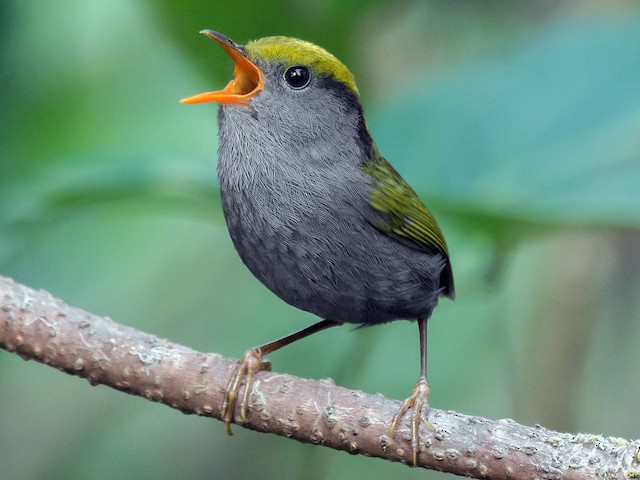
One Bhupen Sonowal, a great bird lover, during his visit to Malini village in Likabali sib-division of Lower Siang district, on November 25 last had spotted Slaty-bellied Tesia (Tesia olivea), captured its picture in mobile and posted on Facebook, captioned ‘Patience rewarded’,which has been doing rounds to evoke comments: ‘Wow! Stunningly gorgeous’, outstanding, good capture, awesome, excellent, wow amazing.
The Slaty-bellied Tesia, a species of warbler in Cettiidae family, is found in Bangladesh, Bhutan, China, India, Laos, Myanmar, Nepal, Thailand and Vietnam. Its natural habitats are subtropical or tropical moist lowland forest and subtropical or tropical moist montane forest.
The Slaty-bellied Tesia is a very small, ground-dwelling warbler, typically measuring 8-10 centimeters (about 3-4 inches) in length, with a weight around 6-9 grams, making it one of Asia’s tiniest birds, characterized by its dark slate-grey belly, olive back, and almost tailless appearance.
These characteristics highlight its diminutive size, helping differentiate it from similar species like the Grey-bellied Tesia, which has a less dark belly.
The presence of the Slaty-belliedTesia is a strong indicator of a rich, dense, and moist forest ecosystem. This bird relies on specific, high-quality forest habitats for survival.
It is an elusive, ground-dwelling warbler that is highly dependent on dense forest cover. Its presence suggests a healthy and complex environment characterized bydense Undergrowth. They primarily forage in thick undergrowth, including ferns, nettles, and dwarf bamboo. They show a strong preference for damp forest environments, often found near streams, small watercourses, and wet ravines.
Their natural habitats are subtropical or tropical moist lowland and montane forests. They breed in mid- to high-elevation broadleaf forests. As an extremely skulking and shy bird, its consistent presence often indicates a habitat that is relatively undisturbed, as they are rarely seen in the open.
While general studies confirm that contiguous and well-managed forests support higher bird diversity, the Slaty-bellied Tesia serves as an indicator species for the specific microhabitat conditions it requires. Its high dependency on forest habitat means that a decline in tree cover can negatively impact its population size. Therefore, finding this species suggests the local forest has the specific structural and moisture characteristics essential for a rich, complex ecosystem.


 20

