
- Mahabharata & Ramayana-based texts found: Riba
NEW DELHI, Dec 09: A dedicated manuscript and digitisation support (DM&DS) cell for Arunachal Pradesh will be established at the Union Ministry of Culture (MoC) to ensure coordinated and long-term assistance to the state, said Secretary Vivek Aggarwal, in his presidential address to a special workshop on ‘Script and Manuscript Preservation’ at Red Fort here on Tuesday.
The week-long (December 8 to 13) 20th session of UNESCO’sIntergovernmental Committee for the Safeguarding of the Intangible Cultural Heritage (ICH 20COM) has been organised by the MoC.
Responding to presentation, Secretary Aggarwal commended proactive initiatives of the GoAP and assured immediate support. He announced that a central expert team would soon visit Tawang, West Kameng, Shi-Yomi, Upper Siang and Namsai districts. for scientific documentation, digitisation and conservation of manuscripts, including Lik-Thai texts, Kangyur collection, other ancient manuscripts,identified Mahabharata and Ramayana-based texts.
Highlighting state’s extraordinary manuscript traditions, including Lik-Thai manuscripts of Namsai, ancient Buddhist Kangyur scriptures and other rare Buddhist and indigenous manuscripts earlier, Art & Culture & Civil Aviation Secretary Mamta Riba lauded MoC for its continued guidance under the Gyan Bharatam Mission (GBM).
She also pleaded for support for scientific conservation, systematic documentation and modern archival infrastructure to safeguard these priceless cultural treasures.
Research OSD-cum-GBM nodal officer Lt Col T.C. Tayum gave a detailed presentation on the GBM showcasing extensive field documentation carried out in Tawang, West Kameng, Shi-Yomi, Upper Siang and Namsai districts.
The presentation revealed discovery of rare manuscripts and traditional scripts, including texts containing episodes from Mahabharata and the Ramayana—a significant indication of deep historical and literary interlinkages among the state communities.
Highlighting risks posed by age, climatic vulnerabilities, and inadequate archival facilities, the presentation outlined a structured roadmap for preservation, digitisation, capacity-buildingand cultural continuity.
The GoAP appreciated the MoC for fund assurance and reaffirmed its commitment to safeguard state’s rich manuscript and script heritage under the GBM, envisioned to become a major contributor to the national digital repository.
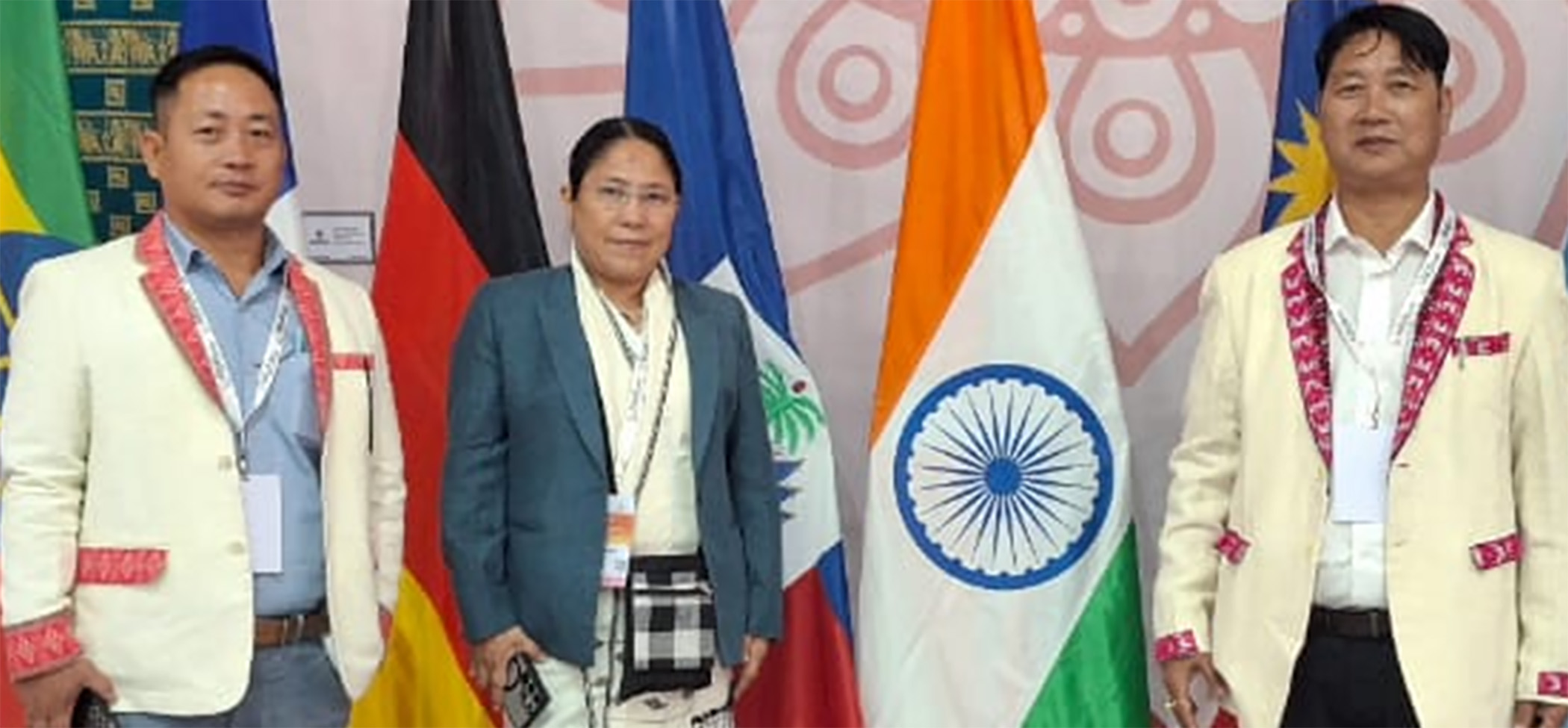
State delegation included Art & Culture assistant director Manyu, according to an official release.
PIB adds: Secretary Aggarwal, in his inaugural address to about thousand delegates from member states, officers, cultural institutions, experts, NGOs and observers on Monday had said “Intangible cultural heritage is not created by policy, it is created by people and the responsibility to protect this knowledge in a rapidly changing world lies with us collectively.”
Addressing a press conference after the morning session,
Aggarwalsaid that hosting the session at UNESCO World Heritage Site of the Red Fort reflects India’s unique blend of tangible and intangible cultural heritage. He emphasized India’s community centered approach to safeguarding traditions, highlighting the ongoing expansion of the National Inventory, capacity-building initiatives for practitioners, and efforts to integrate living heritage into national development programmes.
He also underscored India’s 15 elements on UNESCO’s Representative List, including Vedic Chanting, Kutiyattam, Yoga, Kumbh Mela, Durga Puja and Garba, describing them as a “kaleidoscope of India’s cultural identity.” He also highlighted that Intangible Cultural Heritage represents the “living heartbeat of humanity,” embodied in performing arts, craftsmanship, festivals, rituals and oral traditions sustained by communities across generations.
The Secretary stressed that the session comes at a crucial time, with intangible heritage across the world facing challenges from commercial pressures, shifting community dynamics and evolving digital ecosystems. UNESCO’s platform, remains essential for cooperation, dialogue and collective stewardship he added.
Chairperson of 20 COM-cum-Ambassador Permanent Representative of India to UNESCO Vishal V Sharma reaffirmed India’s long-standing commitment to safeguarding cultural heritages. He noted that India’s ongoing term (2022–2026) on the Committee further strengthens its engagement in global discussions on safeguarding living heritage.
Assistant Direcor General for Culture of UNESCO Ernesto Ottone lauded GoI for Hosting this 20th session committee and its various efforts in safeguarding cultural heritages.


 20

