
By Special Correspondent
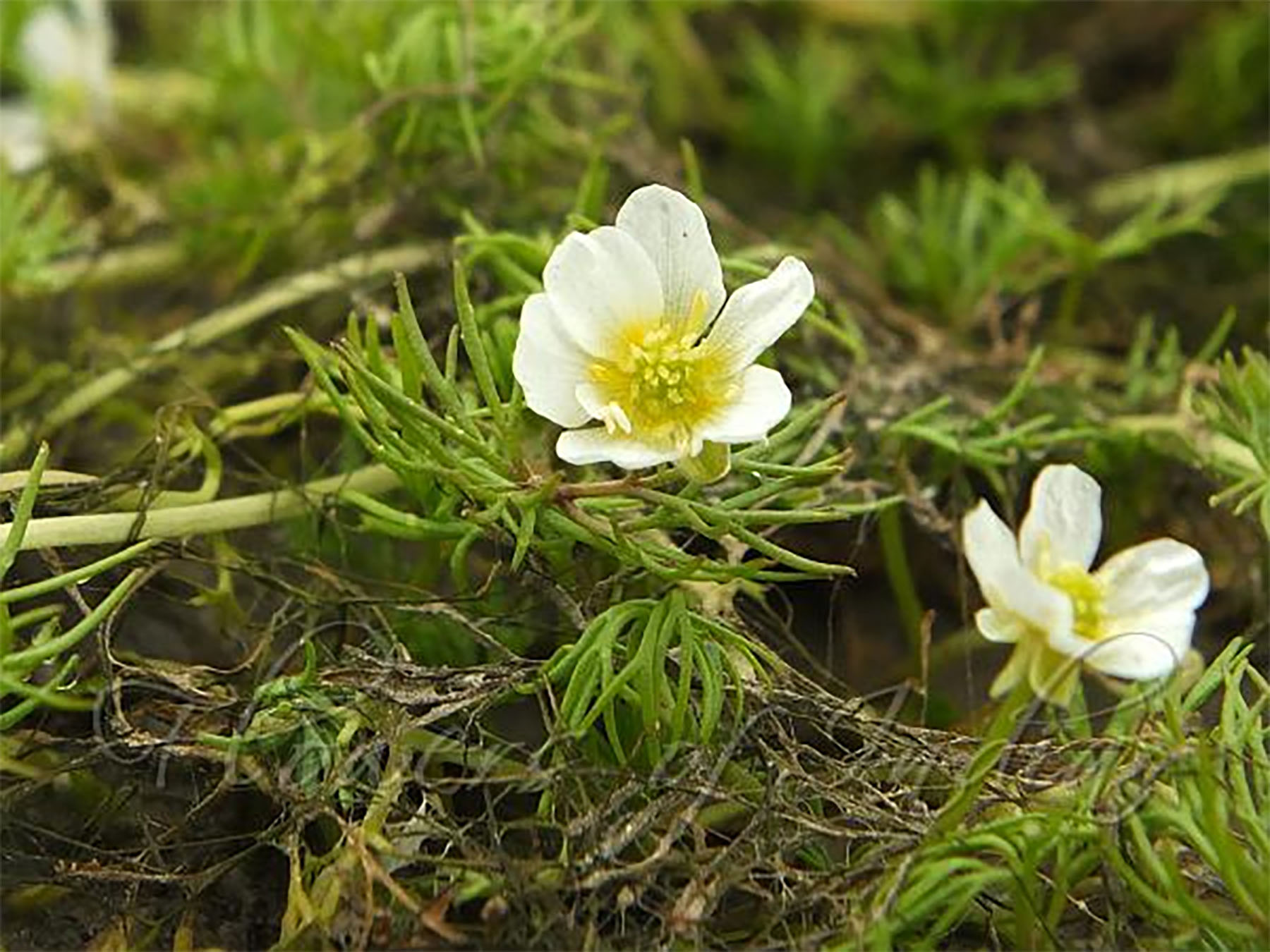
ITANAGAR, Dec 17: Arunachal Pradesh has justified the adage ‘Treasure Trove of Nature” again with rediscovery of Ranunculus trichophyllusin the high-altitude wetlands of Tawang, Arunachal Pradesh, marking its first recorded presence in the state after 115 years, Deputy Chief Minister Chowna Mein wrote on X and posted a picture on Wednesday.
This cold-water aquatic herb was found near P T Tso Lake at an elevation of about 4,000 metres. Thriving in clear, oxygen-rich waters, its return highlights the pristine wetland ecosystems of Arunachal Pradesh and underscores the Eastern Himalaya’s importance as a global biodiversity hotspot. It was documented last time in Sikkim in 1909, Mein added.
The Ranunculus trichophyllus (thread leaf crowfoot or thread-leaved water-crowfoot) is a plant species in the genus Ranaunculus, native to Europe, Asia and North America. In North America it is commonly known as the ‘white water crow foot’. The Icelandic name of this species is Lónasóley.
It is found in the Mediterranean, east through Siberia, the Caucasus, the Middle East, Kazakhstan and Mongolia to Kamchatka in Russia, Japan, China, Korea, the Himalayas and in lakes and ponds of Mount Everest.
It is a herbaceous annual or perennial plant generally found in slow flowing streams, ponds, or lakes. The daisy-like flowers are white with a yellow centre, with five petals. It also has rounded seed heads which become fruits covered with bristles. The segmented leaves and the plant’s ability to photosynthesis underwater have been studied.
It was first described and published by the French naturalist and botanist Dominique Villara in his book ‘Histoire des plantes du Dauphiné’ Vol.3 on page 335 in 1786.[
The species epithet trichophyllus is Latin for ‘hairy leaves’.
It grows in freshwater, found in dune slacks and drainage ditches to ponds, lakes, streams and slow-flowing rivers. It can be found up to 9,800 ft above sea level.


 20
