
By Pradeep Kumar
NAHARLAGUN, Dec 23: The 24×12 state-of-the-art Emergency and Trauma Care Unit with dedicated facilities, like a 32-slice CT scan, X-ray, USG machine and an emergency modular operation theatre of TRIHMS here has been adjudged ‘Centre of Excellence’ by Jai Prakash Narayan Apex Trauma Centre (JPNATC) of AIIMS, New Delhi.
This was announced during a national conference on “Sensitization-cum-National Review Meeting under National Programme for Prevention and Management of Trauma & Burn Injuries”, organized by Union Ministry of Health & Family Welfare in AIIMS seminar hall on December 19 last, TIHMS acting director Dr. Naba Kumar Bezbaruah, who attended the conference, told this daily over telephone on Tuesday, adding TRIHMS’s trauma centre is among 14 across the country to achieve this feat.
Thirteen colleges including JIPMER, Puducherry; Safdarjung Hospital, Delhi; PGI, Chandigarh; SCB Medical College, Cuttack; Goa Medical College; Thiruvananthapuram Medical College have earned this honour, he said, adding “wait and watch for more addition to college’s courses of studies”.
Head (accident and emergency) assistant Prof Dr. Kemba Padu, state nodal officer Dr. Raja Dodum. assistantProf. (surgery) Dr. Karan Pao also attended the conference, he said. When asked how the status could be achieved in such a short time, he lauded proactive roles of the above staff managing the Trauma Centre.
“Prehospital management of accident patients, adequate funds for patient care, training of manpower and research, immediate availability of ambulances and helicopter service in emergency, constant quality monitoring and evaluation by TRIHMS management committee for emergency patients were behind this success, he reasoned.
This is second national glory earned by Tomo Riba Institute of Health & Medical Sciences (TRIHMS) after majority of 49 MBBS students of its first batch (2018) qualified for PG seats in national level counselling, as published in December 21 edition of this daily.
The Trauma Centre, developed based on a MoU between AIIMS and TRIHMS for faculty exchange, students’ academic activities, training of medical personnel and tertiary patients’ care, was operational on 08.05.23.
The existing General Hospital converted to TRIHMS as first medical college-cum-300-beded hospital of Arunachal Pradesh in 2017 and its academic session started on 01.08. 2018 for 50 students.
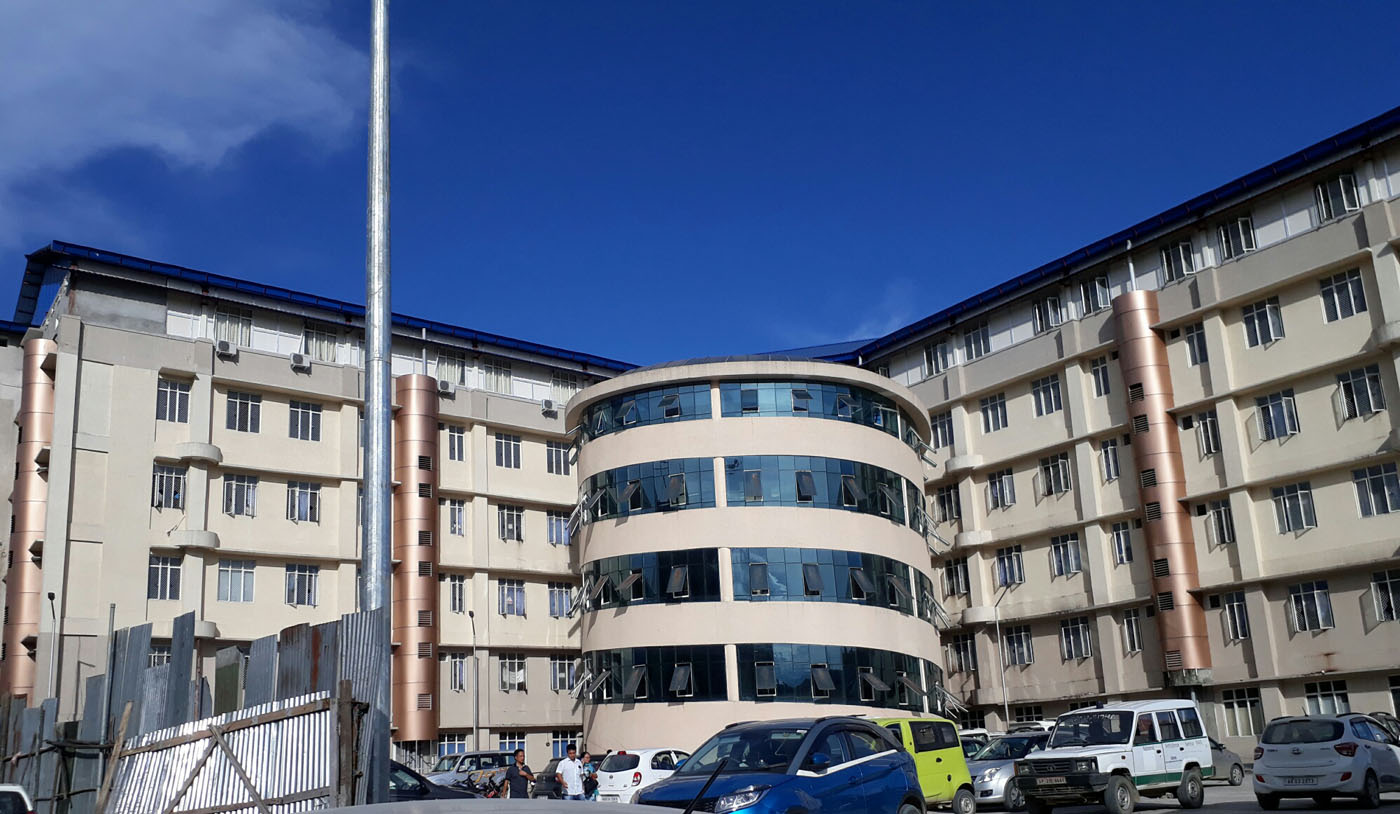
It may be recalled here that JPNATC Prof Dr Sanjeev Bhoi, after inspecting the trauma centre, located on ground floor of an eight-storied building along with JPNATC associate Prof Dr Tej Prakash Singh and TRIHMS then director Dr Moji Jini on 16.03.22, had said “the trauma centre would be unique in North East India as it has been conceived and being developed under the guidance of JPNATC experts.
The Trauma Centre and emergency ward form vital part of any medical college and hospital, run by one each assistant professor, senior assistant and four senior assistants, because of the following alarming data.
Nineteen Indians die every hour due to road traffic injuries (RTIs), means 9.5 deaths for every 1,00,000 people. For comparison, Sweden reports only 2 deaths per 100 000 population since initiating ‘Vision Zero’. In 2022, nearly 33.8% (1,55,781 accidents) of all RTIs in India were fatal.
Another cause for concern is that while highways account for only 5% of the country’s road network, 55% of all RTIs occur on highways and account for 60% of all RTI-related mortalities. The morbidity rate from RTIs is equally alarming, with a disability-adjusted life-years (DALYs) rate per 100 000 population of 1212 (95% uncertainty levels 978–1419). A worrying fact is that the data may not accurately reflect the actual situation as it is sourced from police records, does not account for deaths after 30 days, and many incidents in rural areas go unreported.
Two independent estimates of RTI-related deaths from 2017 and 2019showed 82% and 40% more deaths than the available data for those years. As per WHO estimates for India, falls (2,25,000 deaths), deliberate self-harm (1,73,000 deaths) and interpersonal violence (51,000 deaths) were the biggest contributors to injury-related death.


 20

