
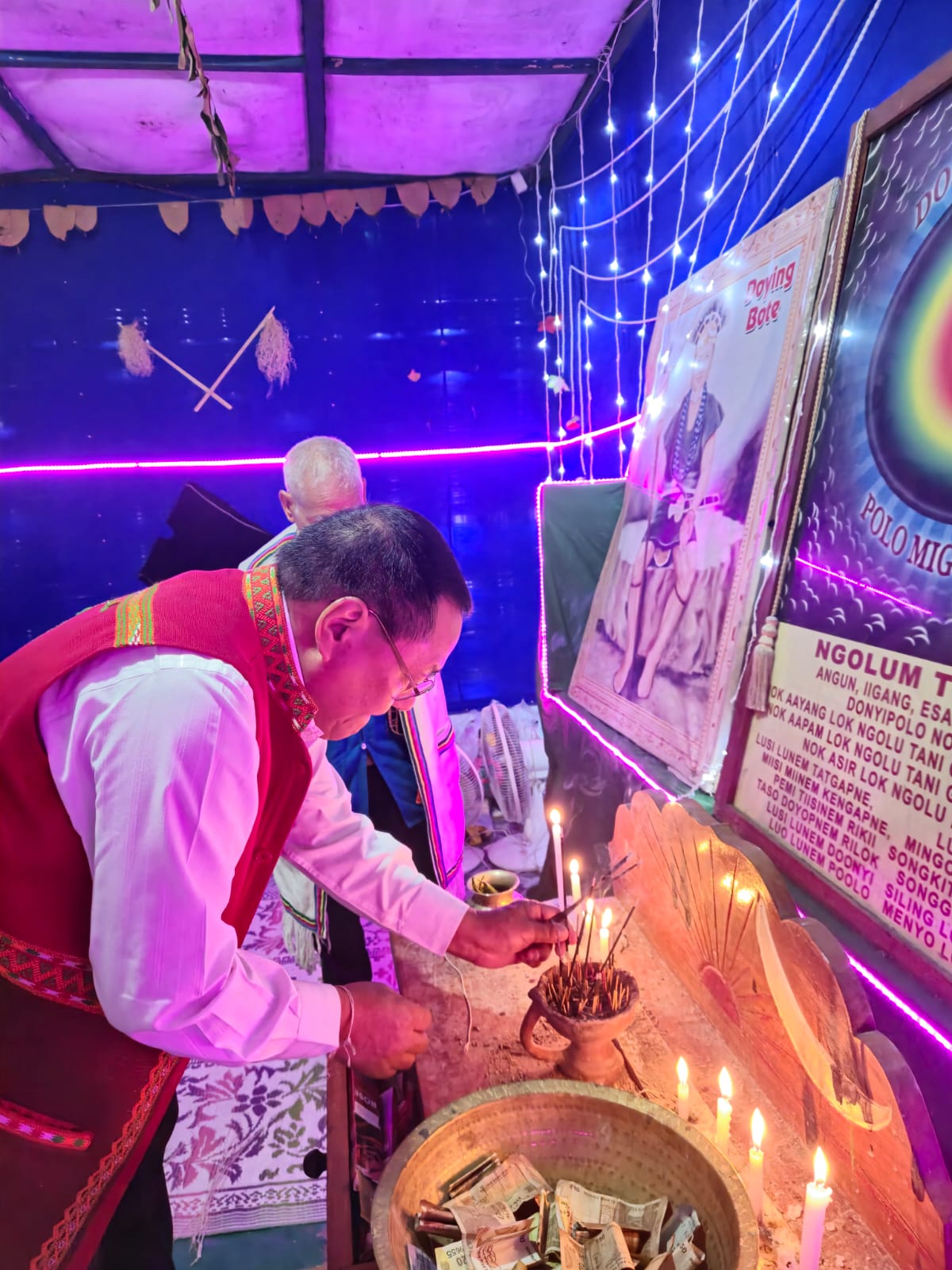
PASIGHAT, Dec 31: Arunachal Pradesh Congress Committee (APCC) president Bosiram Siram, who joined indigenous communities in celebrating the sacred Donyi Polo Indigenous Faith Day by at various locations here in East Siang district on Wednesday, expressed serious concern over erosion of indigenous culture.
Siram, who took part in rituals and prayers in Donyi Polo Gangging at Yagrung, Takilalung and Runne Donyi Polo Gangging, while interacting with the Donyi-Polo faith believers, expressed serious concern over the gradual erosion of indigenous culture, traditions and faith, particularly among the younger generation.
He cautioned that the loss of cultural roots inevitably leads to a loss of identity and said that blind imitation of external influences poses a grave threat to the rich tribal heritage of the state.
The celebration was marked with deep devotion, traditional performances and collective participation, reflecting the enduring strength, relevance and spiritual richness of state’s indigenous heritage.
Siram reaffirmed his profound respect for Donyi Poloism, an ancient indigenous faith, that forms the spiritual, cultural and moral foundation of the tribal communities.
“Culture, tradition, and indigenous faith are true parameters of our original tribal life. When these are weakened, our identity and values are endangered,” Siram said.
Siram made a fervent plea to state youth to embrace, practice, and preserve Donyi-Poloism and indigenous cultural values. He stressed that while modernization is inevitable, it must not come at the cost of abandoning ancestral wisdom, ethical living and community harmony rooted in indigenous faith.
Pointing out that Donyi Polo symbolizing the Sun (Donyi) and the Moon (Polo) teaches humanity the values of truth, balance, discipline and respect for nature—principles that remain highly relevant in today’s world.
He reiterated that preservation of indigenous faith and culture is not merely a religious concern, but a collective responsibility to safeguard the identity, unity, and continuity of tribal society. He stressed that cultural preservation strengthens social harmony and ensures that future generations remain firmly connected to their roots.
He also appreciated the vital role played by elders, community leaders and cultural institutions in protecting and transmitting traditional knowledge, rituals and values to the younger generation, according to an APCC release.


 20

