
By Pradeep Kumar
NAHARLAGUN, Feb 13: Tawang is often considered to be the jewel of India. But many do not know that it was once part of Tibetan administration, and after India gained independence, many people played a crucial role in its integration into India.
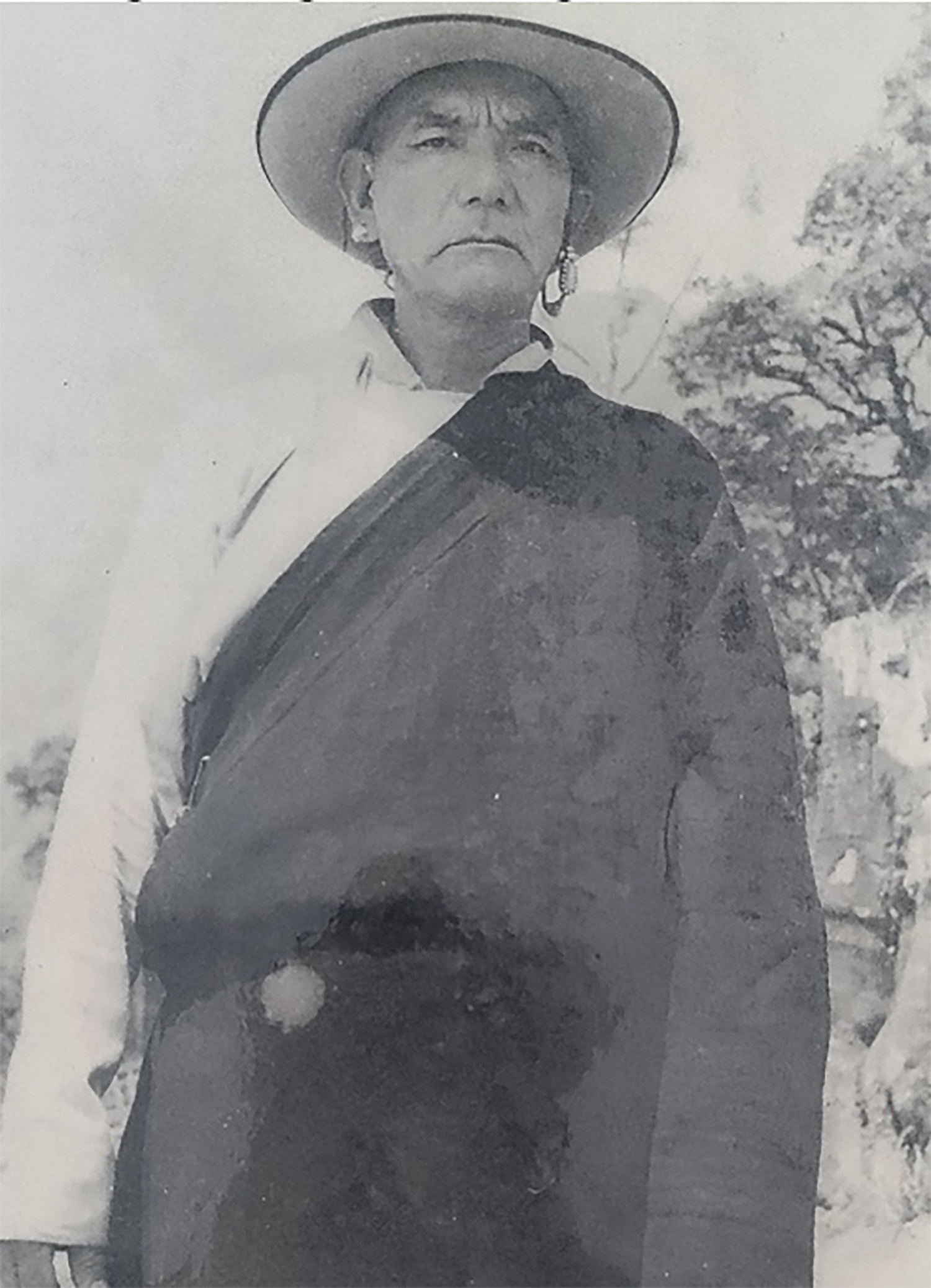
People know the role of Ralengnao Khathing or Bob Khathing, but few know that Monpa tribesman late Rinchin Dhondup, fondly known as Nyerpa Khow, was behind him. His life bridged the gap between tradition and modernity, spirituality and statecraft, leaving behind a legacy rooted in service and harmony.
One of his sons during a chance meeting recalled the history.
When Maj Khating was coming with 200 Assam Rifles personnel, Khow had sent a message not to reach Tawang before Losar Festival and Maj Bom Khating had arrived a day before the festival.
After hoisting the national flag, on the advice of Khow, Maj Khating had proceeded up to Bum La Pass, present Indo-China border, 37-km away from Tawang town in India and 43-km from Tsona Dzong town of in China’s Tsona County. Without Khow’s wisdom, present Indian map would have been different, he said.
Born in 1893 in Tawang’s Shernup village, Nyerpa Khow hailed from a prominent Monpa family. The word Nyerpa in Tibetan means caretaker (administrator), a title bestowed upon him by Tawang monastery for his integrity and wisdom.
Initially a monk at Tawang Monastery (Gaden Namgyal Lhatse), he later served in Bhutan’aMera Sakteng, where his leadership and mediation skills earned him deep respect among both monastic and local circles. He grew up in the pre-independence era, when Mon-Tawang region was under Tibet’s administrative control and Tawang Monastery exercised both spiritual and administrative influence over the region.
He eventually left the monastic life to shoulder family responsibilities and settled in Tsumbitse, Khrimu village, with his wife and 10 children.
His eldest daughter, Yeshi Wangmu, now in her late 80s and still living in Tawang, fondly recalls her father’s progressive outlook, particularly his emphasis on gender equality and education. In 1945, he even took her to Tibet capital Lhasa, a rare gesture then, symbolising his belief in empowering women through exposure and confidence.
Before independence, people from the Mon-Tawang region often travelled to Lhasa for pilgrimage and trade.
Nyerpa Khow with then President of India Dr Rajendra Prasad at New Delhi
In early 20th century, Tawang lay under administrative influence of Tibet, despite 1914 Simla Agreement, which recognised it as part of British India. After independence, India sought to establish its presence in the frontier regions. In 1951, Major R Bob Khathing was tasked with bringing Tawang under Indian administration, a mission fraught with political and cultural sensitivity.
Nyerpa Khow’s diplomacy proved crucial. Appointed as Tawang’s first political assistant (1951-1962), he mediated between Indian officials, Tawang Monastery and local Monpa populace. His tact and wisdom ensured a peaceful integration of Tawang into Indian Union, achieved without a single gunshot. His name became synonymous with leadership and reconciliation.
In 1964, Indian Govt set up Nehru Gonpa in Tawang to commemorate Jawaharlal Nehru’s visit. Nyerpa Khow ensured that project reflected local culture and sentiment. Stones from old Gyangkhar Dzong, once under Tibetan control, were used as a symbolic foundation, marking Tawang’s freedom and unity with India.
As a gesture of gratitude, Nyerpa Khow personally brought a bust of Nehru from mainland India for installation in monastery’s prayer hall. He also took part in immersion of Nehru’s ashes in Lohit River, honouring the leader’s final wishes.
The bond between Nyerpa Khow and Major Bob Khathing evolved into a lifelong friendship and even a family tie. Khow’s son, late Tsering Tashi married Khathing’s daughter Sange Lhamu. When Khathing revisited Tawang in 1985, he offered 100 butter lamps at Tawang Monastery in memory of his old comrade, a moving tribute to the man who had helped unite Tawang with India.
Nyerpa Khow passed away in 1967 after a brief illness. His descendants have continued to carry forward his legacy. His children, late Tsering Tashi, former Cabinet minister, played an instrumental role in creating Tawang district (1984) and promoting Buddhist culture. His other sons include late Thupten Tempa, former IAS officer and Cabinet minister, who led renovation of Tawang Monastery and promoted Bothi language education; Dr Lobsang Jampa, first state epidemiologist, who played a key role in the Covid-19 response; Tsering Wangdi, a senior state administrator; late Karma Wangchu, Lumla MLA (1978-1994), a Padma Shri awardee and Khow’s granddaughter Tenzing Yangki is Arunachal’s first female IPS officer.
Nyerpa Khow’s life embodied leadership rooted in humility, wisdom, and unity. His role in Tawang’s peaceful integration remains one of the most defining yet overlooked chapters in India’s Northeastern history. Though absent from formal archives, his memory endures in oral traditions, monastic circles, and in the lives of those who continue his legacy in Tawang.
As Tawang today blossoms as a centre of culture and spirituality, Nyerpa Khow’s name stands as a reminder that true nation-building begins not with force, but with understanding, and that service is indeed the truest inheritance. In every sense, he is the real unsung hero who played a crucial role in the integration of Tawang into the Indian union.
It is time his massive contribution is recognised and the GoAP should honour this historic figure for his bold steps to change course of statehistory.


 20

