
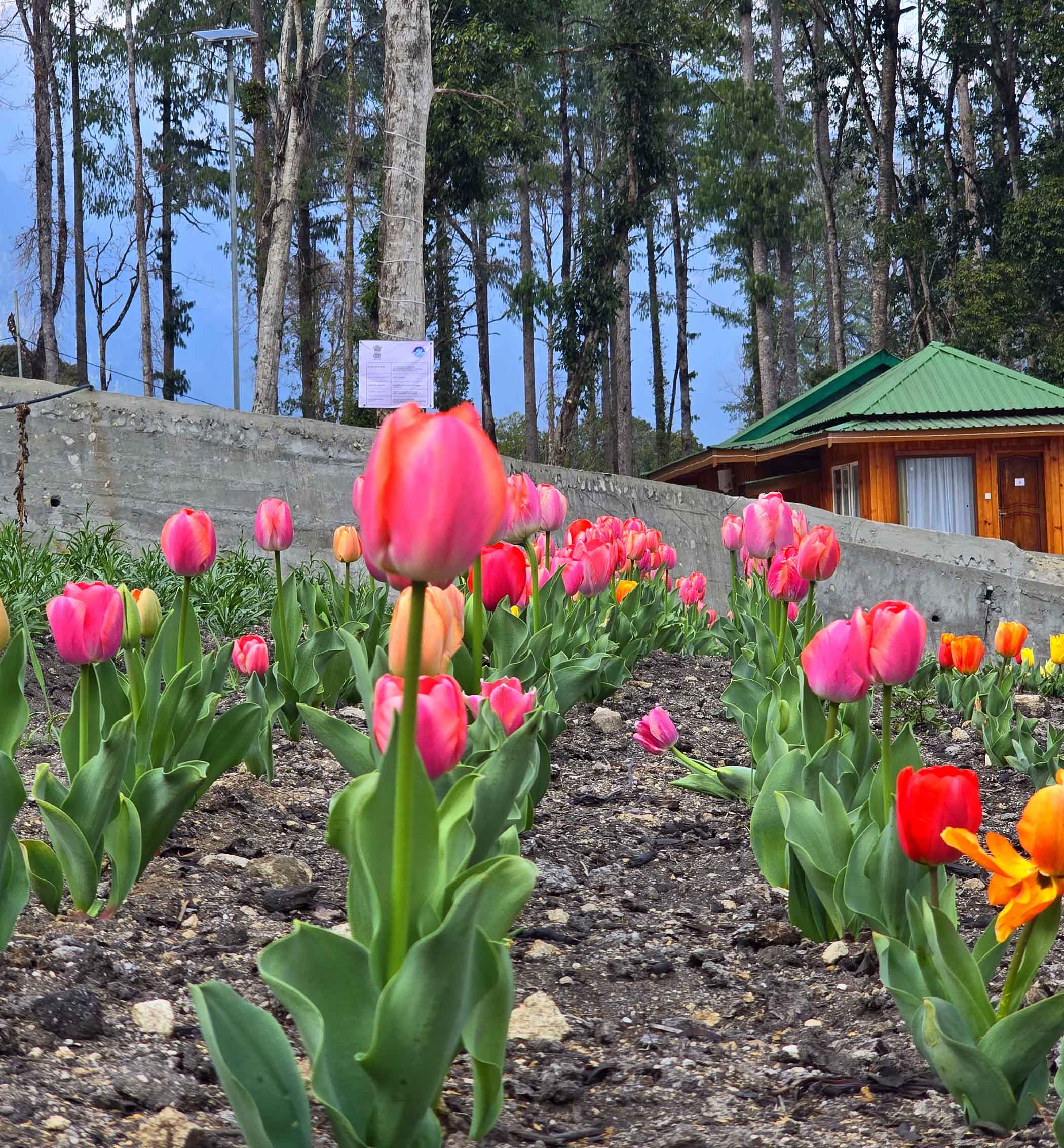
ANINI, Mar 07: In a remarkable milestone for horticultural innovation in Arunachal Pradesh, this pristine valley of Anini has witnessed successful blooming of tulips for the first time.
The pioneering scientific trial was conducted by Dibang ValleyKrishi Vigyan Kendra (KVK) horticulture specialist Dr. Oying Jamoh, marking a promising beginning for floriculture in the highlands of the state.
The initiative aimed to evaluate feasibility of cultivating tulips in Anini, a region whose agro-climatic conditions bear striking similarities to renowned tulip-growing landscapes of Jammu and Kashmir. Blessed with a cool temperate climate, fertile soil and favourable topography, the serene valley offered an ideal natural laboratory to test the adaptability and performance of different tulip varieties under local conditions.
The successful introduction of tulips heralds a new chapter for floriculture and nature-based tourism in the state. With the potential establishment of seasonal tulip gardens and festivals, the valley may soon transform into a vibrant floral destination of NE India.
As these delicate blossoms now sway gently in the cool mountain breeze of Anini, residents and visitors alike may no longer need to travel to J-K to witness their splendour. Instead, the dream of a “Valley of Flowers” in Arunachal Pradesh may soon bloom into reality—right in the enchanting valley of Anini.
Tulips, celebrated worldwide for their elegance and vibrant colours, are bulbous ornamental crops of high commercial value with strong demand in both domestic and international markets as premium cut flowers. Recognizing this potential, tulip bulbs were procured from Kashmir and planted on a trial basis in Anini.
Total 10,000 bulbs representing 13 varieties—Apple Dorm, Big Smile, Avignon, Blushing Lady, Parade, Benja Luca, Ile de France, Strong Gold, King’s Blood, Apricot Impression, Prince Orange, Orange Monarch and Negrita—were introduced for evaluation. Among these, Apple Dorm and Ile de France belong to the dwarf category, while remaining varieties are tall-growing types known for their striking floral display.
The outcome of the trial has been highly encouraging. Most of the varieties demonstrated excellent growth and flowering performance under the unique agro-climatic conditions. Only three varieties—Benja Luca, Big Smile and Ile de France—showed comparatively modest performance. The results indicate strong potential for expansion of tulip cultivation in the region in future.
Beyond its horticultural significance, the initiative holds immense promise for horticulture-based tourism. Nestled amidst the majestic landscapes of Dibang Valley, Anini is already celebrated for its untouched natural beauty and tranquil charm. The addition of vibrant tulip blooms is expected to further enhance the district’s appeal, offering visitors a spectacular floral experience set against the dramatic backdrop of the Eastern Himalayas.
The trial was funded by local MLA-cum- Advisor to Tourism MinisterMopi Mihu, whose support has been instrumental in turning it into a reality by the KVK).
With this successful scientific trial, the future of commercial floriculture in Dibang Valley appears bright and promising. Expansion of cultivation areas and development of market linkages for cut flowers could open new livelihood opportunities for local farmers while strengthening the region’s growing tourism profile. The initiative stands as an inspiring step toward diversification of horticultural crops and sustainable economic development in the state. (DIPRO)
Anini, headquarters of Dibang Valley district, a miniature plateau between tributaries of Dibang river & Dri river and Mathun river, the northernmost districct of NE India, located at an elevation of 5,299 ft) above sea level., has total population of 4,489 (2011 census). Anini’s history dates back to 1st millennium BC. In 1947, Anini became a part of India. In June 1980, Dibang Valley district was carved out ofLohit district as Anini its HQs., situated approximately 50-km from Chinese border to the north.


 20

