
By Our Staff Reporter
ITANAGAR, Mar 11: Arunachal Pradesh Legislative Assembly (APLA) on Wednesday constituted a ‘one time evaluation committee’ to examine growing issue of human-wildlife conflict in the state.
The committee will be headed by BJP MLA Wangling Lowangdong as chairman and MLAs Kumar Waii, Mohesh Chai, Topin Ete, Tsering Lhamu and Principal Chief Conservator of Forests (PCCF) as members.
Announcing the decision on fourth day of ongoing budget session, Speaker Tesam Pongte said the committee has been asked to submit its evaluation report within three months.
The committee was constituted after Congress MLA Kumar Waii raised the matter through a Private Members’ Resolution, highlighting the urgent need to address the rising incidents of human-wildlife conflict in the state.
Waii had said that the situation has reached an alarming level and urged the government and concerned departments to frame a comprehensive policy to safeguard both human lives and wildlife.
Supporting the resolution, Tezu MLA Mohesh Chai, advisor to the Health Minister, and PWD Minister’s advisor Honchun Ngandam said merely using crackers to drive away elephants would not solve the problems faced by farmers.
They noted that frequent elephant attacks on farmers require a more concrete and long-term solution.
Both legislators also stressed the need for separate legal provisions to protect human lives and wildlife in line with the Wildlife Protection Act, 1972.
They further urged the GoAP to create greater public awareness on planting saplings and preventing deforestation to reduce human-wildlife conflict.
Only 5 of 42 nanotechnology road projects successful: Sona
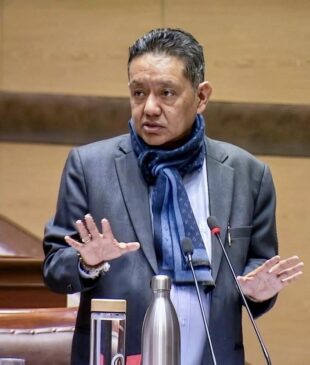
Short-duration discussion: Out of 42 road projects undertaken using nanotechnology in Arunachal Pradesh, only five were successful while 37 remained incomplete, RWD Minister Pasang Dorjee Sona informed while responding to concern raised by BJP MLAs Laisam Simai and Wangling Lowangdong during short duration discussion on nanotechnology road construction.
The legislators alleged that officials of company concerned had deliberately neglected their duties, leading to the failure of several projects. Sona assured that stern action would be taken if any officer is found to have deliberately neglected their responsibilities.
Simai said that if nanotechnology was introduced in the state only on a trial basis, it should not have been implemented across the state at once.
Lowangdong alleged that the GoAP had used Tirap and Changlang districts as experimental areas for nanotechnology-based road construction projects.
Taking part in the discussion, MLA Honchun Ngandam suggested that instead of directly adopting nanotechnology, the government should have continued with conventional road construction methods and tested the new technology through phased pilot projects.


 20
