
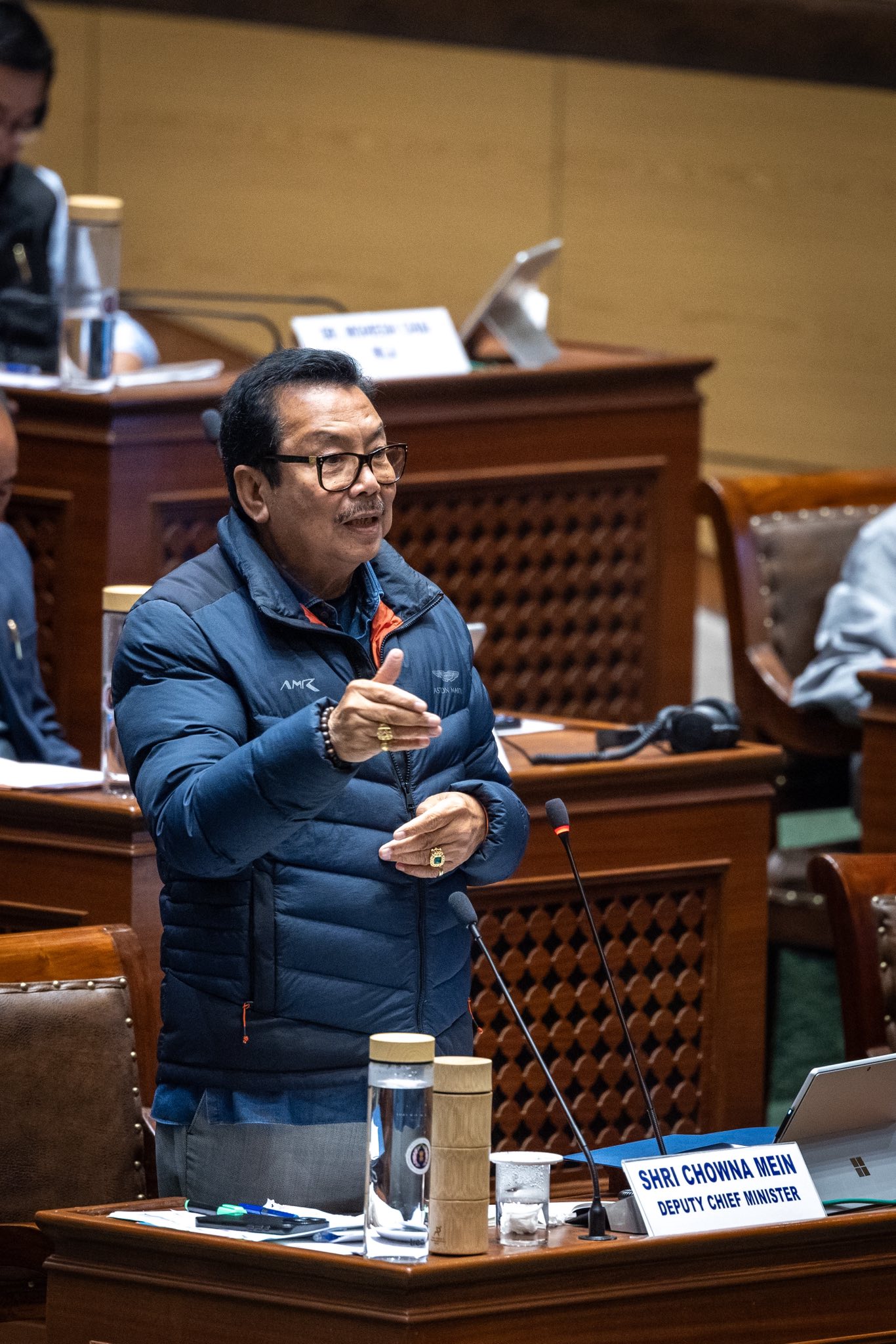
ITANAGAR, Mar 12: The Arunachal Pradesh assembly on Thursday passed the Rs 36,607 crore state budget for 2026–27 by voice vote after a two-day discussion in the House.
The budget, presented by Deputy Chief Minister Chowna Mein on March 10, focuses on six key sectors aimed at strengthening infrastructure, people-centric development, economic growth and governance reforms. The total budget estimate projects a deficit of Rs 701.43 crore.
The budget size for 2026–27 stands at Rs 36,607 crore, about 8.1 per cent lower than the previous fiscal’s budget of Rs 39,842 crore.
During the discussion in the House, Mein, who also holds the Finance, Planning and Investment portfolios, thanked members for participating in the deliberations, and described the budget as one that fulfils people’s aspirations.
He said the reduction in the budget size was mainly due to a shortfall in allocation from the Centre following the recommendations of the 16th Finance Commission based on horizontal devolution.
The deputy chief minister, however, highlighted several measures the state government would take to address the shortfall in the current year’s budget allocation.
He added that the state budget has been designed to benefit every section of society.
“Through its focus on health, education, livelihoods, connectivity, safety, culture and governance, it ensures that all 16 lakh plus people of Arunachal Pradesh benefit from one or more of the measures announced,” Mein said.
He informed the House that after the budget’s passage, allocations would be made to all departments to carry forward ongoing schemes and implement new initiatives.
He urged departments to immediately prepare guidelines and annual operating plans to ensure the timely implementation of projects.
Mein also said that centrally sponsored schemes and other flagship programmes of the Centre and the state government are being reviewed every two months by a committee headed by the chief secretary.
Stressing the need for the timely completion of centrally sponsored schemes and flagship programmes, he said delays often lead to cost escalation.
Responding to issues raised by members during the discussion, the deputy chief minister assured that their concerns would be addressed on a priority basis and schemes suggested by them would be implemented in a phased manner.
“We are trying to uplift the education department through various plans and policies. In the health sector too, the government is creating infrastructure and trying to fulfil the manpower gap in a phased manner to improve the sector,” he said.
Mein reiterated the government’s commitment to implement the budget and fulfil the aspirations of the people and elected representatives.
Referring to development in the Northeast, he said the region witnessed significant changes after Prime Minister Narendra Modi assumed office in 2014 and described the region as an engine of growth for the country.
He said the prime minister launched the Act East Policy to accelerate development in the region and had termed the northeast as “Ashta Lakshmi”, emphasising its importance for the country.
Mein added that the Centre’s focus on the northeast has also led to increased budget allocations, particularly in the areas of education and entrepreneurship.
He urged members of the House to cooperate with the government for the overall transformation of the state.
Later, the House passed the budget by voice vote. PTI


 20

