
Photo: Special arrangement
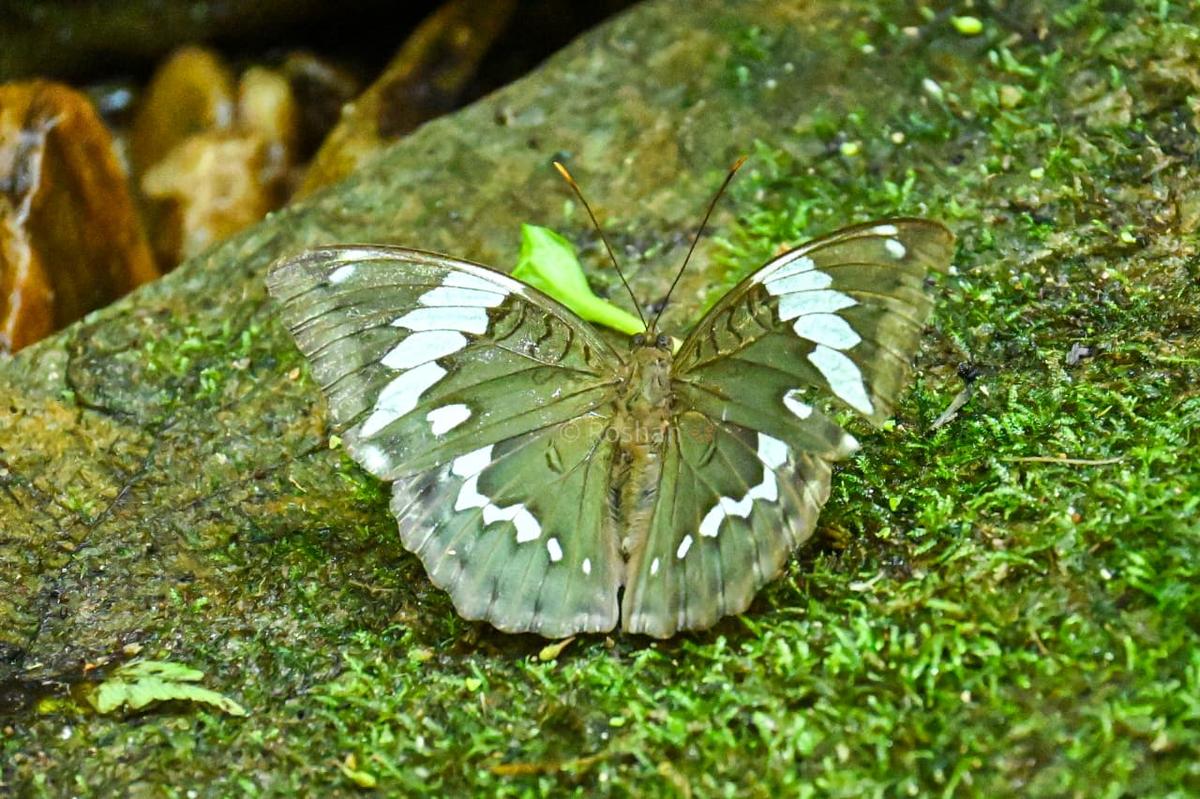
ITANAGAR, Mar 27:A new species of butterfly Euthalia zubeengargi, new-to-science, has been recorded in Leparada district forest and named after Zubeen Garg, the cultural icon of Assam, whose death on 19.09.25 had triggered a storm.
The researchers — Roshan Upadhaya, a scholar at Punjab’s RIMT University, and Kalesh Sadasivan of Travancore Natural History Society — have proposed Basar Duke as the common name for Euthalia zubeengargi, which was observed during field surveys conducted in 2025. Upadhaya is an Arunachal police constable.
Their findings in semi-evergreen forests at elevations of 600-750 metres appeared in the latest issue of Entomon, a quarterly journal published by Association for Advancement of Entomology, an Indian NGO.
Despite months of observation, the researchers documented only two male individuals, one collected specimen and another photographed in the wild, indicating that the species may be rare or highly localised.
“The butterfly belongs to the genus Euthalia, a group commonly found across South and Southeast Asia. Members of this group are typically seen in forested habitats and are known for their earthy brown wings marked with pale spots,” Upadhaya said.
The newly discovered species stands out for its distinct wing patterns and structural features, which allowed them to confirm it as a separate species, he added.
Field observations suggested that Euthalia zubeengargi prefers cool, shaded forest interiors. The butterfly was seen resting on low vegetation, feeding on tree sap and occasionally gathering minerals from damp surfaces near streams.
“The butterfly appears to be active mainly from late morning to early afternoon, making short, slow flights between nearby plants,” the researchers noted, also underlined that dense, moist forest undergrowth plays a crucial role in its survival.
The study, however, acknowledged that much about the butterfly’s life cycle, including its breeding pattern and host plants, remains unknown.
Euthalia zubeengargi is one of more than 80 species from this group recorded in India’s NE region.


 20

