
- Aims to safeguard shared heritage: CM
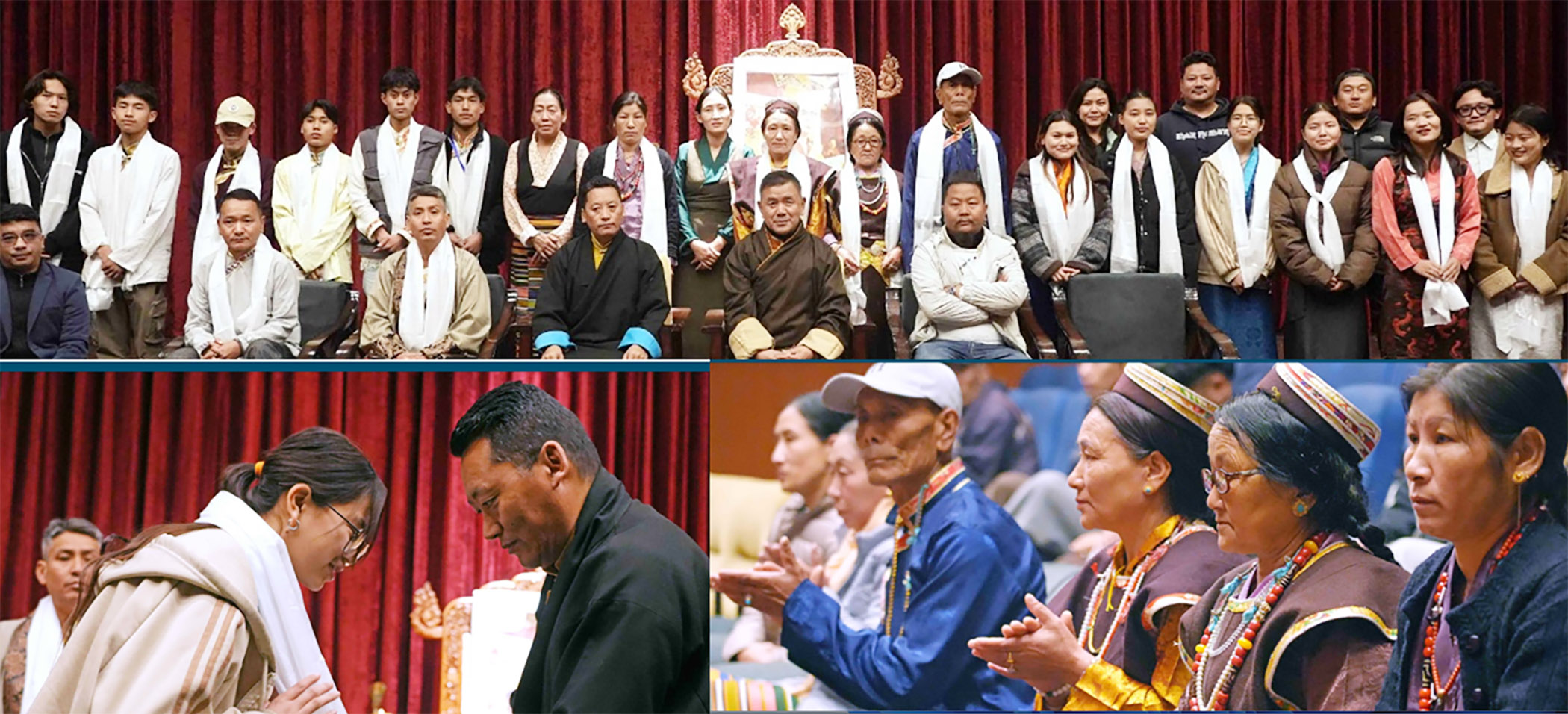
DHARAMSHALA, Apr 16: In a historic first, expanding its mandate beyond the exiled Tibetan community to culturally linked Himalayan populations within India, Tibetan Institute of Performing Arts (TIPA) has formally inducted 12 students from Menchukha in Arunachal Pradesh under a special initiative aimed at preserving and promoting the cultural heritage of the region.
The TIPA formally inducted 12 students under a special initiative aimed at preserving and promoting Himalayan cultural heritage. The induction ceremony was held at 10AM on April 9 in TIPA’s main hall, in presence of dignitaries, faculty members, students and a Menchukha delegation, including family members of new students.
The initiative stems from a cultural exchange visit in February 2025, when a TIPA delegation took part in Losar celebrations in Menchukha and staged traditional Tibetan performances at the invitation of Mechukha Cultural Association (MCA), The visit highlighted the deep-rooted linguistic, religious and cultural ties between Memba community and Tibetan traditions, while also drawing attention to concerns over the gradual decline of these traditions amid generational change.
Following appeals from local leaders and community representatives, TIPA approved admission of 12 students (six boys and six girls) after detailed deliberations during its 50thexecutive meeting. The selected students have been offered free education, subject to a minimum six-year commitment to training at TIPA.
Proceedings began with traditional ceremonial offerings, including presentation of khataks and lighting of butter lamps before a portrait of His Holiness the 14thDalai Lama.
TIPA director, in his address, underscored the significance of the initiative and urged students and their families to remain committed to full duration of the training. He also stressed on discipline and adherence to TIPA guidelines as key to their success.
Arunachal Department of Religion and Culture (DoRC) secretary Dhondul Dorjee, in his address as chief guest, stressed importance of safeguarding Tibetan religion, culture and language. He highlighted role of the DoRC in supporting such preservation efforts.
MCA general secretary Sangey Sona and deputy chairman Cheeden Goibas lauded TIPA for giving the opportunity and briefly outlined the process that led to the collaboration.
Artistic director Tenzin Phuntsok described admission of Memba students historic, marking a significant step in TIPA history. The initiative is expected to not only support cultural preservation but also strengthen ties between Tibetan and Arunachal Pradesh communities.
The initiative carries both cultural and political significance for Arunachal Pradesh as the state is culturally and geographically tied to Tibet though China has been often laying claim over the whole territory.
Chief Minister Pema Khandu, in a letter of appreciation, called it a meaningful step towards strengthening mutual understanding and safeguarding shared heritage. For TIPA, it signals a subtle but important evolution from preserving a past in exile to actively shaping a shared Himalayan cultural future.
Education, Parliamentary Affairs, Rural Works, Tourism, and Public Libraries Minister Pasang Dorjee Sona, in an appreciation letter, commended the effort, describing it as a meaningful step toward fostering mutual understanding and cooperation, according to TIPA website.
AONS add: The lucky 12 students pursuing six-year training course field-wise are: Girls-1) Karma Buti Gyana, class-VIIIth pass, 2) Nima Lhamu Sona, studying in class-X (both singing), 3) Sonam Yurin Gyana, class-VIIIth pass, 4) Tsowang Drema Goiba, studying in class-X, 5) Sange Lhomu Goum, class-VIIIth pass,(all dancing) and 6) Pema Khandu Naksang, reading in class-VII passed (her choice).
Boys- 1) Changa Sona, class-VIIIth pass (guitar), 2) Zigme Wangchuk Philley, class-XIIth passed (singing/guitar), 3) Phurba Dorjee Buru, class-IX passed (his choice), 4) Sonam Phinjo Dorsom, class-X passed (flute), 5) Passang Wangchuk Naksang, class- VIIthpassed (his choice) and Thinley Gyana, class- VIIth passed (his choice), according to Menchukha-based journalist Sanjay Mosing.
Arunachal Pradesh finds a prominent place in Tibetan landscape as 14th Dalai Lama Tenzin Gyatso, after a treacherous 14-day journey across the Himalayas to escape Chinese suppression of the Tibetan uprising, had entered India on 31.03.1959. He was received at Chuthangmo (Khenzimane Pass) in present Arunachal Pradesh by Assam Riflespersonnel before traveling to Tawang and Bomdila eventually settling in Dharamshala.
His Holiness, then aged 23, had placed his walking stick on the ground at Gorong Kukpa. His stick took root and grew into a large, sacred tree revered by locals as the “Holy Tree”.
On 26.03.1959, the Dalai Lama had sent a letter to Prime Minister Jawaharlal Nehru from Lhuntse Dzong in Southern Tibet after fleeing Lhasa.He wrote to Nehru detailing the crisis and requesting safe passage. India welcomed him, providing refuge in Mussoorie before he settled in Dharamshala. HH Dalai Lama met Nehru in Mussoorie in April 1959 to finalize the arrangements.


 20

