
- Bamboo stock 2nd largest in India
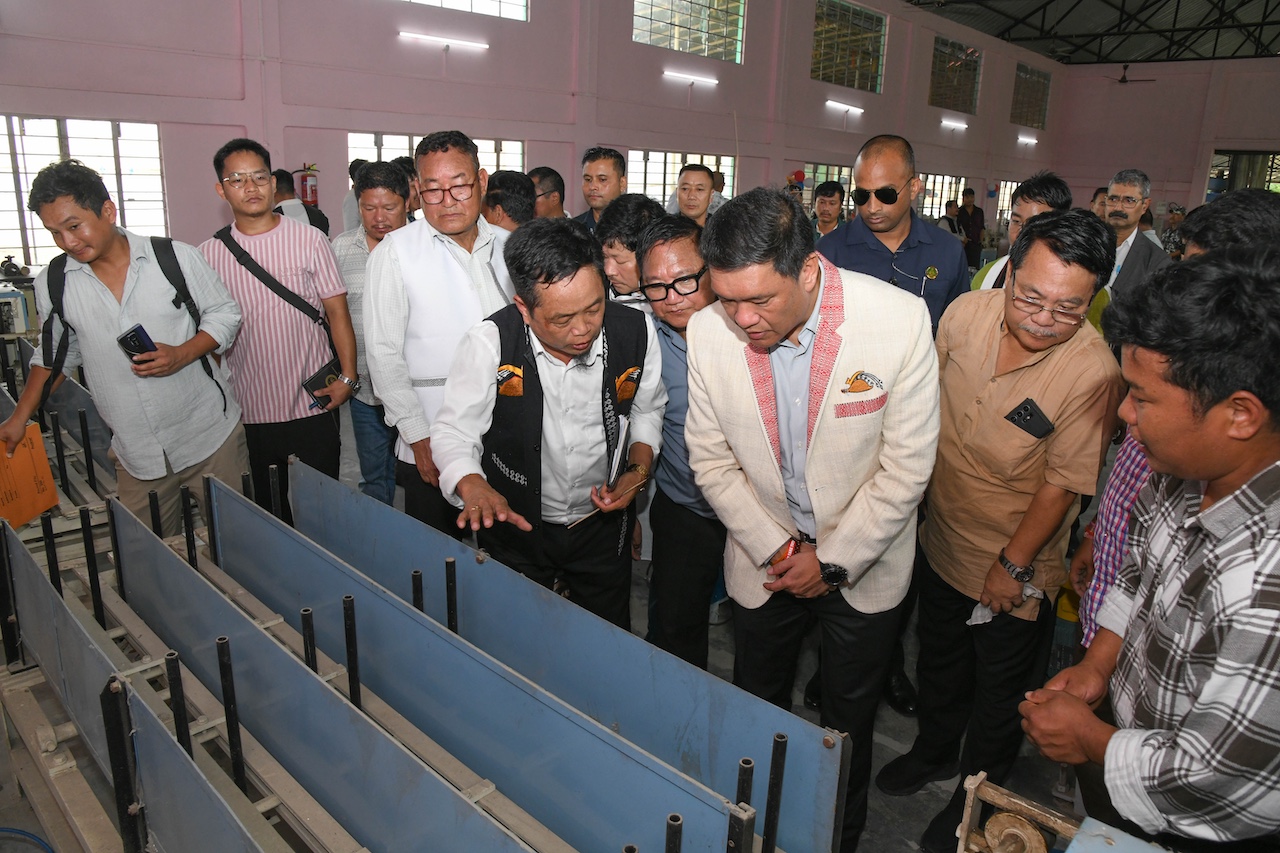
ITANAGAR, June 15: After inaugurating Arunachal Pradesh Bamboo & Cane Technology Centre BCTC) at Gungu near here on Monday, Chief Minister Pema Khandu termed bamboo as one of the state’s greatest natural strengths capable of driving sustainable economic growth, entrepreneurship, employment generation and environmental conservation.
The newly inauguratedBCTC would play a pivotal role in transforming state’s vast bamboo resources into value-added products while creating livelihood opportunities for local youth, artisans, self-help groups and entrepreneurs, he said.
Describing bamboo as an inseparable part of tribal life and culture, Khandu said bamboo has been deeply woven into the social, cultural and economic fabric of the state for generations.
“Bamboo is not a new subject for us. Long before modern institutions came into existence, bamboo played a central role in lives of our tribal communities. Across all 26 major tribes of the state, bamboo remained an integral part of daily life, culture and tradition,” he said.
Appreciating efforts of Arunachal Pradesh Bamboo Resources and Development Agency (APBRDA), Forest Department and all stakeholders involved in its establishment, he said the facility would serve as a hub for innovation, skill development, value addition and commercialization of bamboo-based products.
Referring to recent technological advancements in bamboo processing, he observed that bamboo is no longer limited to traditional handicrafts and household items but has emerged as a versatile industrial resource with applications ranging from furniture and construction materials to textiles, biofuel and aviation fuel.
Khanducredited Prime Minister Narendra Modi for bringing transformative reforms in the bamboo sector by removing bamboo from the category of trees under forest regulations and recognizing it as grass, thereby simplifying procedures related to cultivation, transportation and commercial utilization.
“Today bamboo is rightly called ‘Green Gold’. The state possesses 2ndlargest bamboo stock in the country and more than 60 bamboo species. We must harness this immense resource professionally and scientifically for the benefit of our people,” he said.
He called upon local youth, particularly unemployed youth of Gungu and Sangdupota areas, to utilize the training facilities available at the centre and develop entrepreneurial ventures based on bamboo products.
He urged PRI representatives, community leaders and local stakeholders to motivate young people to acquire skills through the centre and take advantage of various Govt schemes designed to promote entrepreneurship and self-employment.
Highlighting opportunities under Prime Minister’s UNNATI Scheme and various MSME programmes, he said bamboo-based enterprises have the potential to access national and international markets through modern e-commerce platforms such as Amazon and Flipkart.
He also advocated adoption of bamboo-based prefabricated housing technology across the Himalayan region as bamboo-based structures are cost-effective, lightweight, environmentally sustainable and better suited to seismic zones than conventional construction methods.
“Arunachal Pradesh falls in a high seismic zone-V. Bamboo-based prefabricated structures can provide sustainable and aesthetically appealing alternatives while preserving our traditional architectural heritage,” he said.
Emphasizing the need for innovation in infrastructure development, he called for greater research into region-specific technologies for roads, housing and public infrastructure suited to the climatic and geographical conditions of the Himalayan states, NE in particular.
Highlighting vast industrial potential of bamboo, including its use in textiles, furniture, handicrafts, biofuel production, ethanol manufacturing and sustainable construction materials, he cited example of Vietnam, where bamboo contributes significantly to the economy. “Our state should adopt a professional and market-oriented approach to developing its bamboo sector,” he said.
He stressed the need for a comprehensive bamboo policy and a scientific roadmap covering bamboo cultivation, processing, regeneration, marketing and industrial utilization. He directed APBRDAexperts, scientists and officials to prepare a long-term vision document and roadmap for bamboo development.
Bamboo flowering and regeneration cycles should be scientifically managed to ensure uninterrupted availability of raw materials, he said and called for expansion of similar bamboo technology and training centres to other parts of the state, particularly eastern and western to ensure wider access to training and livelihood opportunities.
Underlining importance of skill development in reducing dependence on outside labour and creating employment opportunities for local youth, he cited recent example of a group of Arunachalee youth trained by Govt-supported skilling programmes in electrical and plumbing project for ₹10 lakh, which costs ₹18 lakhoutside the state.
“This demonstrates the importance of skilling and self-reliance. This state has immense employment opportunities. We must equip our youth with necessary skills and reduce dependence on external manpower,” he said.
Highlighting the massive investments currently generated by hydropower projectsin the state, he said thousands of skilled workers would be needed in future to make skill development a critical priority.
He noted that Sangdupota and adjoining areas are poised to become an important growth corridor for the Capital Region. Several educational and institutional establishments, including NIT, Film & Television Institute, Law College and Women’s College, are already located in the area and future expansion is expected to take place in this area.
Responding to local demands, the CM assured support for strengthening water supply infrastructure and construction of a bridge to improve connectivity to the APBCTC. He directed departments concerned to prepare DPRsfor proposed projects for consideration by the GoAP.
Congratulating all associated with the initiative, the CM expressed confidence that the centre would emerge as a model institution for bamboo-based industrial development and significantly contribute towards building a self-reliant and sustainable economy in the state.
Forest & Climate Change department officers led by Minister Wangki Lowang, local legislator Nabam Vivek, APBRDA chairman Kipa Tatar, vice chairman Techi Necha, NEC member T N Thongdok, several chairmen and vice-chairmen of various boards and agencies were present. (CMO)


 20

