
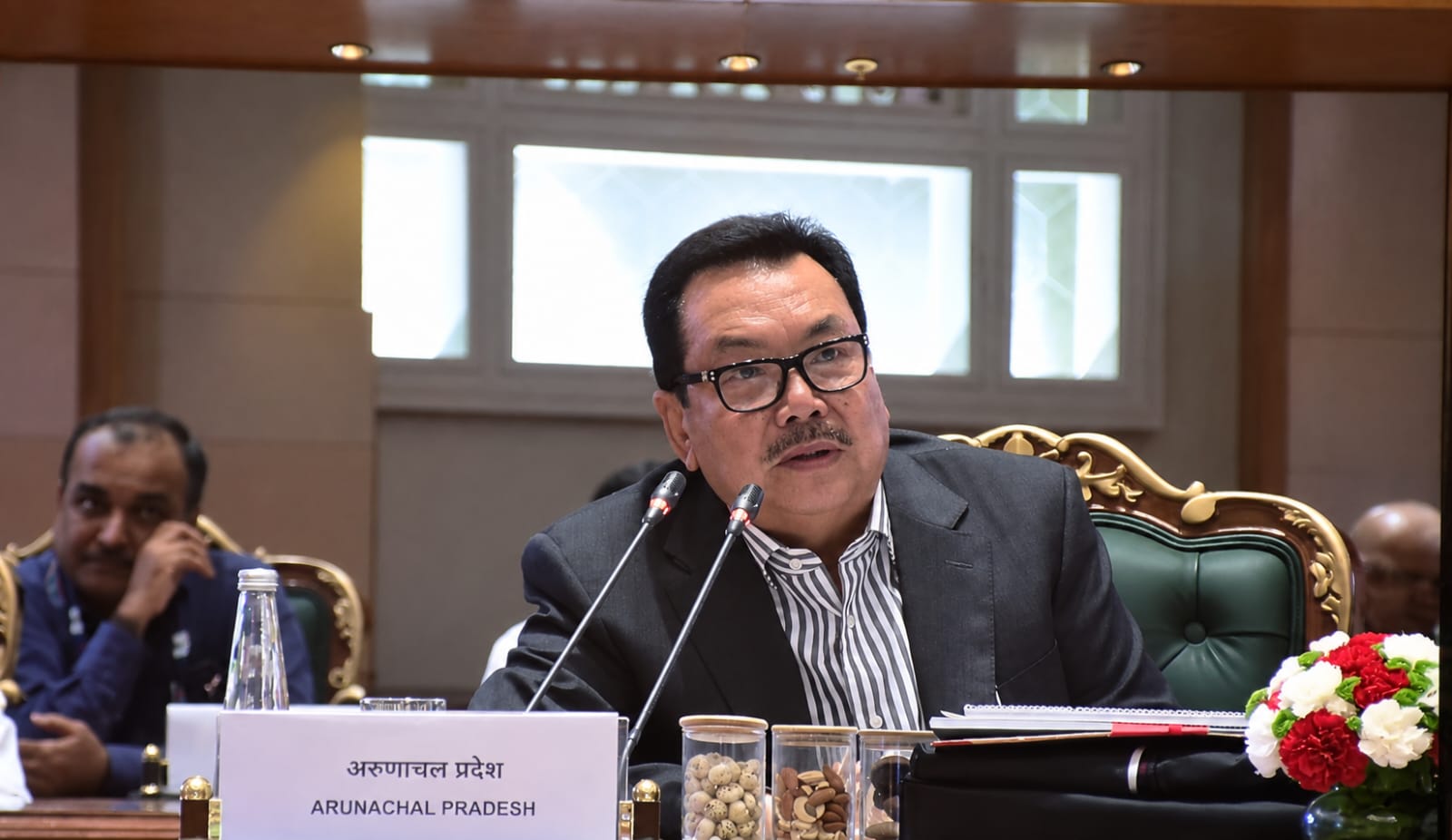
NEW DELHI, Sept 19: Deputy Chief Minister Chowna Mein, on second day of two-day conference on ‘Financing India’s journey towards a Viksit Bharat’ here on Saturday, highlighted Arunachal Pradesh’s immense hydropower potential and its strategic importance in India’s clean energy transition.
Mein, taking part in ‘Financing the energy transition’, said that hydropower is critical to achieving India’s clean energy goals, providing stable and dependable renewable power while complementing solar and wind energy. He stressed that the responsible development of hydropower resources is not merely a state-level priority but a national strategic opportunity.
With an assessed hydropower potential of nearly 58,000 MW, accounting for around 40% of India’s total hydropower potential, Arunachal Pradesh is uniquely positioned to contribute substantially to the country’s energy security and non-fossil energy ambitions. The State has set an ambitious target of harnessing 40 GW of hydropower capacity by 2047.
Highlighting progress made, he said that installed hydropower capacity has grown from 405 MW in 2016 to to 2,270 MW following recent commissioning of Subansiri Lower Project.
He outlined state’s vision under the ‘Decade of Hydropower 2025–35’, which envisages commissioning 19 GW of new hydropower capacity, backed by an investment pipeline of approximately ₹1.9 lakh crore. Around 19,000 MW is already at various stages of development, including 4,880 MW under construction. The sector is expected to generate over 30,000 direct and 16,000 indirect employment opportunities.
Mein stressed that power generation and transmission must advance together. Given state’s remote and challenging terrain, he called for integrated planning of hydropower projects with high-capacity transmission systems and renewable energy aggregation infrastructure to ensure timely and efficient evacuation of power to the State grid and interstate network.
He underlined importance of greater private sector participation in developing state’s remaining hydropower potential and sought continued support from the GoI through appropriate incentives and facilitation mechanisms to accelerate hydropower development in Arunachal Pradesh.
He reiterated that with responsible development, strong transmission infrastructure and greater investment participation, the state could emerge as a major contributor to India’s clean energy transition, while creating significant opportunities for employment, entrepreneurship and inclusive economic growth. (PRO)


 20

