
- NDA made QCCJ defunct
By Pradeep Kumar
ITANAGAR, Sept 19: The attack on All Arunachal Pradesh Students’ Union (AAPSU) executive body member during the SIR process at Bordumsa on 04.09.26 has raised concerns and called for actions.
Though the incident led to heightened security measures in the area and a demand for an inquiry into circumstances surrounding the attack, AAPSU president Meje Taku had demanded suspension of SIR process in state’s Chakma and Hajong-inhabitted areas and arrest of those involved.
Meanwhile, the Chakma Development Foundation of India (CDFI) has sought intervention of National Human Rights Commission (NHRC) regarding alleged prevention of Chakma electors from appearing in SIR hearing.
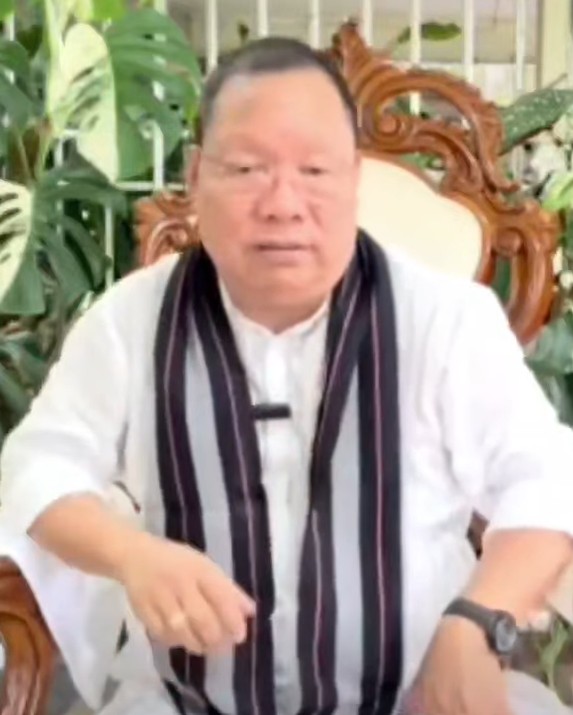
However, former Lok Sabha member-cum-former AAPSU president and ANSU president Takam Sanjoy, reacting on the issue, questioned the status of a Quadripartite Committee comprising of Govt of India, Govt of Arunachal Pradesh, AAPSU and Chakma organisations to resolve decade-long pending issue of Chakma and Hajong.
In an exclusive interview to this daily over telephone on Friday, the former sate IPR Minister, said that large number of ethnic Chakma and Hajong were dislocated from Chittagong Hill Trats of then Bangladesh after construction of Kaptai Dam during 1959–1963 by the then Govt in Chakma areas submerging their cultivable lands and religious persecution 100,000 Chakma-Hajongs were displaced who during 1964–1969 migrated to India and rehabilitated, including in then NEFA (present Arunachal Pradesh), which was under Ministry of Eternal Affairs, not Ministry of Home Affairs
“We never chased away these refugees forcefully from the state.
This sensitive border state has been facing important issues, like, infiltration of foreigner Bangladeshis, despite no border with Bangladesh.
“Chakama-Hajong refugees were taken by train to Bihar and they were not allowed to get down and brought back again. They were rehabilitated in Hollongi, Borduma, who later encroached into reserve forest.
“Many well-to-do people used them as labourers for cultivation. As these refugees were expert farmers, they became main suppliers of vegetables.
“I became part of anti-Chakma-Hajong movement as president of AAPSU, which has been very clear that Arunachal Pradesh has not taken any contract to rehabilitate these refugees.
“The GoI has not been very supportive. These refugees could have been distributed across the country, like the Tibetans settled in Karanataka, Lohit and West Kang districts (Arunachal Pradesh). Such prompt initiative should have been taken for these refugees. But this did not unfortunately happen.
“Arunachalees became friends of Chakmas, gave them shelters, land in the form of lease for cultivation to earn their livelihood. But sometimes they became very cruel and arrogant, started encroaching upon local land and reserve forest measuring 100s of sqkm.
“Interestingly, the GoI has been a silent onlooker while the GoAP under the influence of AAPSU and ANSU has been pushing the refugees. One of the largest rallies was conducted at Namsai in 1993 to draw attention of the GoI that we are not against human rights, but want a permanent and acceptable solution to the decades-old imbroglio.
“Why should Arunacahlees be alone forced to face these arrogant refugees? This became a very serious socio-economic, law and order issue as Arunachal Pradesh is most sensitive in the world. We are neighbour of China and confronted the 1962 trauma. Such land encroachment is continuing from Myanmar and China too converting this state into a hot spot of law and order.
“The law-and-order situation escalates internal security, conflict between three nations sharing borders. But, after NEFA came under the MoA in a democratic setup, we Arunachalees enjoyed rights on land and natural resources. But, Chakma-Hajong was not a big issue for the GoI to intervene and solve.
“When Congress ruled in the Centre and the state, the GoAP did not deal with the issue properly nor the GoI guided how to tackle the issue. Students’ movement only prolonged the issue, when I was heading APPSU during 1982-1985.Even AAPSU was defunct for five years on the issue. There used to be misunderstanding between the GoAP and the AAPSU. GoAP was accusing AAPSU as a political tool and AAPSU used to blame the ruling and the opposition for inability to act.
Though ANSU took over the issue proactively, but some Chakmas had left Hollongi and shifted to Namsai, Bordumsa, Miao and other areas of the state.
In 2015, the Supreme Court of India had directed the GoI and the GoAP to grant citizenship on eligible Chakmas. The AAPSU and GoAP protested.
India hosts around 228,000 Chakmas according to the 2011 Census, primarily in Mizoram (-92,850), Tripura (-84,269), Arunachal Pradesh (-47,073), Assam, Meghalaya, Nagaland and West Bengal and recognized in India as a Scheduled Tribe across these NE states.
It was the GoAP-led by then chief minister Gegong Apang realized the AAPSU’s genuine stand on Chakma issue and its far-reaching consequences the for the future generations if the refugees continue to live in the state. The GoAP worked with AAPSU on the issue. I and many former AAPSU leaders became MLA and I became law minister in Apang ministry. The Gauhati High Court Itanagar permanent bench was set up at Naharlagun followed by separation of the judiciary from the executive.
When I became personnel and administrative reforms minister in Mukut Mithi Govt, I was instrumental in introducing 80% reservation policy for APST and 20% general on merit, roster and promotion system.
The referendum rally against Chakma had resolved for state politicians to resign from their respective party in protest. But, the GoI failed to understand the deep-rooted philosophy of the people. In 2009, I became Lok Sabha member when intellectual Dr Manmohan Singh was Prime Minister.
When I through Congress Parliamentary Party chairperson Sonia Gandhi approached the PM on the issue, who within nine months approved formation of a quadrative committee, headed by joint secretary (NE), on 10.08.2010 to examine various issues relating to settlement of Chakmas & Hajongs, including possibility of grant of Indian citizenship to eligible Chakmas/Hajongs and to recommend measures to be taken by GoI and GoAP in the matter.,
The committee comprising of GoI, GoAP, Chakma representatives, Tirap, Changlang & Longding DCs as special invitees, had first time met 09.01.2012 and decided that decided the GoAP would consider grant of citizenship to eligible Chakmas and Hajongs who were settled in the state between 1964-69 after a joint field verification by AAPSU & Committee for Citizenship Rights on Chakma & Hajongs of Arunachal Pradesh (CCRCHAP).
In 2014, the NDA Govt came, I was defeated and Kiren Rijiju as elected, who was made MoS for Home Affairs. Where is the Quadrative Committee on Chaka-Hajong issue (QCCH), a most important step for a dialogue?
Rijiju became Law Minister too. But the NDA regrettably made QCCH defunct, Sanjoy said, adding present APPSU president has volcanized the issue. It is high time for the GoI to be proactive to solve this issue, he added.


 20

