
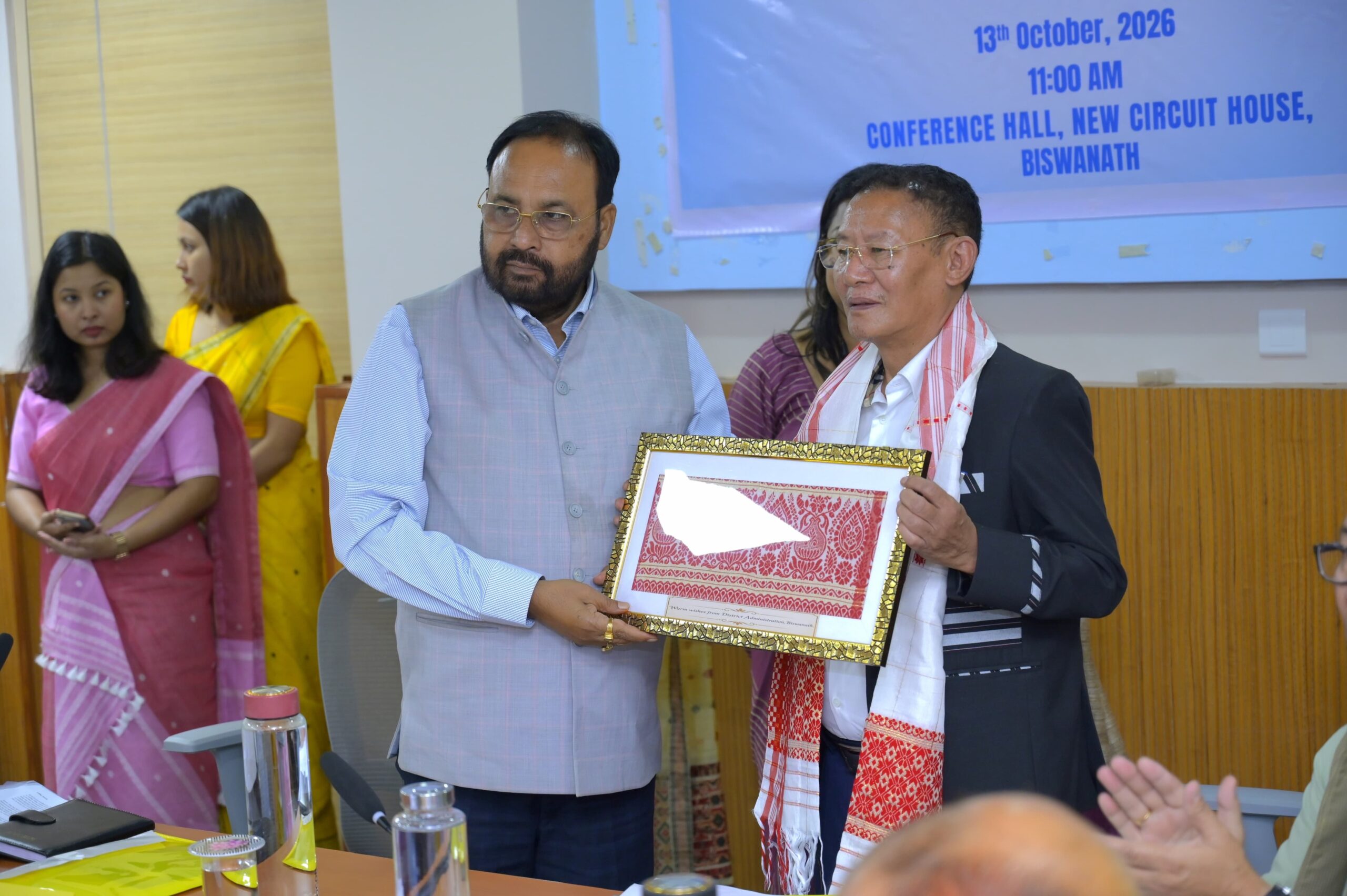
BISWANATH, Oct 13: The second Regional Committee meeting on inter-state boundary issues involving Papum Pare district of Arunachal Pradesh and Lakhimpur and Biswanath districts of Assam was held at Biswanath Circuit House here on Tuesday.
Arunachal Pradesh Regional Committee delegates Doimukh MLA Nabam Vivek, Border Affairs Secretary-cum-Papum Pare DC Mamu Hage, SP Taru Gusar and senior administrative officers, led by its chairman Urban Affairs, Land Management and Civil Aviation Minister Balo Raja attended the meeting.
Assam delegation was led by Biswanath and Lakhimpur Regional Committee Chairman Revenue Minister Keshab Mahanta. Education Minister Ranoj Pegu. MP Ranjit Dutta, MLAs Utpal Borah, Pallab Lochan Das, Murindra Das, Bhupan Kumar Borah and Rishiraj Hazarika, Additional Chief Secretary L.S. Changsan, Lakhimpur and Biswanath DCs and DFOs were members.
After giving detailed PowerPoint, Papum Pare and Biswanath DCs briefed the committee on the background, chronology of events and measures taken so far to resolve the outstanding disputes and differences. After first Regional Committee meeting on 09.01.23, both sides had conducted visits by respective regional committees, joint inspections by district administrations and held subsequent discussions at their levels. Based on the ground realities observed across the disputed areas and villages, both sides submitted their suggestions.
Both states had constituted regional committees for their respective districts in accordance with Namsai Declaration, signed by chief ministers of both states on 15.07.22 to resolve disputes relating to 86 villages. Today’s meeting focused on boundary issues involving villages in Biswanath and Lakhimpur districts.
At the first regional committee meeting in January 2023, both sates had agreed to identify uninhabited land for exchange in lieu of the inhabited villages located beyond three kilometres from the high-powered tripartite committee identified boundary line of both states through continuous dialogue within six months. This exercise could not be completed within stipulated period due to several factors, including general elections and panchayat & local body elections of both states.
During deliberations, the regional committees were informed that the villages had been classified into three categories: nine villages under Category I – where there is no dispute; 22 villages under Category II – where minor disputes remain; and two villages under Category III – where consensus is yet to be achieved.
After hearing both sides, chairpersons of regional committees called for strict adherence to maintain status quo as of the cut-off date decided at the first regional committee meeting. No further encroachment or felling of trees shall be permitted on either side. First information reports registered against officials of both sides shall be withdrawn with due process. Immediate action shall be taken to erect boundary pillars along the villages under Category I. Minor disputes concerning all villages under Category II shall be settled, following which the same action prescribed for Category I shall be taken wherever possible at district administrative level.
A feasible roadmap shall be prepared to resolve disputes concerning villages under Category III, with the involvement of the local MLAs from both sides, the district administrations and residents of the affected areas. The district administrations shall take the necessary steps to place the matter before the Survey of India for proper demarcation of the settled areas at the earliest, and not later than two months from today. The next regional committee meeting to be held by December end to resolve all outstanding disputes in the best interests of the people of both states, in keeping with the commitment made by both CMs under Namsai Declaration, according to an official release.


 20

