
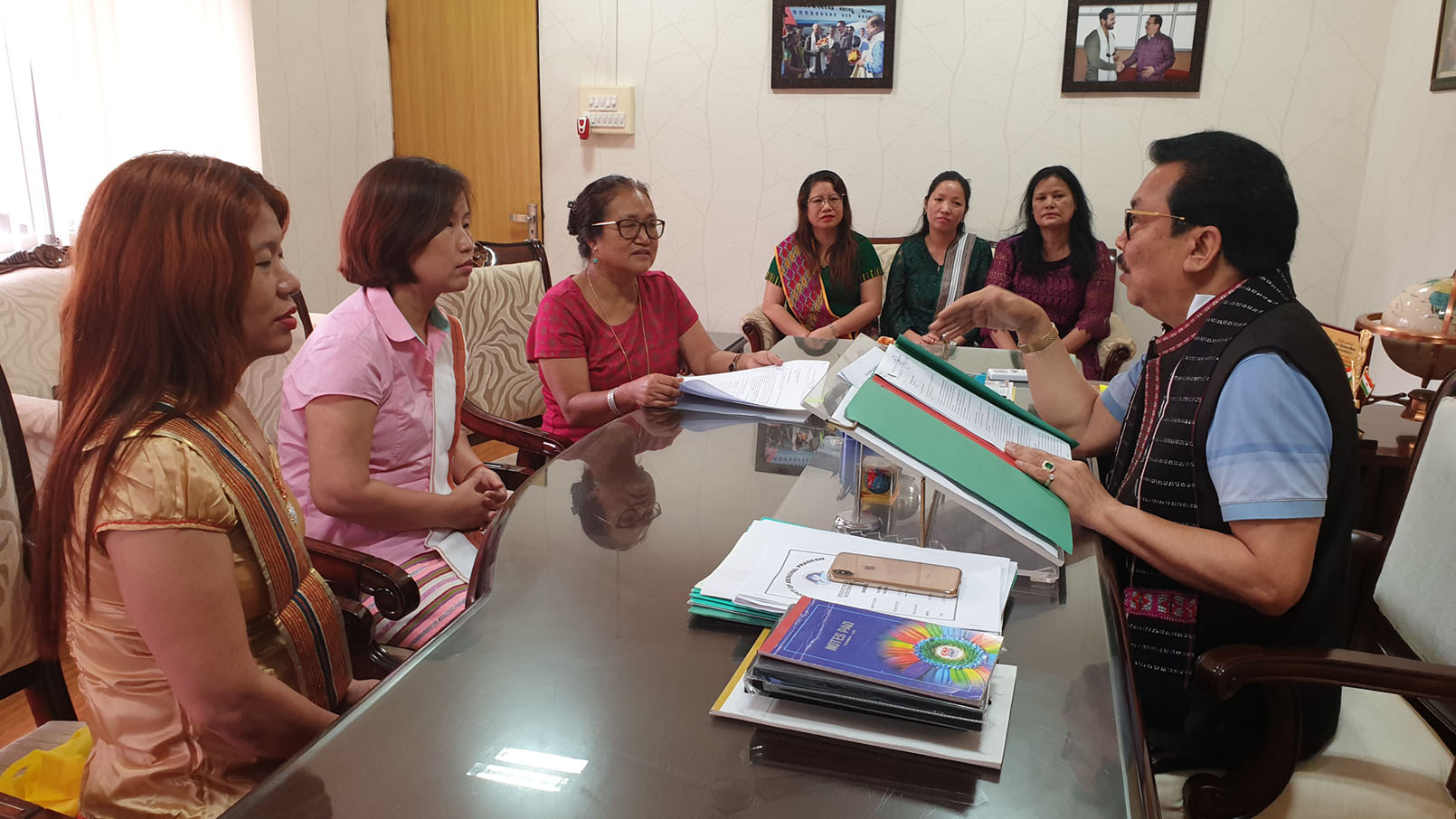
ITANAGAR, July 07: Arunachal Pradesh State Commission for Women (APSCW) members led by its chairperson Radhilu Chai Techi called on Deputy Chief Minister Chowna Mein here on Sunday and reiterated the necessity to enact laws for compulsory registrations of marriages.
There is continuous rise of crime against women and domestic violence, she said while highlighting various issues related to women and children in the state. The APSCW is independent and functions as a quasi-judicial body with powers of a civil court in matters relating to evidence, she said, adding most complaints and cases received are related to marriages and domestic violence. Thus, she urged the GoAP to evolve feasible act to tackle the menace besides suggesting installing CCTV at all prime locations in Capital Complex to check growing rise of crime against women.
They also expressed grave concern over continuous rise of menace of drug-addiction among state youths for which it had drawn the attention of Chief Minister Pema Khandu recently with a plea for budget provisions to set drug rehabilitation centres and juvenile observation homes with proper facilities and manpower.
It also raised 33% job reservation in assembly for womenfolk, which if materializes would be one of the greatest achievements of Pema-led Govt.
The members – Heyomai Towsik (vice chairperson), Hoksum Ori, Likha Joya, Techi Hunmai and Yame Higio (member-secretary) – demanded immediate setting up of permanent office building, creation of regular posts for APSCW office to work efficiently and deliver justice to needy women besides drew his attention for creating independent plan head of commission and special loan provisions with subsidy for state’s women entrepreneurs.
Congratulating Mein on resuming the post again, they exuded confidence that women-sensitive issues and welfare measures would be taken up by the GoAP and various issues and challenges confronting the APSCW readdressed. It also thanked the GoAP for extending maternity leave and child care leave benefits to women contingency and contractual employees.
While acknowledging the proactive role of the APSCW, the DyCM assured to look into their


 20
