Indian media 2nd most untrusted globally
World Economic Forum (WEF) survey has labeled Indian media globally “most untrusted institution”, 2nd after Australia, while India had emergedthe most trusted nation for its institutions worldwide in “global implosion of trust” by 2017 Edelman Trust Barometer, released on 16.01.17.
This justifies my definition of media (mein diya – I gave), means a society gets what it deserves. If expectations are reciprocal, India got whatever it deserved from media, nothing more or nothing less.
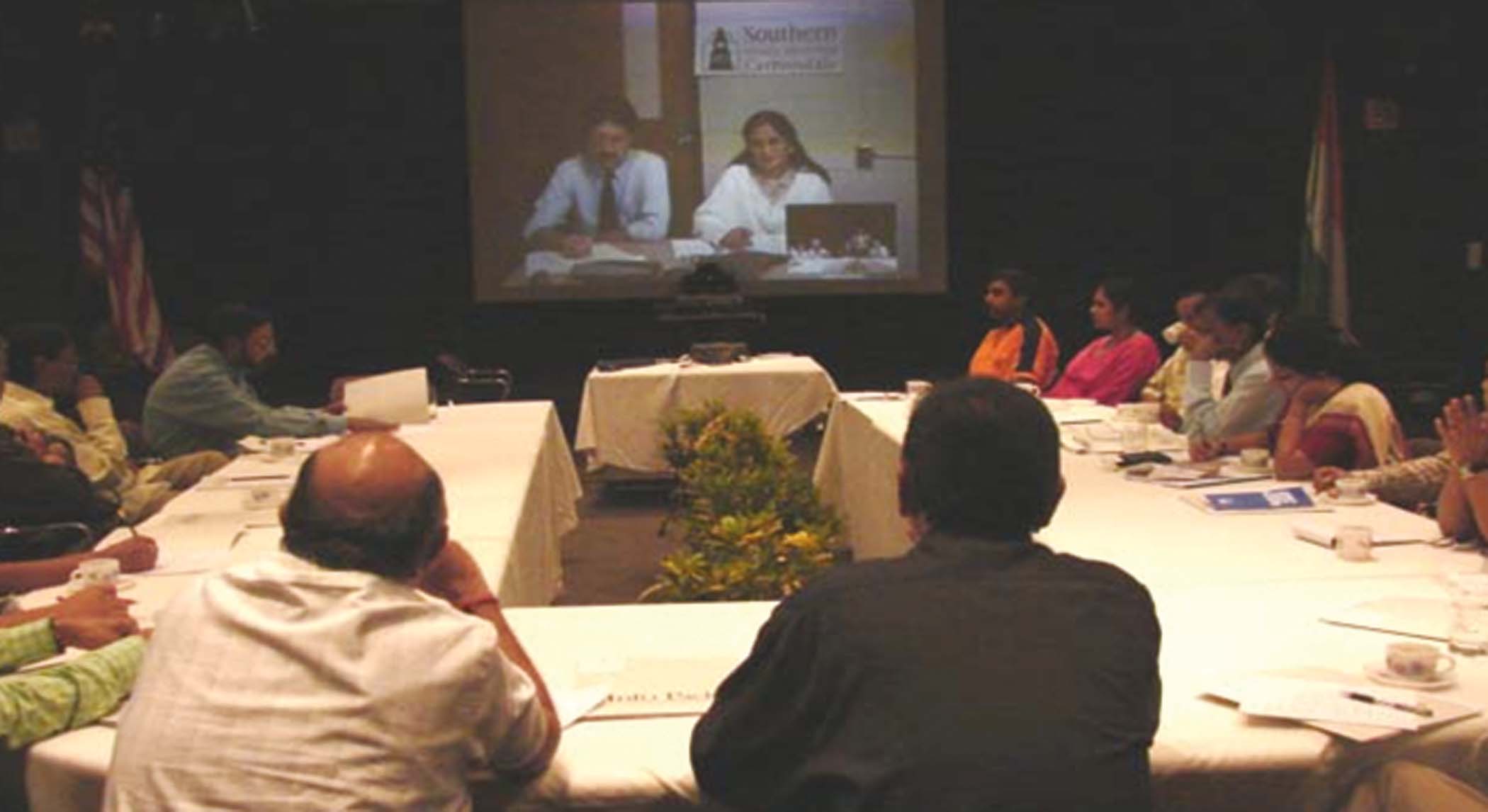
This reminds me the teleconferencing with Dr. James D Kelly & Dr. Jyotika Ramaprasad, both associate professors of School of Journalism, Southern Illinois University, held at Calcutta-based American Center in July 2006.
USA journalism schools never produced a fraction of journalists working in electronic and print media in America, Dr. Kelly had said, adding courses offer good lessons on fundamental subjects, art of writing & practical training.
American media was no exception to the oft repeated criticism of profit-oriented motive, Dr. Ramaprasad, responded to a query, adding profit and service were a conflict for decades.
A journalist covering a programme would accept nothing, not even drinks, considered inducement in USA, while in many third world and developing nations the ill-paid scribes accept gratification for their sustenance, both of them had informed. However, of late journalists were not taking decisions as media organizations were run by non-journalists, they reasoned.
US has more resources to divert for pressing problem unlike India, Dr. Ramaprasad, an Indian, had said, advocating soul searching by the Govt, the people, journalists, NGOs, educators have to realize that social issues, like education and health care have to be brought to the forefront. If Indian journalists and NGOs fail to realize, particularly take up the grave threat of AIDS, the country would wake up to face a bleak future, she cautioned.
Journalism schools in USA never produced a fraction of journalists working in electronic and print media in America, Dr. Kelly said, adding the course offered good lessons on fundamental subjects, art of writing and practical training.
American media was no exception to the oft repeated criticism of profit-oriented motive, Dr. Ramaprasad responded to a query, adding profit and service were a conflict for decades.
A journalist covering a programme would accept nothing, not even drinks, considered inducement in USA, while in many third world and developing nations the ill-paid scribes accept gratification for their sustenance, both the teachers informed. However, of late media organizations were run by non-journalists and journalists were not taking decisions, they added.
US has more resources to divert for pressing problem unlike India, she said, advocating soul searching by the Govt., the people, journalists, NGOs, educators have to realize that social issues, like education and health care have to be brought to the forefront. If the journalists and NGOs in India fail to realize and take up the grave threat of AIDS, the country would wake up to face a bleak future, she cautioned.
Senior NE journalists and city besides NGOs involved in health sector took part in the event, part of an interactive roundtable discussion on ‘Social responsibility of the mainstream media’.
“Crime, cricket, celebrities and politics were the buzzword of present day media reflecting negativity”, The Arunachal Times Editor Pradeep Kumar said, citing the example of Manorama Devi’s death that had drawn global attention. The media beyond the NE has failed in its responsibility to cognizance of agonies of women, shackled by the traditional practice & gang raped by army personnel in the region, particularly in Arunachal Pradesh, he added.
Jharkhand edition of The Telegraph, Resident Editor Uttam Sengupta minced no words in describing how present genre scribes without any commitment has joined journalism as a profession of glamour. Though mostly products of public schools but lacked the concept, drive, research & hard work resulting in poor show of today’s media. His views were endorsed unanimously by the house, which questioned the very term ‘mainstream media’.
The American Centre’s Nilanjan Hajra, instrumental for the event, advocated research like that of America to suggest guidelines to make media more effective and committed to the society.
Highlighting media’s important role in a democracy and how American Govt was promoting its relations with India by sharing the country’s various concerns ranging from health to developmental issues, US Consul General Henry V Jardine said that media has a pivotal role to play by committing itself to humanitarian causes and sought participating scribes’ views on the theme.
The interactions, however, had reflected how the basic sanctity of media had disappeared after it became part of consumerism. Nothing was untouchable for the sake of money, while media was reacting to only crisis situation and failing to maintain continuity and consistency on important issues related to the masses.
Indian media globally “most untrusted institution”, was the outcome of a survey conducted by Eldmen Trust on behalf of WEF, which it has been doing for more than 20 years in media, Govt & business fields in more than 38 nations covering 33,000 people.
This year’s survey recorded largest-ever drop of trust in business, Govt, media, and NGOs. A majority of people in 2/3rd of countries surveyed now distrust these institutions, with all-time low levels of trust recorded in a number of places. In short, there has been a “global implosion” in trust.
The media took a beating in Edelman’s latest survey, with 43% of respondents expressing trust in the press, down from 48% in 2016. Trust in media fell to an all-time low in 17 of the 28 nations polled.
“People now view media as part of the elite,” said Eldmen Trust president Richard Edelman. These days, that’s an uncomfortable place to be.
‘India most trusted nation in terms of institutions’
However, faring better than 2016, India had emerged as the most trusted nation in terms of its institutions by general population even as there has been a “global implosion of trust” worldwide, says a survey.
Indian Govt is also the 2nd most trusted after neighbouring China, according to 2017 Edelman Trust Barometer released on 16.01.17 ahead of the World Economic Forum (WEF) annual meet here.
This year’s barometer showed the largest-ever drop in trust across the institutions of Govt, business, media and NGOs. The conclusions are based on an online survey of more than 33,000 respondents conducted during Oct 13 – Nov 16, 2016.
Among the 28 nations, India has emerged as the most trusted nation in terms of institutions with 72% of respondents from general population feeling so. India is followed by Indonesia (69%), China (67%), Singapore and UAE (both at 60%). In 2016, India was 3rd most trusted after China and UAE.
According to public relations major Edelman, trust has declined in 21 out of 28 countries – “the broadest declines since beginning general population tracking in 2012”. Globally, the trust level decreased to 47% in 2017 from 50% in 2016. The barometer “reveals global implosion of trust,” Edelman said.
In terms of trust in Govt, China tops the league with 76% trusting its Govt followed by India with 75% respondents feeling so. The figure is 75% of UAE, followed by Indonesia (71%) and Singapore (69%). Out of the 28 countries, there was distrust in Govt in 75% of the nations.
“Trust in media (43%) fell precipitously and is at all-time lows in 17 nations, while trust levels in Govt (41%) dropped in 14 markets and is the least trusted institution in half of the 28 nations surveyed.
“The credibility of leaders also is in peril: CEO credibility dropped 12 points globally to an all-time low of 37%, plummeting in every country studied, while Govt leaders (29%) remain least credible,” the report said.
As many as 53% of respondents believe that the current overall system has failed them as it is unfair and offers little hope for the future whereas only 15% believe it is working.
“Even the elites have a lack of faith in the system, with 48% of top quartile in income, 49% of college-educated and a majority of well-informed (51%) saying the system has failed,” the report said. (with inputs of agencies)


 20