Deforestation causing 11% GHG emissions
Arunachalees conservators of ecosystem
As the world seeks to slow the pace of climate change, preserve wildlife and support billions of people, trees inevitably hold a major part of the answer. Yet the mass destruction of trees or deforestation continues, sacrificing long-term benefits of standing trees for short-term gain. Deforestation is a primary contributor to climate change. As of 2019, deforestation is responsible for about 11% of global greenhouse gases (GHGs) emissions.
GHGs are mainly carbon dioxide, methane, chlorofluorocarbon (CFC) and ozone. These gases are called GHGs because their presence in the atmosphere lends the same effect as a green house creates on its ambience, the warming by not allowing heat to escape. Deforestation and the ever rising emission by the industries and vehicles, excessive use of CFC in cold storage, refrigerators, sprays, open-air decaying of human and vegetable wastes, heavy burning of fossil fuels are some of the most important contributors to increase in build-up of GHGs in the atmosphere and eventual global warming.
Forests still cover about 30% of the world’s land area, but they are disappearing at an alarming rate. Between 1990 and 2016, the world lost 1.3 million sqkm of forest, according to World Bank,an area larger than South Africa. Since humans started cutting down forests, 45% of trees have been felled, according to a 2015 study in journal Nature. About 17% of Amazonian rainforest has been destroyed over the past 50 years, and losses recently have been on the rose.
We need trees for a variety of reasons, not least of which is that they absorb not only the carbon dioxide that we exhale, but also the heat-trapping greenhouse gases that human activities emit. As those gases enter the atmosphere, global warming increases, the trend scientists call climate change. Tropical tree cover alone can provide 23% of climate mitigation needed over the next decade to meet goals set in 2015 Paris Agreement, according to one estimate.

Growing forests as a carbon sink and also potential to mitigate effects of climate change. Thus, tree plantation is always a part of VVIP’s progrmme to encourage the masses to follow suit.
But Arunachal Pradesh, with over 50,000 sq km of moderate to very dense forests, covering 82% of its geographical area, is equivalent to 550 million cubic metre growing stock or living assets (equivalent to 2000 million metric tons of carbon dioxide) that serves as one of the major ‘carbon sinks’ or ‘lungs’ of the globe, State Forest Research Institute director P Subramanyam had said while taking part in DDK’s 6th Arunachal Ki Awaaj on ‘Creativity in conservation’ on 16.05.12.
Describing carbon as “a blanket of the earth to allow life to sustain,” he had said Arunachal and Arunachalees have been shouldering a huge responsibility as conservators of the great ecosystem through their traditions and customs.
“Every human action – from the use of fossil fuel to setting up industries – is affecting the ecosystem. We want development for a comfortable life, but for what gain – short term or long term? Maintaining of the human pyramid along with development is called human chain development,” he had said.
Considering the destructive effects of human activities, the concept of ‘development and environment’ has changed to ‘green development’ to strike a golden mean between development and conservation, while also adopting new methods of lifestyle in tune with the inevitable impacts of climate change, he had said, to supplement the views of PCCF BS Sajwan on state action plan on climate change of the state, 1st in the NE region to prepare.
I as anchor had cited the pioneering examples of Arunachalees, like joint effort of Winrock International India and Yuva Arunachal, supported by Lumla MLA JambeyTashi to plant 3,000 saplings to protect the famous Tawang Monastery from the threat of landslides.
By Pradeep Kumar
Scientists are observing changes in the Earth’s climate in every region and across the whole climate system, according to latest Intergovernmental Panel on Climate Change (IPCC) report, released on 9th August last in Geneva. Many of the changes observed in the climate are unprecedented in thousands, if not hundreds of thousands of years, and some of the changes already set in motion, like continued sea level rise, are irreversible over hundreds to thousands of years.
However, strong and sustained reductions in emissions of carbon dioxide (CO2) and other greenhouse gases would limit climate change. While benefits for air quality would come quickly, it could take 20-30 years to see global temperatures stabilize, according to the IPCC Working Group I report, Climate Change 2021: the Physical Science Basis, approved by 195 member governments of the IPCC, through a virtual approval session that was held over two weeks starting on July 26 last.
The Working Group I report isf first instalment of IPCC’s sixth assessment report (AR6), which will be completed in 2022.
“This report reflects extraordinary efforts under exceptional circumstances,” IPCC chair Hoesung Lee said, adding: “The innovations in this report and advances in climate science that it reflects, provide an invaluable input into climate negotiations and decision-making.”
Faster warming: The report provides new estimates of chances of crossing the global warming level of 1.5°C in the next decades and finds that unless there are immediate, rapid and large-scale reductions in greenhouse gas (GHG), emissions limiting warming to close to 1.5°C or even 2°C will be beyond reach.
The report shows that emissions of greenhouse gases from human activities are responsible for approximately 1.1°C of warming since 1850-1900, and finds that averaged over next 20 years, global temperature is expected to reach or exceed 1.5°C of warming. This assessment is based on improved observational datasets to assess historical warming, as well progress in scientific understanding of the response of the climate system to human-caused GGEs.
“This report is a reality check,” said IPCC Working Group I co-chair Valérie Masson-Delmotte. “We now have a much clearer picture of the past, present and future climate, which is essential for understanding where we are headed, what can be done and how we can prepare.”
Every region facing increasing changes: Many characteristics of climate change directly depend on the level of global warming, but what people experience is often very different to the global average. For example, warming over land is larger than the global average, and it is more than twice as high in the Arctic.
“Climate change is already affecting every region on Earth in multiple ways. The changes we experience will increase with additional warming,” said IPCC Working Group I Co-Chair Panmao Zhai.
The report projects that climate changes will increase in all regions in coming decades. For 1.5°C of global warming, there will be increasing heat waves, longer warm seasons and shorter cold seasons. At 2°C of global warming, heat extremes would more often reach critical tolerance thresholds for agriculture and health, the report shows.
But it is not just about temperature. Climate change is bringing multiple different changes in different regions – which will all increase with further warming. These include changes to wetness and dryness, to winds, snow and ice, coastal areas and oceans. For example:
Climate change is intensifying the water cycle. This brings more intense rainfall and associated flooding, as well as more intense drought in many regions.
Climate change is affecting rainfall patterns. In high latitudes, precipitation is likely to increase, while it is projected to decrease over large parts of the subtropics. Changes to monsoon precipitation are expected, which will vary by region.
Coastal areas will see continued sea level rise throughout the 21st century, contributing to more frequent and severe coastal flooding in low-lying areas and coastal erosion. Extreme sea level events that previously occurred once in 100 years could happen every year by the end of this century.
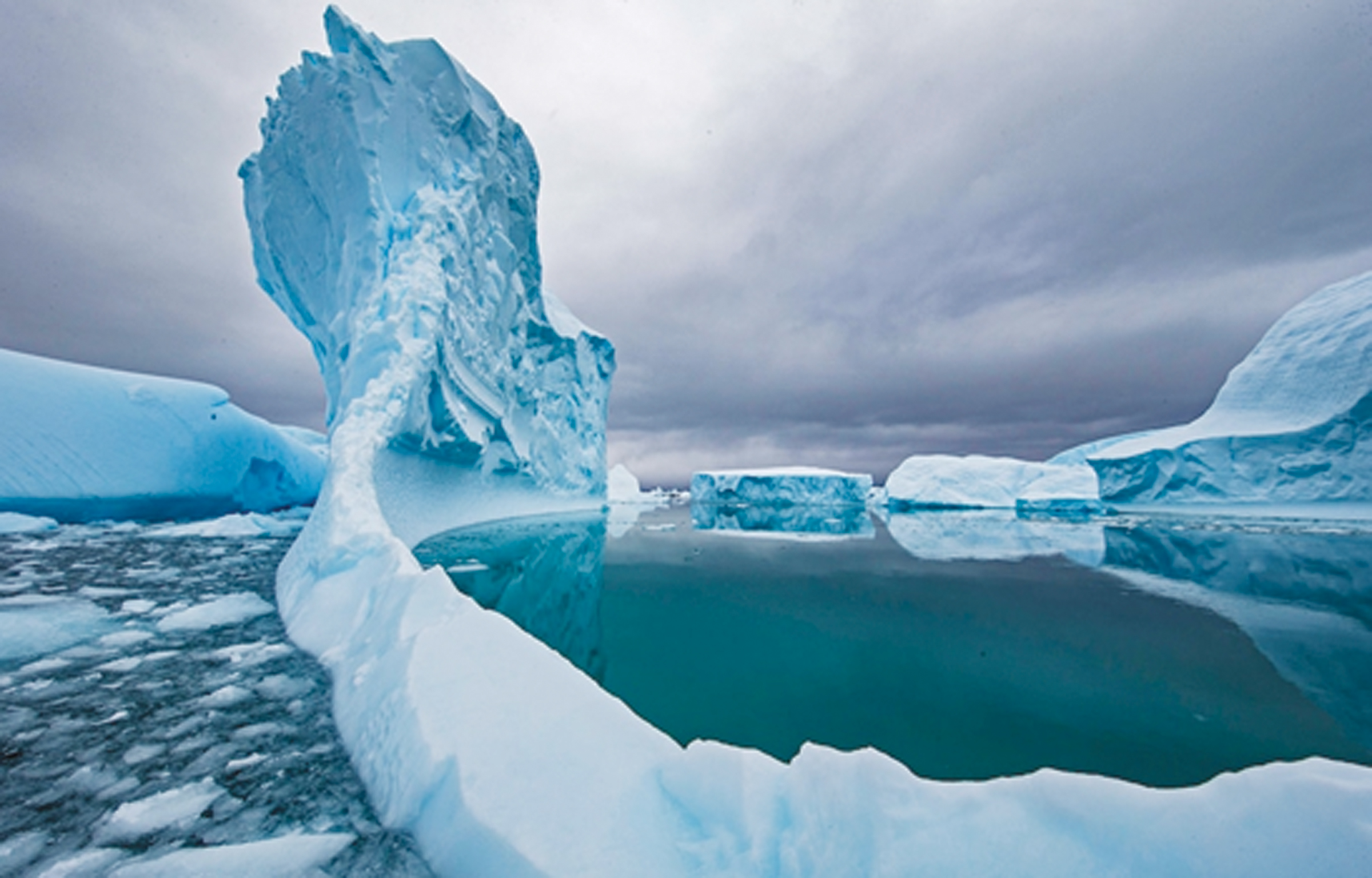
Further warming will amplify permafrost thawing, and the loss of seasonal snow cover, melting of glaciers and ice sheets, and loss of summer Arctic sea ice.
Changes to the ocean, including warming, more frequent marine heat waves, ocean acidification, and reduced oxygen levels have been clearly linked to human influence. These changes affect both ocean ecosystems and the people that rely on them, and they will continue throughout at least the rest of this century.
For cities, some aspects of climate change may be amplified, including heat (since urban areas are usually warmer than their surroundings), flooding from heavy precipitation events and sea level rise in coastal cities.
For the first time, the AR6 provides a more detailed regional assessment of climate change, including a focus on useful information that can inform risk assessment, adaptation, and other decision-making, and a new framework that helps translate physical changes in the climate – heat, cold, rain, drought, snow, wind, coastal flooding and more – into what they mean for society and ecosystems.
This regional information can be explored in detail in the newly developed Interactive Atlas interactive-atlas.ipcc.ch as well as regional fact sheets, the technical summary, and underlying report.
Human influence on past & future climate: “It has been clear for decades that the Earth’s climate is changing, and the role of human influence on the climate system is undisputed,” said Masson-Delmotte. Yet the new report also reflects major advances in science of attribution – understanding the role of climate change in intensifying specific weather and climate events such as extreme heat waves and heavy rainfall events.
The report also shows that human actions still have the potential to determine the future course of climate. The evidence is clear that carbon dioxide (CO2) is the main driver of climate change, even as other GHGs & air pollutants also affect the climate.
“Stabilizing the climate will require strong, rapid and sustained reductions in GHG emissions, and reaching net zero CO2 emissions. Limiting other GHGs and air pollutants, especially methane, could have benefits both for health and the climate,” said Zhai. (Courtesy: National Geographic)


 20