
Beyond the Horizon
By Pradeep Kumar
Many may not be aware of the in-depth research conducted by Hollywood producers before shooting any film. Moreover, it is intriguing to think that Hollywood films have also link with Egyptian tombs.
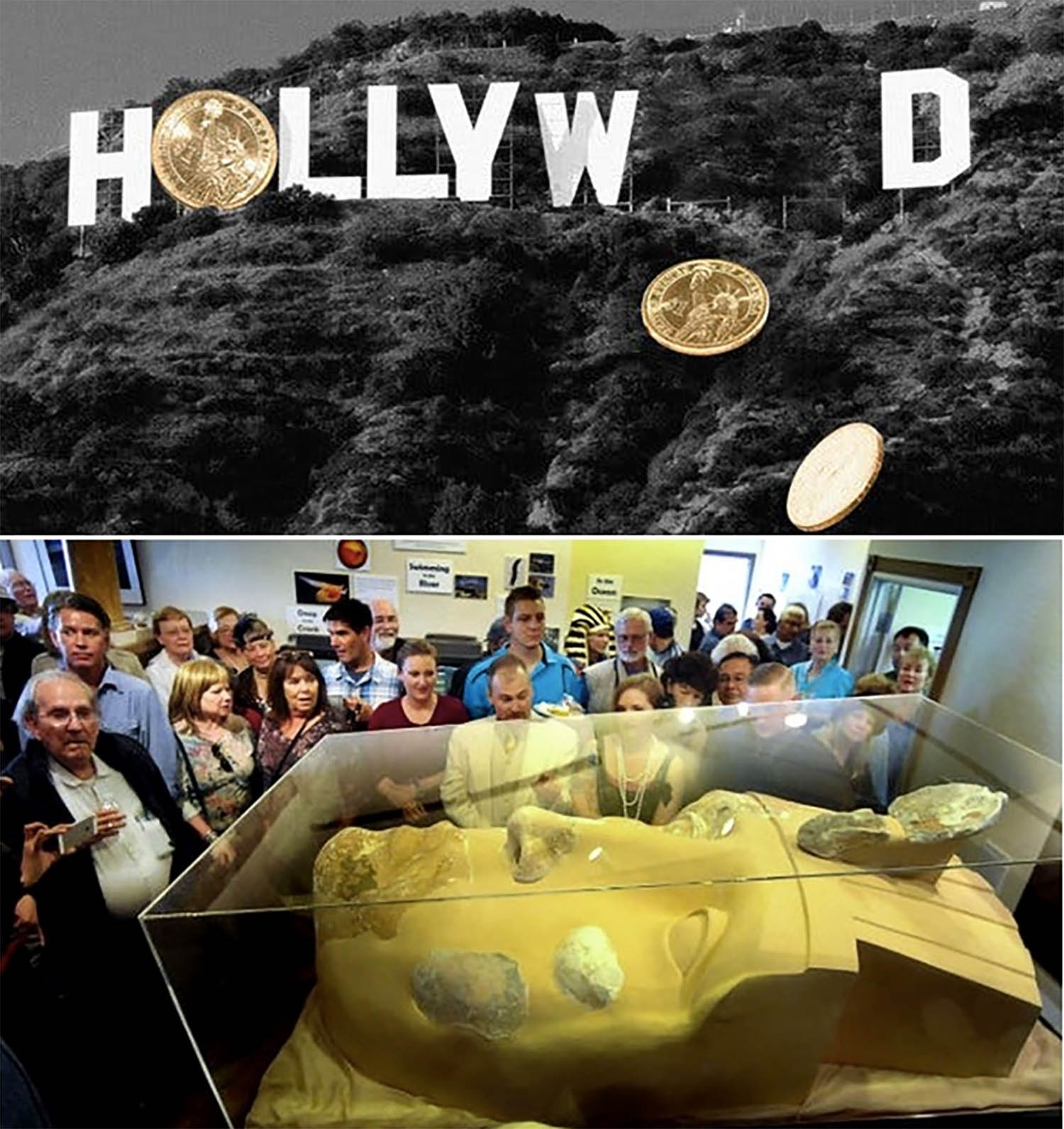
It was realized the sphinx head was not from Egypt’s deserts that time. Robbers or aliens had not sneaked or teleported it to Santa Barbara. Thus, the 300-pound head came from most unlikely places. The sphinx head was first thought to be from Charlton Heston’s role in Cecil B. DeMille’s 1956 film The Ten Commandments. The head, on the other hand, had to come from an even older film, which it did, thanks to the film’s groundbreaking visual effects.
It wasn’t DeMille’s first time adapting The Ten Commandments, which he did in 1956. In 1923, he attempted to adapt the biblical story into one of the first “epic” films. He won’t be able to rely on computer-generated effects like he could in the 1956 version of the movie.
The Guadalupe-Nipomo Dunes in Santa Barbara were used to film DeMille’s 1923 adaptation, which he thought looked like the Egyptian desert. Set designers built Moses’ world entirely by hand and it was massive.
The set was one of the largest and most expensive ever built at the time. It stood 12-stories tall and 800-feet wide and was built with 25,000 nails and 250 tons of plaster. The strangest aspect of all was the way the sphinx heads were decorated. Four 35-foot Pharaoh statues, 110-foot gates, eight lions, an Egyptian temple, and of course, 21 sphinxes were reportedly built by over 1,600 people.
Archaeologists were taken aback by the “extremely intense” colors used to color the sphinx heads. The majority of the movie was shot in Technicolor, with the exception of one of the most crucial scenes, which was shot in B&W.
The sphinxes were colored in such a way that when the lighting and shadows are applied, they will also stand out without the use of Technicolor, which was necessary because much of the film was shot in black and white. In person, they appeared to be a little different than they did on film when they were found nearly a century after they were captured on film.
In both versions, the Red Sea must be parted, but the ’23 film was forced to think out of box to make this happen. While making waves in a slab of Jell-O, the “parted sea” effect was captured on film.
Cecil B. DeMille was pleasantly surprised to complete filming despite putting his daring ideas into action in three months. At this juncture, he was faced with the question: what to do with the set. DeMille used to have a love/hate relationship with his movie that was one of the first “iconic” films made in Hollywood. He’d mainly orchestrated the growth of a city that was both prohibitively expensive to relocate and incalculably valuable to abandon. Worse yet, he was completely aware of the truth of the situation.
Hollywood filmmakers recycled sets and props to save funds on production. However, DeMille, ever the artist, was not about to allow another filmmaker to actually make money from his work and so he made a silly decision.
Prophet: DeMille stated in his autobiography, “If 1,000 years from now archaeologists happen to dig beneath the sands of Guadalupe, I hope they will not rush into print with amazing news that Egyptian civilization…extended all the way to the Pacific Coast.”
Indeed, DeMille ascertained that if he was unable to use his elaborate set, no one else would. He demanded that the entire structure be demolished and that anything repairable be buried underground.
“There was no such thing as over the top for Cecil B. DeMille,” author Scott Eyman said. DeMille was lauded for his powerful and authoritative directing style as well as his knack for reprimanding everyone from extras to the main actor who fell short of his standards.
The intense methods used by DeMille led to burying of his man-made city. Archaeologists have found comparatively tiny scraps of “artifacts” from The Ten Commandments film over the years, however the biggest breakthrough came when archaeologists found that nearly-intact sphinx head in the sand.
“Given that these objects have lasted 94 years, even though they were only built to last for two months during filming, it really speaks to the craftsmanship,” said Doug Jenzen of the Guadalupe-Nipomo Dunes Center. Nonetheless, recovering these artifacts will be incredibly hard.
Since it was made of Plaster of Paris, the first sphinx head crumbled into powder when it was reached. The second time around, the archaeologists had to use a foam spray to strengthen the interior of the head, allowing them to recover it from the sand without causing damage to it.
The head may not even have come from the massive deserts of ancient Egypt, but it is still part of the history — Hollywood history. “Movie sets from that Golden Age of Hollywood simply do not exist anymore,” Jenzen said. Unknown scraps hiding beneath the sand dunes now do…along with a piece of one.
Hollywood’s business model has indeed been based on breaking the law to generate profits. Early film producers set up shop in Los Angeles to avoid paying dues to Thomas Edison, who lived on the East Coast and owned patent rights to almost all of filmmaking tools available.
Similarly, studios found it difficult to find their footing during the silent film era, but eight studios gained the upper hand after the 1920s. MGM, Warner Bros., 20th Century Fox, RKO and Paramount managed the major part of the town, with United Artists, Universal, and Columbia having shared their territory.
Hollywood made a lot of money off the European wars. Because other nations were preoccupied with fighting during WWI, the American cinemascape advanced in entertainment race. Americans craved lighthearted, escapism-inducing amusement and splurged in cinemas.
Studios require a large number of stars to meet customer expectations. Shark-like talent scouts combed the area’s theaters, restaurants and even the streets for new faces. The majority of celebrities were pounced on for their sex appeal, such as Lana Turner, who was dubbed “Sweater Girl” because of her form-fitting dresses.
New concepts were brought in for a screen test, and if they looked so good on film, the studios would handle the rest. Actors were pressured to go to charm schools, follow strict exercise as well as health regimens, and even have plastic surgery.
Those were the days when an actor could get away with playing a variety of roles. Actors were recruited as leads, supporting characters or extras, and everyone was typecast. You got to play the parts that your contract demanded and once the studio found an iconic character type for you, that one was your forever area.
In addition, celebrities did not finish their project at the end of the day. To make sure that they stayed marketable, studios focused, particularly on their personal lives. Nobody was allowed to be gay and problems like pregnancies and substance abuse were prohibited. If celebrities are found to be breaking rules too frequently, their contracting studios may be forced to loan them out to other production companies as a form of punishment. It doesn’t sound like a bad idea until you consider that stars were not paid for films they made outside of their home studio.
Hays Code: When the Govt threatened the manipulative industry to remove films with objectionable content, studios implemented their own self-censorship, called Hays Code, name after MPPDA president Will H. Hays.
Onscreen sexuality, feminism, nudity, biracial relationships, non-hetero characters or even pregnancy were all prohibited under this code, which was named after MPPDA president Will H. Hays. By the end of the film, villains had to be punished; husband and wife characters had to sleep in different beds.
The “happy ending” has become the standard way to end a film. The silent film era’s European ways, in which characters attired and acted as they pleased, faced real stakes, as well as pondered life’s dark truths, were long gone.
Because it was not permitted for American movie characters to be pregnant, it was also not permitted for the actors who played them to be pregnant. Beyond the Hays Code, studios believed that pregnancy made a star less sellable and they exerted pressure on pregnant women to end their pregnancy.


 20

