Dance of democracy: Which party will challenge BJP in 2019?

India linguistically, ethnically and religiously more diverse than the whole of Europe has made it the most diverse country in the world with democracy as its greatest asset. India, an example that a nation can thrive on diversity, is the largest democracy in the world where might (numbers) always proves right.
Results of assembly elections in five states mark another chapter in BJP’s rise to the central pole of Indian politics and the decline of the Congress.
But state- or region-specific factors gave sporadic success in Punjab, Manipur, and to some extent Goa. But. The BJP national canvas had widened with Narendra Modi’s entry in May 2014 and the latest outcome added more depth to it.
Congress victory in Punjab could be attributed to Amarinder Singh’s leadership and anti-incumbency wave against the ruling alliance of Shiromani Akali Dal and the BJP. Rise of the Aam Aadmi Party (AAP) is at the cost of the Congress.
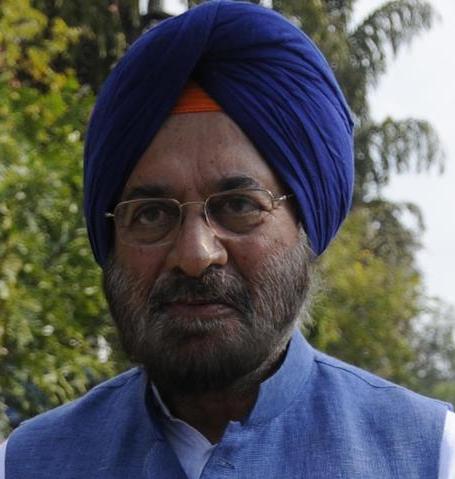
However, In the electoral battle between a Captain and a General, Punjab Congress chief Amarinder Singh showed little mercy on his superior (going by the army ranks) JJ Singh of the Akali Dal . The captain decimated the General by 52,335 votes, the highest ever victory margin in Punjab assembly polls while JJ Singh finished a poor third and forfeited his security deposit. Capt Amarinder bagged 72,586 votes, almost 70% of total votes polled. General JJ Singh polled only 11,677 votes, less than Dr Balbir Singh (AAP), who bagged 20,179 votes to stand second.
Manipur has been a Congress stronghold, where party’s performance paled in comparison with the bigger story of BJP’s boldly venturing into this NE state after winning Assam in 2016 and installing Govt in Arunachal Pradesh. Election Commission data put both the parties neck to neck in Manipur.
UP results raises a pertinent question – What is the future of the Congress as India’s grand old national political party? Who is going to be the next challenger to the BJP? These questions become more pertinent as the BJP continues to push the Congress further to the margins. It’s a grim picture that India’s grand old party faces.
The BJP has more than doubled its vote share in UP to close to 40% since last Assembly elections though there is a slight drop since 2014 Lok Sabha polls. The BJP did even better in neighbouring Uttarakhand with over 46% vote share, though down from nearly 56% in 2014 Lok Sabha polls.
The latest vote share, according to Election Commission data: The BJP polled 39.6%, followed by the SP and the BSP with 22% each while the Congress was seen getting over 6%. Among others, the Rashtriya Lok Dal was seen getting less than 2% vote share and the CPI had just 0.2%, while 0.9% votes were cast for NOTA (None of the above). Independent candidates who were seen as leading on three seats polled 2.5% votes.
In states where the BJP is not in power or is not even a prominent opposition party, it is not the Congress which is ruling. By the end of 2016, the Congress was in power in only six states on its own and two states in a coalition. The BJP was in power in eight states alone and jointly in five. But latest round of assembly polls, the BJP has gained two more states – UP from Samajwadi Party, which had an alliance with the Congress, andUttarakhand from Congress. The only big state where the Congress is in power is Karnataka, due for elections next year.
In states ruled by non-Congress, non-BJP parties, it is not the Congress which is waiting in the wings to be the next party in power. For instance, in West Bengal, ruled by the Trinamool Congress (TMC), it is the Left which is waiting in the wings even as the BJP rises.
The Congress lost Assam to BJP in 2016 and Kerala to the Left. In Kerala, the Congress has not recovered from the loss and it is again the BJP, with its violent turf battles with the Left, which is occupying the opposition space. The political map of India reveals that the Congress rules some patches at the margins with only Karnataka and Himachal Pradesh left with it in mainland states. The 2017 assembly mandate has shrunk India’s grand old party even further.
Who challenges the BJP now? In states where the Congress has not been power for a long time or has lost power recently, the BJP is getting challenged by strong regional players—TMC in West Bengal, Shiv Sena in Maharashtra, Janata Dal (United) in Bihar, Samajwadi Party and Bahujan Samaj Party in UP, All India Anna Dravida Munnetra Kazhagam (AIADMK) and Dravida Munnetra Kazhagam (DMK) in Tamil Nadu.
But none of these parties is in a position to pose a pan-India challenge to the BJP in 2019 when the next general election is due. Even as the latest round of assembly polls show a widening BJP footprint and a shrinking Congress, raising the question: which party will challenge BJP now at the national level?
Of the total 31 states, 17 are now under BJP-NDA rule, Himachal Pradesh, Punjab, Karnataka, Puducherry, Bihar, Mizoram and Meghalaya under Congress/UPA and 7 by others.
India flourished because basic freedoms for all formed the lynchpin of the reign of Emperor Ashoka in the 3rd century BC, who as Nobel Laureate Amartya Sen has pointed out, “did not exclude women and slaves as Aristotle did.” Hey na mera Bharat Mahaan!


 20