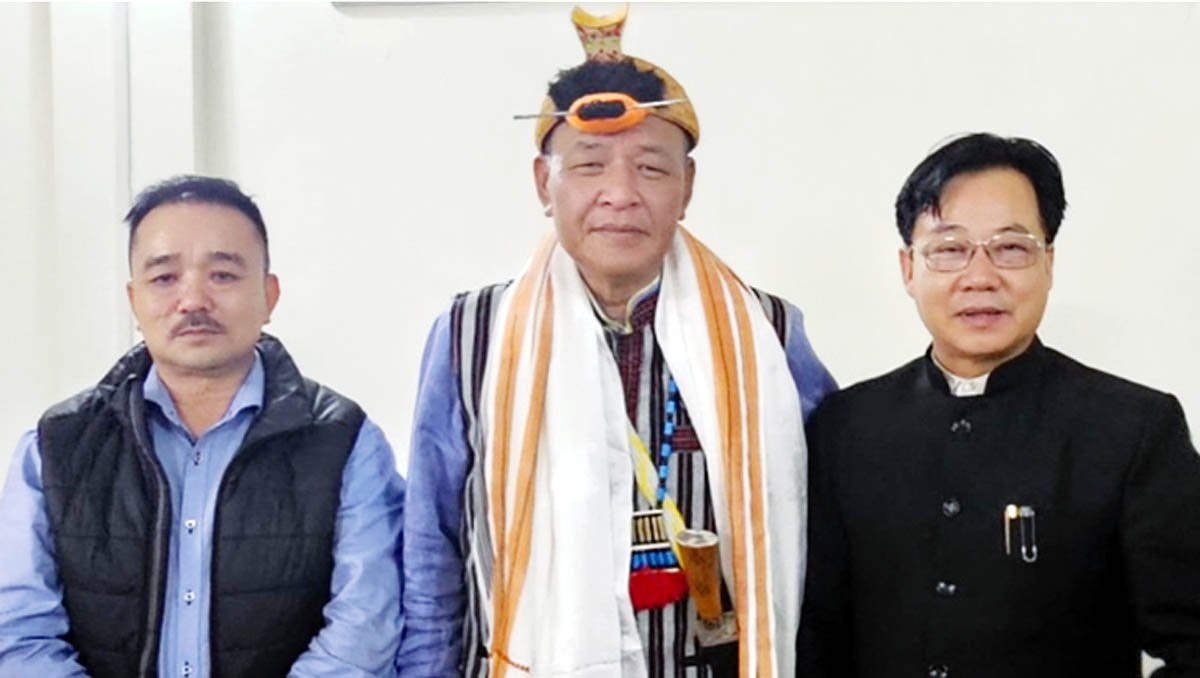
Beyond the Horizon By Pradeep Kumar Why not count Valley’s bird species? Mechukha or Menchukha, ‘Men’ means medicine, ‘Chu’ means water (streams/rivers) & ‘Kha’ means snow – “the land blessed with medicinal snow-fed water” is a town, assembly constituency and sub-division, situated 6,000 feet above sea level in Mechukha Valley, encircled by Yargep Chu or Siyom River in Shi Yomi district, of late has been attracting large number of tourists. The social media platform is full of videos posted by IT savvy tourists showcasing their enchanting experiences with the unspoiled…
Read MoreCategory: Beyond The Horizon
Maha Vishuba Sankranti celebrated globally
Beyond the Horizon By Pradeep Kumar Maha Vishuva Sankranti or Pana Sankranti, coinciding with Odia New Year signifies the transition of the sun into the Aries zodiac sign and a time of cultural festivities and religious observances annually on April 13/14 on Gregorian calendar. It festival signifies the transition of the sun into the Aries zodiac sign, which is considered a significant event in the Hindu calendar and is also linked to agricultural practices, as it marks the beginning of the planting season. While its roots are deeply entrenched in…
Read MoreExpansive land grabbing made China’s diplomatic ties complex
Beyond the Horizon By Pradeep Kumar The image highlights countries in yellow that have border disputes with China, which has ongoing territorial disputes with several neighboring nations. To the north, China has had disagreements with Russia and Mongolia over certain border demarcations, though most have been resolved. To the west, China has historical border tensions with Kazakhstan, Kyrgyzstan and Tajikistan, largely settled through treaties. However, significant disputes remain with India over Aksai Chin and Arunachal Pradesh, leading to military standoffs. In the south, China claims parts of Bhutan and has…
Read MoreHoli changes colours of all once in a year, but Mother Nature showcases Holi always
Beyond the Horizon By Pradeep Kumar Arunachal Pradesh joined global fraternity on March 14 in celebrating Holi, a festival of humanity, but amply justified the gospel truth – all are equal as multi-coloured faces of young and old, men, women and children made all equal as if rainbow (indradhansuh) had gripped the state, known as an ethnic hub of the country. This again proved right Roing lawmaker Muchu Mithi, who has given a new sobriquet to the state “Land of Relations”. “Our relations are deep rooted, we make, maintain and…
Read MoreBritain’s Got Talent | Assam’s tiny tot Binita sets stage ablaze with her gravity-defying moves & energy
By Prdeeap kumar Tiny tot Binita Chhetry, only 8-year-old. from Assam, made headlines on Monday for her exceptional dance performance on Britain’s Got Talent (BGT) to earn a standing ovation from both the judges and the audience. In a video of her performance that has gone viral on social media, Binita introduced herself to the judges and expressed her interest in buying a ‘Pink Princess House’ if she wins the competition. “My name is Binita Chhetry, and I am eight years old, and I am from Assam, India. The Britain’s…
Read MoreNE leaders oppose gigantic China dam HSMAP helps first Tibet objection Beyond the Horizon By Pradeep Kumar Cutting across party lines, most MPs of NE states and chief ministers have univocally opposed a massive hydropower project on Yarlung Zangbo River in Medog county of Tibet where it take a U-turn, called the ‘Great Bend’, announced by Chinese Govt in December 2024. Why because the river entering Arunachal Pradesh at Tuting village as Siang, as Brahmaputra in Assam and as Jamuna in Bangladesh before merging with the Ganges to form Meghna River before melding with the Bay of Bengal. Brahmaputra, the 3,000-km long only male river of India is a live giver along its downstream in India and Bangladesh for irrigation and transportation to facilitate millions of families to earn their livelihood. But, the planned largest dam of the world would have catastrophic impacts due to potential unimaginable impacts on water flow to turn lives of millions upside down to cause regional instability. After Chief Minister Himanta Biswa Sarma, his Arunachal Pradesh counterpart Pema Khandu had raised concern over the dam and warned that it could be used by Beijing as a “water bomb”. In his inaugural address to a seminar – Environment and Security – in state Legislative Assembly complex here on 24.01.25, Khandu had drawn attention of all stakeholders towards the hydropower project which could generate 60,000-MW of power. “60,000-MW… this is out of context. If such a big mega project is built there, it will have a big impact on the ecology of areas around the Siang and the Brahmaputra. This is a big threat and, if China uses this as a water bomb, the Adi tribe that we have in Siang belt will disappear and lakhs of people will lose their lives in Assam… it will go till Bangladesh,” Khandu had told reporters, adding “11,000-MW Siang Upper Multipurpose Project has been proposed as a national project to neutralize the threat posed by China dam”, The seminar,, organized by Himalayan Surkashya Manch Arunachal Pradesh (HSMAP) had undoubtedly drawn attention of Beijing with Dharamshala-based Central Tibetan Administration Sikyong (President) His Excellency Penpa Tsering, as special guest, had feared “Tibet alone supplies around one billion water and would be bio-hotspot, if water drives a World War-III and and advocated a midway solution, which should be initiated by India through peace talks”. “Tibet people under Chinese occupation are living in violation of human rights, intellectuals and religious restrictions. There is gradual destruction of Tibetan’s language, religion, culture and heritage by Chinese Communist Party,” he had said. Hinting at serious ecological and strategic ramifications for riparian communities, while talking at Tezu’s Dhargyeling Tibetan Settlement on 27.01.25, he had warned of the risks posed by large-scale construction in the fragile region and added, “The recent devastating earthquake in Tibet’s Dingri region is a stark reminder of the natural disasters that could follow.” Lok Sabha member-cum-All-Party Indian Parliamentary Forum for Tibet co-convenor Tapir Gao had sounded the alarm and cautioned that it poses a grave threat to India and entire Southeast Asian region. The project would have potential catastrophic consequences affecting not only Arunachal Pradesh but also the entire NE region with impacts extending to the Bay of Bengal, Gao had said. The massive scale of the project, aims to generate 60,000-MW of power and involves constructing a dam approximately 2-km in height, Gao had said, adding that the project is not just an environmental crisis for India but for the entire Southeast Asian region, given that most major rivers in the region originate in Tibet. He had sought immediate action to address this issue, warning that consequences of inaction would be disastrous. Highlighting HSMAP activities and future plans, its president Tarh Tarak enlisted steps taken across the country, including in the state, to bring mass awareness to free Tibet from the clutch of China and facilitate safe return of Tibetans to their native country to live with dignity. HSMAP secretary general Nima Sangey, many state ministers & MLAs, representatives of Arunachal Indigenous Tribes Forum CBOs and Core Group for Tibetan Cause in India were present. “Brahmaputra is the lifeline of Assam and China’s recent decision to construct the “world’s largest dam” over it raises serious concerns about the country’s water security, Congress deputy leader in Lok Sabha Gaurav Gogoi said on Tuesday. Speaking during Zero Hour, Gogoi said he has written to Defence Minister Rajnath Singh and External Affairs Minister S Jaishankar regarding the “disproportionate control” of China over the water flow in the Brahmaputra, a major strategic asset in India. He demanded that water-sharing and management should be a key component of India’s diplomatic engagement with China, especially at the level of prime minister, the National Security Adviser (NSA) and the MEA. Recalling Doklam standoff in 2017, Gogoi noted how China had then suspended the sharing of hydrological data, endangering downstream regions and cautioned that similar tactics could arise, potentially threatening India’s security and regional stability. “We must have an agreement that China must always share hydrological data supporting flood forecasting and management. My question is – did this Govt know that China is constructing such a dam, and what has this Govt done to raise this issue at the international forum?” he asked. Assam’s Mangaldoi MP and state BJP chief Dilip Saikia, during Zero Hour in Lok Sabha on Monday, had strongly opposed China dam and raised concerns that China’s move to build the gigantic dam would have devastating effects on the climate of entire NE India, particularly Assam and Arunachal Pradesh the, endangering the region’s civilisation, culture and environment. Raising concern over the dam, Asom Gana Parishad Rajya Sabha member MP Birendra Prasad had also warned of serious threat. “The Union Govt has ‘taken note’ of China’s announcement of a mega-dam project on the lower reaches of the Yarlung Tsangpo River in Tibet Autonomous Region. Various issues relating to trans-border rivers are discussed with China under the ambit of an ‘institutionalised Expert Level Mechanism’, which was established in 2006, as well as through diplomatic channels,” External Affairs MoS Kirti Vardhan Singh, in a written response to a query had informed Rajya Sabha on February 6.
By Pradeep Kumar Cutting across party lines, most MPs of NE states and chief ministers have univocally opposed a massive hydropower project on Yarlung Zangbo River in Medog county of Tibet where it take a U-turn, called the ‘Great Bend’, announced by Chinese Govt in December 2024. Why because the river entering Arunachal Pradesh at Tuting village as Siang, as Brahmaputra in Assam and as Jamuna in Bangladesh before merging with the Ganges to form Meghna River before melding with the Bay of Bengal. Brahmaputra, the 3,000-km long only male…
Read MoreSeeing is believing | More hidden than visible to naked eyes
Did Three Gorges Dam not uproot over 31 million people? Beyond the Horizon By Pradeep Kumar The common adage “a picture is worth a thousand words” means that a single image can convey a complex idea or story more effectively than a lengthy written description, essentially stating that visuals can be very powerful in communicating information quickly and directly as proved by this picture. China has announced to build the world’s largest dam on Brahmaputra River, known as Yarlung Tsangpo in Tibet, to annually generate 300 billion kilowatt-hours of electricity, more…
Read MoreBirds: Nature’s living ornaments & seasons’ harbingers
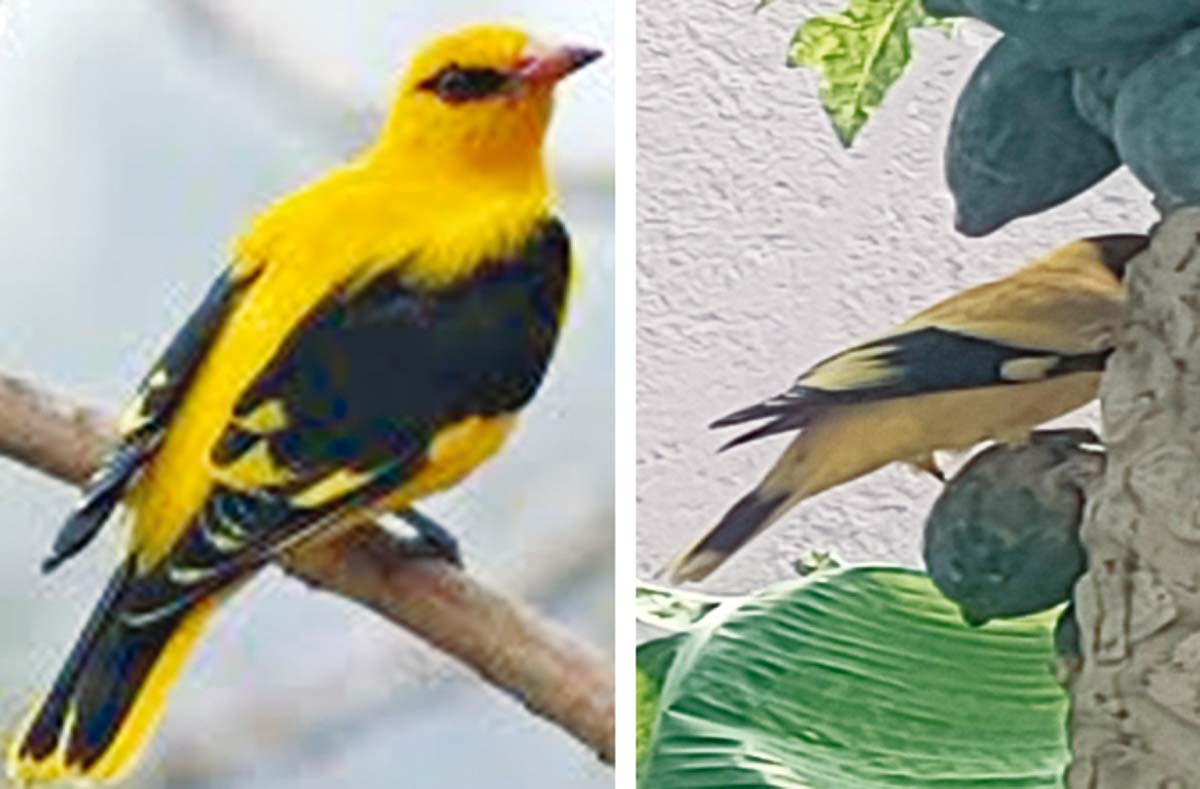
By Pradeep Kumar An Indian golden oriole, a dazzlingly yellow bird with a black eye stripe and black wings and inner tail feathers, called Haladi Basanata in Odia, drew my attention while pecking a ripe papaya on a tree in my house backyard, indicating arrival of winter season. Birds, the living ornaments of the nature, are harbingers of season too. Thus, poets have used nature and its beauty to express their thoughts and feelings and birds have always inspired poets in their qualities like their accuracy and stealth, their ability…
Read MoreChatur-mukhalinga finding in Vietnam proves Lord Shiva omnipresent
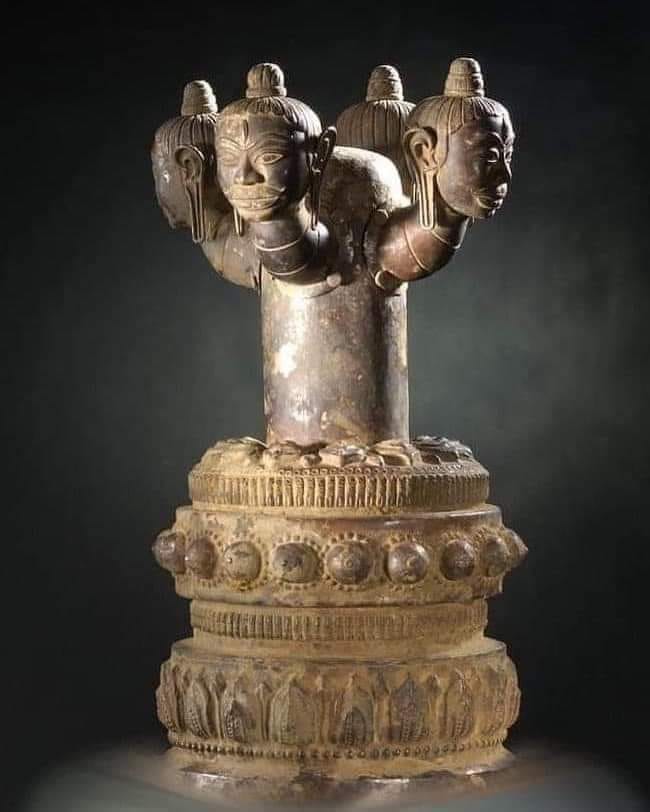
On display at My Son Champa ruins on 26.11.23 Beyond the Horizon By Pradeep Kumar The devotees pray Lord Shiva with hymn “Om Namo Bhagavate Rudraya”, which means “Om, I bow down to the divine Rudra (Shiva)”, signifying that Shiva is omnipresent and pervades the entire universe. The discovery of Shiva Linga, represents the ascending energy of consciousness and life in nature, the form in which devotees worship globally, proves HE is omnipresent, omniscient and omnipotent. The way a “Chatur-mukhalinga” (a four-faced linga), a Hindu phallic symbol representing the god Shiva, which…
Read MoreFalcon fastest-moving creature on Earth
About to take first flight largest gyrfalcon smallest pygmy Beyond the Horizon By Pradeep Kumar Falcons are birds of prey in the genus Falco, which includes about 40 species while the extinction of small Réunion kestrel or Falco duboisi was historically ” reported in 1671–1672 but became extinct in around 1700 due to human persecution. Some small species of falcons with long, narrow wings are called hobbies and some that hover while hunting are called kestrels. Falcons are widely distributed on all continents of the world except Antarctica, though closely related raptors did…
Read More