NE leaders oppose gigantic China dam HSMAP helps first Tibet objection Beyond the Horizon By Pradeep Kumar Cutting across party lines, most MPs of NE states and chief ministers have univocally opposed a massive hydropower project on Yarlung Zangbo River in Medog county of Tibet where it take a U-turn, called the ‘Great Bend’, announced by Chinese Govt in December 2024. Why because the river entering Arunachal Pradesh at Tuting village as Siang, as Brahmaputra in Assam and as Jamuna in Bangladesh before merging with the Ganges to form Meghna River before melding with the Bay of Bengal. Brahmaputra, the 3,000-km long only male river of India is a live giver along its downstream in India and Bangladesh for irrigation and transportation to facilitate millions of families to earn their livelihood. But, the planned largest dam of the world would have catastrophic impacts due to potential unimaginable impacts on water flow to turn lives of millions upside down to cause regional instability. After Chief Minister Himanta Biswa Sarma, his Arunachal Pradesh counterpart Pema Khandu had raised concern over the dam and warned that it could be used by Beijing as a “water bomb”. In his inaugural address to a seminar – Environment and Security – in state Legislative Assembly complex here on 24.01.25, Khandu had drawn attention of all stakeholders towards the hydropower project which could generate 60,000-MW of power. “60,000-MW… this is out of context. If such a big mega project is built there, it will have a big impact on the ecology of areas around the Siang and the Brahmaputra. This is a big threat and, if China uses this as a water bomb, the Adi tribe that we have in Siang belt will disappear and lakhs of people will lose their lives in Assam… it will go till Bangladesh,” Khandu had told reporters, adding “11,000-MW Siang Upper Multipurpose Project has been proposed as a national project to neutralize the threat posed by China dam”, The seminar,, organized by Himalayan Surkashya Manch Arunachal Pradesh (HSMAP) had undoubtedly drawn attention of Beijing with Dharamshala-based Central Tibetan Administration Sikyong (President) His Excellency Penpa Tsering, as special guest, had feared “Tibet alone supplies around one billion water and would be bio-hotspot, if water drives a World War-III and and advocated a midway solution, which should be initiated by India through peace talks”. “Tibet people under Chinese occupation are living in violation of human rights, intellectuals and religious restrictions. There is gradual destruction of Tibetan’s language, religion, culture and heritage by Chinese Communist Party,” he had said. Hinting at serious ecological and strategic ramifications for riparian communities, while talking at Tezu’s Dhargyeling Tibetan Settlement on 27.01.25, he had warned of the risks posed by large-scale construction in the fragile region and added, “The recent devastating earthquake in Tibet’s Dingri region is a stark reminder of the natural disasters that could follow.” Lok Sabha member-cum-All-Party Indian Parliamentary Forum for Tibet co-convenor Tapir Gao had sounded the alarm and cautioned that it poses a grave threat to India and entire Southeast Asian region. The project would have potential catastrophic consequences affecting not only Arunachal Pradesh but also the entire NE region with impacts extending to the Bay of Bengal, Gao had said. The massive scale of the project, aims to generate 60,000-MW of power and involves constructing a dam approximately 2-km in height, Gao had said, adding that the project is not just an environmental crisis for India but for the entire Southeast Asian region, given that most major rivers in the region originate in Tibet. He had sought immediate action to address this issue, warning that consequences of inaction would be disastrous. Highlighting HSMAP activities and future plans, its president Tarh Tarak enlisted steps taken across the country, including in the state, to bring mass awareness to free Tibet from the clutch of China and facilitate safe return of Tibetans to their native country to live with dignity. HSMAP secretary general Nima Sangey, many state ministers & MLAs, representatives of Arunachal Indigenous Tribes Forum CBOs and Core Group for Tibetan Cause in India were present. “Brahmaputra is the lifeline of Assam and China’s recent decision to construct the “world’s largest dam” over it raises serious concerns about the country’s water security, Congress deputy leader in Lok Sabha Gaurav Gogoi said on Tuesday. Speaking during Zero Hour, Gogoi said he has written to Defence Minister Rajnath Singh and External Affairs Minister S Jaishankar regarding the “disproportionate control” of China over the water flow in the Brahmaputra, a major strategic asset in India. He demanded that water-sharing and management should be a key component of India’s diplomatic engagement with China, especially at the level of prime minister, the National Security Adviser (NSA) and the MEA. Recalling Doklam standoff in 2017, Gogoi noted how China had then suspended the sharing of hydrological data, endangering downstream regions and cautioned that similar tactics could arise, potentially threatening India’s security and regional stability. “We must have an agreement that China must always share hydrological data supporting flood forecasting and management. My question is – did this Govt know that China is constructing such a dam, and what has this Govt done to raise this issue at the international forum?” he asked. Assam’s Mangaldoi MP and state BJP chief Dilip Saikia, during Zero Hour in Lok Sabha on Monday, had strongly opposed China dam and raised concerns that China’s move to build the gigantic dam would have devastating effects on the climate of entire NE India, particularly Assam and Arunachal Pradesh the, endangering the region’s civilisation, culture and environment. Raising concern over the dam, Asom Gana Parishad Rajya Sabha member MP Birendra Prasad had also warned of serious threat. “The Union Govt has ‘taken note’ of China’s announcement of a mega-dam project on the lower reaches of the Yarlung Tsangpo River in Tibet Autonomous Region. Various issues relating to trans-border rivers are discussed with China under the ambit of an ‘institutionalised Expert Level Mechanism’, which was established in 2006, as well as through diplomatic channels,” External Affairs MoS Kirti Vardhan Singh, in a written response to a query had informed Rajya Sabha on February 6.

By Pradeep Kumar

    Cutting across party lines, most MPs of NE states and chief ministers have univocally opposed a massive hydropower project on Yarlung Zangbo River in Medog county of Tibet where it take a U-turn, called the ‘Great Bend’, announced by Chinese Govt in December 2024.

Why because the river entering Arunachal Pradesh at Tuting village as Siang, as Brahmaputra in Assam and as Jamuna in Bangladesh before merging with the Ganges to form Meghna River before melding with the Bay of Bengal. Brahmaputra, the 3,000-km long only male river of India is a live giver along its downstream in India and Bangladesh for irrigation and transportation to facilitate millions of families to earn their livelihood. But, the planned largest dam of the world would have catastrophic impacts due to potential unimaginable impacts on water flow to turn lives of millions upside down to cause regional instability.

After Chief Minister Himanta Biswa Sarma, his Arunachal Pradesh counterpart Pema Khandu had raised concern over the dam and warned that it could be used by Beijing as a “water bomb”.

In his inaugural address to a seminar – Environment and Security – in state Legislative Assembly complex here on 24.01.25, Khandu had drawn attention of all stakeholders towards the hydropower project which could generate 60,000-MW of power.

“60,000-MW… this is out of context. If such a big mega project is built there, it will have a big impact on the ecology of areas around the Siang and the Brahmaputra. This is a big threat and, if China uses this as a water bomb, the Adi tribe that we have in Siang belt will disappear and lakhs of people will lose their lives in Assam… it will go till Bangladesh,” Khandu had told reporters, adding “11,000-MW Siang Upper Multipurpose Project has been proposed as a national project to neutralize the threat posed by China dam”,

The seminar,, organized by Himalayan Surkashya Manch Arunachal Pradesh (HSMAP) had undoubtedly drawn attention of Beijing with Dharamshala-based Central Tibetan Administration Sikyong (President) His Excellency Penpa Tsering, as special guest, had feared “Tibet alone supplies around one billion water and would be bio-hotspot, if water drives a World War-III and and advocated a midway solution, which should be initiated by India through peace talks”.

“Tibet people under Chinese occupation are living in violation of human rights, intellectuals and religious restrictions. There is gradual destruction of Tibetan’s language, religion, culture and heritage by Chinese Communist Party,” he had said.

Hinting at serious ecological and strategic ramifications for riparian communities, while talking at Tezu’s Dhargyeling Tibetan Settlement on 27.01.25, he had warned of the risks posed by large-scale construction in the fragile region and added, “The recent devastating earthquake in Tibet’s Dingri region is a stark reminder of the natural disasters that could follow.”

Lok Sabha member-cum-All-Party Indian Parliamentary Forum for Tibet co-convenor Tapir Gao had sounded the alarm and cautioned that it poses a grave threat to India and entire Southeast Asian region. The project would have potential catastrophic consequences affecting not only Arunachal Pradesh but also the entire NE region with impacts extending to the Bay of Bengal, Gao had said.

The massive scale of the project, aims to generate 60,000-MW of power and involves constructing a dam approximately 2-km in height, Gao had said, adding that the project is not just an environmental crisis for India but for the entire Southeast Asian region, given that most major rivers in the region originate in Tibet. He had sought immediate action to address this issue, warning that consequences of inaction would be disastrous.

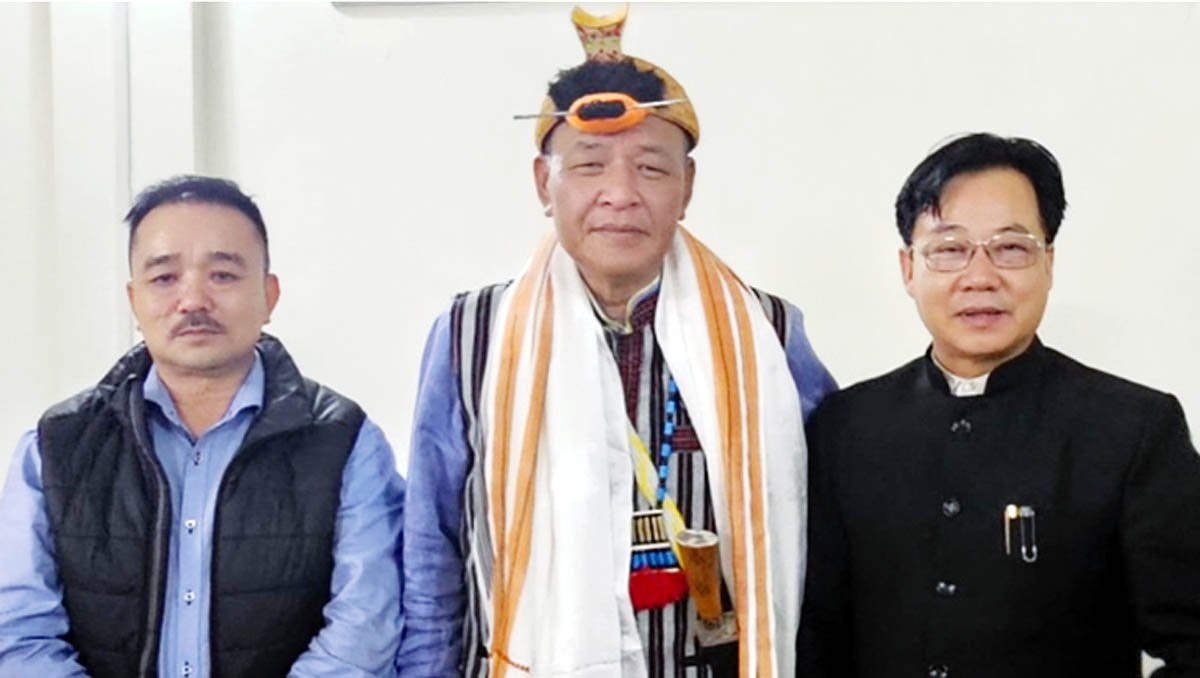
Highlighting HSMAP activities and future plans, its president Tarh Tarak enlisted steps taken across the country, including in the state, to bring mass awareness to free Tibet from the clutch of China and facilitate safe return of Tibetans to their native country to live with dignity.

HSMAP secretary general Nima Sangey, many state ministers & MLAs, representatives of Arunachal Indigenous Tribes Forum CBOs and Core Group for Tibetan Cause in India were present.

“Brahmaputra is the lifeline of Assam and China’s recent decision to construct the “world’s largest dam” over it raises serious concerns about the country’s water security, Congress deputy leader in Lok Sabha Gaurav Gogoi said on Tuesday.

Speaking during Zero Hour, Gogoi said he has written to Defence Minister Rajnath Singh and External Affairs Minister S Jaishankar regarding the “disproportionate control” of China over the water flow in the Brahmaputra, a major strategic asset in India. He demanded that water-sharing and management should be a key component of India’s diplomatic engagement with China, especially at the level of prime minister, the National Security Adviser (NSA) and the MEA.

Recalling Doklam standoff in 2017, Gogoi noted how China had then suspended the sharing of hydrological data, endangering downstream regions and cautioned that similar tactics could arise, potentially threatening India’s security and regional stability.

“We must have an agreement that China must always share hydrological data supporting flood forecasting and management. My question is – did this Govt know that China is constructing such a dam, and what has this Govt done to raise this issue at the international forum?” he asked.

Assam’s Mangaldoi MP and state BJP chief Dilip Saikia, during  Zero Hour in Lok Sabha on Monday, had strongly opposed China dam and raised concerns that China’s move to build the gigantic dam would have devastating effects on the climate of entire NE India, particularly Assam and Arunachal Pradesh the, endangering the region’s civilisation, culture and environment.   Raising concern over the dam, Asom Gana Parishad Rajya Sabha member MP Birendra Prasad had also warned of serious threat.

“The Union Govt has ‘taken note’ of China’s announcement of a mega-dam project on the lower reaches of the Yarlung Tsangpo River in Tibet Autonomous Region. Various issues relating to trans-border rivers are discussed with China under the ambit of an ‘institutionalised Expert Level Mechanism’, which was established in 2006, as well as through diplomatic channels,” External Affairs MoS Kirti Vardhan Singh, in a written response to a query had informed Rajya Sabha on February 6.

Related posts