* How long Rs 10 cr Potin-Ziro road renovation last?
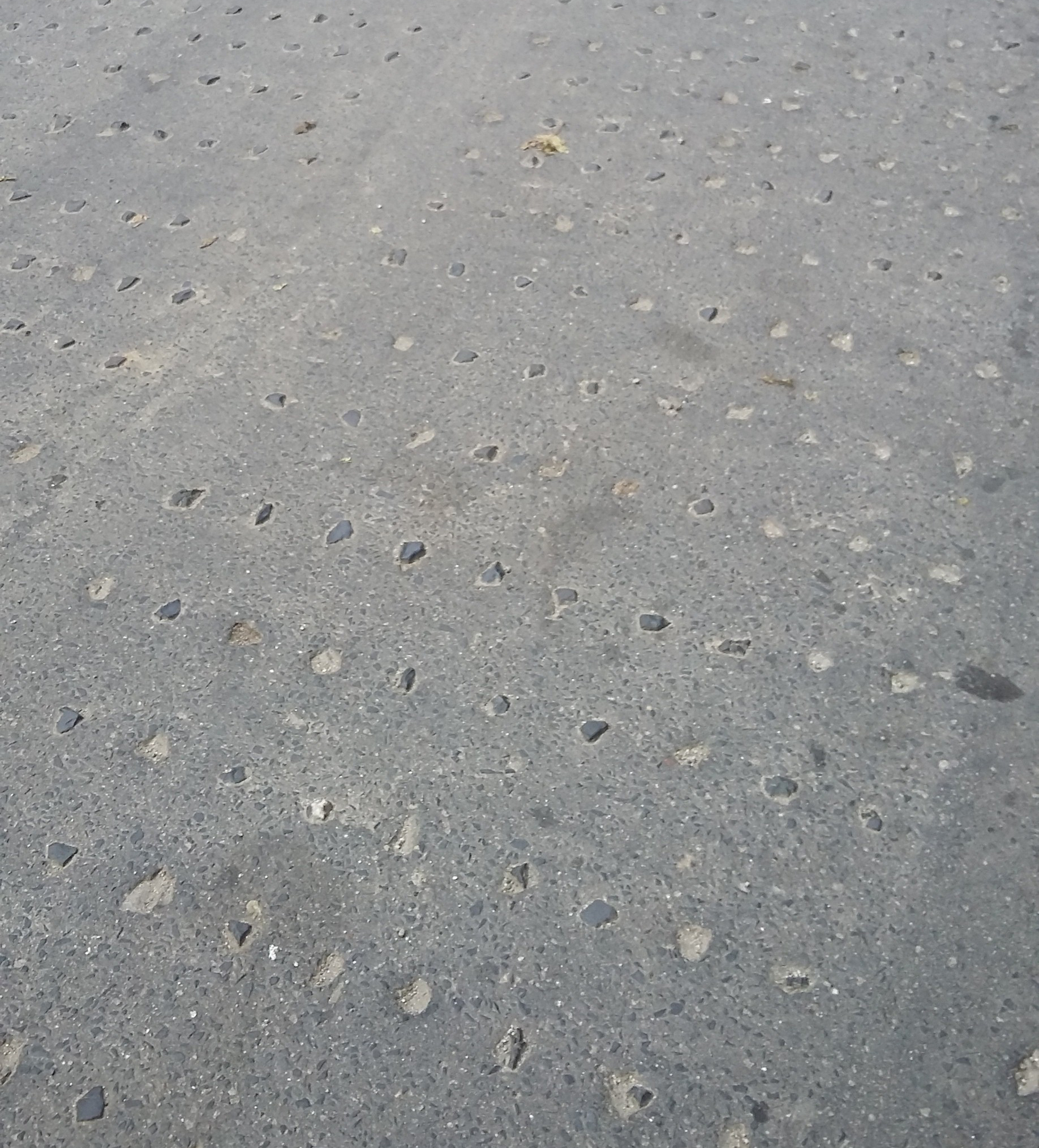
Come rainy days, roads and highways in Arunachal Pradesh disappear to oblivion to be developed again, a perennial problem. State capital Itanagar does not have an all-weather road even 70 years after India’s independence.

Itanagar located at an elevation of 750-m featuring humid subtropical climate with dry, mild winters and warm, wet summers, the state located at the foothills of Himalayan receives heavy rainfall of 2,000 to 4,100 mm annually, mostly between May and September. But why all its roads are washed away, contrary to all blacktopped roads in hilly Siliguri and Darjeeling, known as Queen of the Hills, remaining in shape without any damage, but why and how?
Interestingly, Union MoS (Home) Kiren Rijiju, while addressing Golden Jubilee Nyokum Yullo celebration at Joram on 26.02.17 revealed that due to his insistence Union MoS (MoRTH) Mansukh Mandaviya had inspected Ziro-Potin road during his maiden visit to the state on 13.09.16 and had announced Rs 10 crore (not Rs 11 crore), during a press conference to renovate the dilapidated road.
“Ziro and Joram are very beautiful places for which I had plan to visit Ziro with Union MoRTH Minister Nitin Gadkari which Mandaviya visited on my insistence and announced renovation fund going out of the way to boost tourism by improving the road for the commuters to have a pleasure ride to Ziro”, Rijiju had said to the applause of the gathering.
But how long this renovation would last is a pertinent question? Infrastructure development poses toughest challenges in this hilly state known for its loose soil, huge annual rainfall and tough hilly terrain of higher altitudes posing different problems.
Is Rijiju aware of landfall disaster mitigation is still not inbuilt into GoI road development policies due to cost constraints. Citing Darjeeling example, this editor had asked Mandaviya as to why disaster resilient roads in this landslide prone hilly areas approved by World Bank & Asian Development Bank is not adopted though visible in Darjeeling & Siliguri in West Bengal?
In his appreciation, Mandaviya had said that a high level conference involving international agencies, road researchers and state engineers will be conducted soon to discuss the issue threadbare to develop a mechanism soon.
Finding repeated landslides blocking traffic movement along Ziro-Pappu-Yupia-Hoj-Potin-Itanagar during his to-and-fro drive, he had discussed with engineers and DC Kemo Lollen to find a solution, but announced Rs 10 crore for immediate renovation. After opening state’s 2nd Jan Aushadhi Store at Lower Subansiri district hospital at Ziro, he had informed that of the total 2,570-km roads sanctioned (MoRTH-710-km, PWD-420-km, NHAIDCL-722-km & BRO-718-km), 653-km have been completed while 1,917-km are under progress.
Located at 125-m height, Siliguri in Darjeeling & Jalpaiguri districts of West Bengal on the banks of Mahananda River along the foothills of the Himalayas with warm & temperature climate, records heavy rainfall in summer – 3274 mm of precipitation annually.
Darjeeling is 80-km away from Siliguri, developed by the British in mid-19th century, located in the Lesser Himalayas at an elevation of 2,042.2 m, overlooking Kangchenjunga, world’s third-highest mountain, with subtropical highland climate – wet summers caused by monsoon with average annual precipitation is 309.2 cm.
The reason is that the CPWD is involved in road construction in upper Himalayas with heights ranging from 10,000 ft. to 18,000 ft, prone to landslides and rockfall by adopting various globally approved protection measures. The decision making machinery in state and central Govts need to appreciate the need for such measures and avoid half baked initiatives. There is state of the art research in permafrost engineering in places like Alaska, where frost boiling in roads have been addressed by use of specialized geo-composites.
Disaster resilient roads? If ‘Seeing is believing’, my quote of late visionary leader Setong Sena, is right, I saw the road in Darjeeling and searched to look for damaged portion but failed in three days in September 2016.
India is one of the worst affected regions in the world so far as landslide disasters are concerned. Many important highways passing through mountainous regions suffer from landslides leading to loss of connectivity, life and property.
Increasing developmental activity in mountainous areas has aggravated the landslide hazard, like falls, topples, slides, spreads and flows of rock as well as soils and mud and are triggered by geological, morphological or human interventions. Road construction by disturbing the vulnerable ecology of these areas is one of the major causes of landslide events, writes CPWD SE D Roychowdhury.
Poor technology: Landfall disaster mitigation is still not inbuilt into the road development policies mostly due to cost constraints. The technological interventions, like use of GIS for finalizing of alignment, use of geo-composites for improved drainage and rockfall protection measures are slowly finding their way into our road construction codes and guidelines. Capacity building and documentation of experiences from early projects and monitoring of hazardous areas are some of the specific actions needed as policy.
The landslide hazard zonation Atlas of India published by Building Materials and Technology Promotion Council (BMTPC) provides a good insight into various landslides-prone areas. Road construction is closely linked to development in the mountainous regions, which generally lacks transportation infrastructure. Thus, the authorities started giving serious attention to the land slide hazards since 1950s which is contemporary with the development of the hilly regions in India – NE states, mountainous Northern states and Western Ghats.
Road construction as a development tool has been widely implemented by international development agencies, like World Bank, Asian Development Bank, UNDP etc. in India and Nepal. The impact of developmental activities on landslide hazard and vice-a-versa has been well documented in Nepal.
The landslide and rock falls hold up traffic in hilly areas apart from causing direct damage by hitting vehicles. In the mountainous region there is usually one road from one point to another and alternative routes are often not available. Blockage of road by landslide not only hampers economic activity at higher elevation, but also prevents relief and reconstruction equipments from reaching the point of obstruction.
The Indian Road Congress (IRC) and the Bureau of Indian Standards have come out with publications regarding landslide and Rock-fall Mitigation Systems. Landslide Control Guidelines, Recommended Practices for treatment of embankment and roadside slopes for erosion control, state of the art: Design and construction of Rockfall Mitigation Systems (IRC Highway Research Board – Special Report 23 – 2014), to name a few.
Such well tested technology is yet to finds its way to India. The scope for innovation in this domain especially using local materials is immense. The road construction agencies have neither the budget nor the mandate for landslide/Rockfall protection initiatives and their poor capacity, vendor-driven technology remain vulnerable to questions while unauthorized excavation, jungle clearance and building activities causing slides often for lack of engineering precautions intensify the problems.
Will all ongoing projects (cost shown) – 250-km Nechipu-Hoj (Rs in 1,985 crore); 20-km Dibang-Alubari river bridge system (Rs 860 crore); 75-km Pasighat-Pangin ( Rs 500 crore); 50-km Pappu-Yupia-Hoj-Potin (Rs 450 crore) besides 12-km Itanagar-Naharlagun4-laning (Rs 250 crore) – in Arunachal Pradesh on completion not get damaged and commuters tragedy because of nature’s fury? Will these crores of scare resources not be wasted if the right technology is adopted for the longevity of the road? Who will reply to this question?
However, Deputy Chief Minister Chowna Mein, responding to a question on disaster resilient technology from this editor on 14.09.16, had clarified that the ADB after conducting survey had intended to fund state development projects, but refrained after China’s objection. The central Govt announced to compensate which remained a day dream.


 20