
Italians working in health sector say:
By Pradeep Kumar
BEGALURU | Jul 31 | The vast gap between extremely rich class and extremely poor class of India is shocking, said Italians working in India’s health sector through their Italian NGO Samten Cheling.
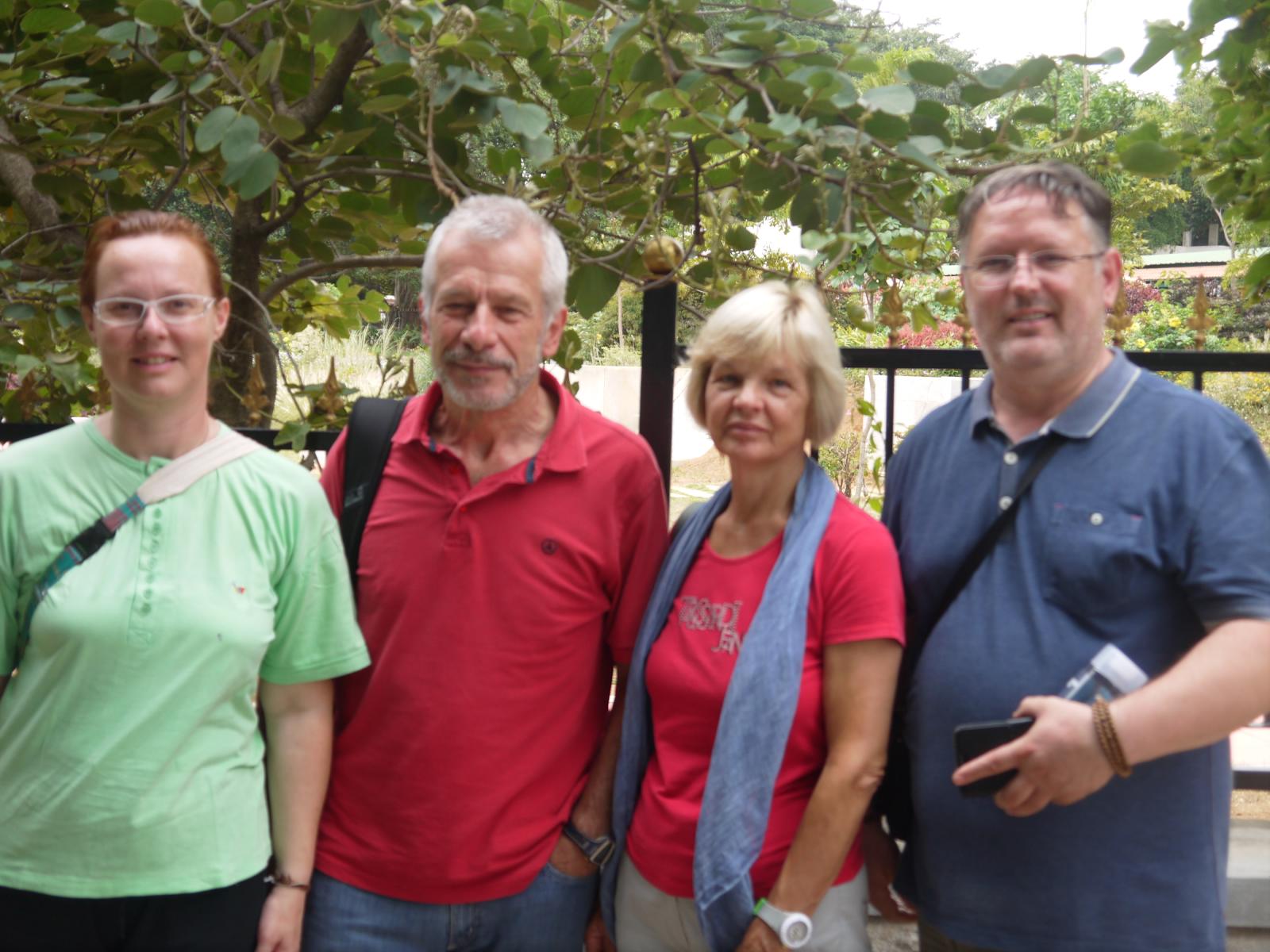
During a pleasure to this city while waiting for a vehicle for a safari into the famous Bannerghatta Biological Park (BBP) and Zoo here today, I came across a group of Italians and within no time came together, justifying the adage “birds of same feather flock together”.
“As I introduced myself adviser of Arunachal Vivekananda Yuva Shakti (AVYS) based in Itanagar engaged in campaigning for voluntary blood and so far helped collection of record 86,346 blood units, thus we are relatives as our blood is read,” their faces brightened and they shook hands.
“I am Martina, they are Gabriella, Franco and Gianni. We have been working in India for the last eight years for Buddhist community all over the country through Samten Cheling and all are blood donors too”, Martina said.
“I spent half of my time in India and have been shocked to find the vast gap between the extremely rich class and extremely poor class of India,” Gabriella responded in Italian, which was interpreted in English by Martina for me to understand.
“We are at a loss to understand why the social strata, particularly health sector is unimaginably like this in such a resourceful vast nation,” Gabriella, while Franco and Gianni standing by nodded.
The Italians are honest as India accounted for the largest number of people living below international poverty line in 2013, with 30% of its population under the $1.90-a-day poverty measure, World Bank had reported on 03.10.16.
India accounts for one in three of the poor population worldwide, the WB had said in its inaugural edition of the report ‘Poverty and Shared Prosperity’, according to which extreme poverty worldwide continued to fall despite the global economy’s “under-performance”.
“India is by far the country with the largest number of people living under the international USD 1.90-a-day poverty line, more than 2.5 times as many as the 86 million in Nigeria, which has the second-largest population of the poor worldwide,” the report said.
India had 30% of its population living below poverty line at 224 million. Nearly 800 million people lived on less than USD 1.90 a day in 2013, around 100 million fewer poor people than in 2012, the report had added.
When I informed that AVYS has saved innumerable lives in Arunachal Pradesh besides facilitating the Arunachal Govt in receiving Award of Excellence from Govt of India during World Blood Donor Day in 2016, he said the voluntary organisation has a vital role to play in narrowing down the gap.
Again on being told that I am the vice president of National Youth Project, whose founder-chairman is nonagenarian Dr S N Subba Rao, presently in American trip, Martina quipped: “We know him well”.
On the purpose of their visit to India, Martina said this is first visit to Bengaluru but not to India as they have been working together and shutting down between Rome and India every year.
“We arrived here two days ago and work here till August 10 next and on a friend’s advise about the uniqueness of this National Park a combination of eco-recreation, eco-tourism and conservation, one among the few places in the world where wilderness is preserved so close to a big city. Its beauty is showcased through Zoo, Safari, Butterfly Park and Rescue Center (conservation of captive animals), she added.


 20
