Is Arunachal still far away from 21st century?
Of total 22 districts 13 are hilly border districts – Tawang, West & East Kameng, Upper, Lower, East & West Siang, Siang, Upper & Lower Subansiri, Papumpare, Kra Daadi, Kurung Kumey, Kamle, Dibang & Lower Dibang Valley, Anjaw, Lohit, Namsai, Changlang, Tirap, Longding and the number of local people living in the lap of nature in those districts are not known to anyone as was proved during a recent awareness campaign in Longding.
A team of NYP on mission ODF in January last had reached Nokfan helmet after 11-hour foot march to be shocked to find that about 350 residents of Wangcho community live in Nokfan village, 7-hour walk from nearest motorable point Kanubari, without water supply, health service and adequate education facility.
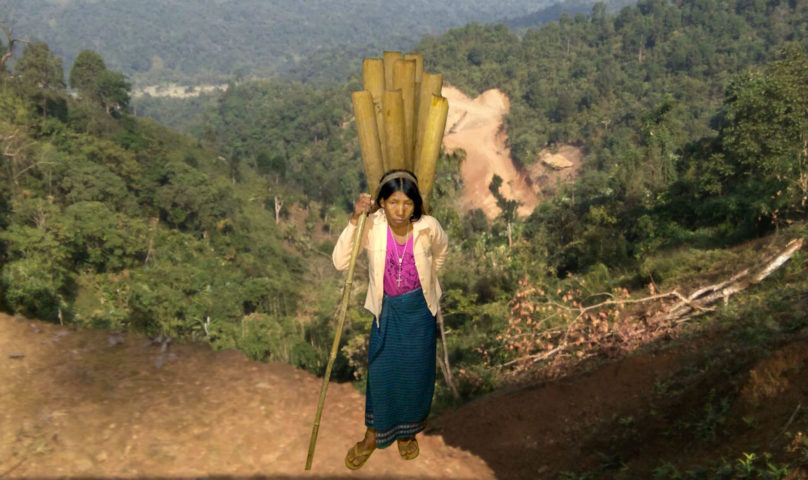
“Women go down the valley with dozens of bamboo chungas in basket to bring water for all purposes from stream and rivers as far as one-km down the valley,” village chief Towang Wangham told this daily today over telephone.
“We are lucky as Assam BSNL has coverage in this Nokfan hill, making us linked to the rest of the world,” he said, adding “if water collection is such a tough job for people living one could imagine their struggle for survival, he reasoned.
A Govt primary school set up in 1953 caters to 20 students with a teacher while other children walk down about 5-6-km to Ottongkhwa to read in a middle school, set by Don Bosco, he said, adding the patients walk down 27-km to Deomali in Tirap district for treatment as there is no health unit in the village.
“We have no other go as we falling in Kanubari assembly constituency fend for ourselves without any help from the GoAP,” he said without mincing any words. Water is life without which survival of any living being is next to impossible, but Arunachalees living in far-flung inaccessible hill tops in the lap of nature have developed their indigenous system for survival. And Nokfan is a glittering example.
They being true custodians of the fragile environment should be brought under the canvas of development. Chief Secretary Satya Gopal had assured action when his attention was drawn. The Centre appreciably has identified 18 border villages in the state with all basic amenities and focus on all priority sectors, like health, water, electricity and infrastructure for which specific funds would be allocated under the BADP. The credit goes solely to Governor Brig (Retd) B D Mishra for his initiative. Is Arunachal still not far away from 21st century?
By Pradeep Kumar
ITANAGAR | Mar 18 | Climate change impacts are not only apparent in environment and ecosystem, but also in socio-economic and cultural life of the people across the globe, though with varied intensity. The impact of climate change is believed to be more prominent and extensive on mountain as they are among the most fragile environments on earth.
The mountains, besides having a rich repository of biodiversity and water, provide ecosystem services to the communities downstream. They harbour some of the world’s most endangered and endemic flora and fauna species as well as the home to traditional communities who are highly dependent on the ecosystem services for their subsistence and livelihood.
Thus, this Himalayan state of Arunachal Pradesh spread in 83,743 SQKM geographical area is considered as one of the 12 bio-diversity hotspots on the Earth including Capital Complex’s watershed. With over 50,000 sqkm of moderate to very dense forests equivalent to 550 million cubic metre growing stock or living assets (equivalent to 2000 million metric tons of carbon dioxide) that serves as one of the major ‘carbon sinks’ or ‘lungs’ of the globe, according to State Forest Research Institute director P Subramanyam.
This Himalayan state is custodian of 23.52% of total flowering India plants, including around 4,500 species of angiosperm and 550 species of orchids; is regarded as nature’s repository of medicinal plants, where around 500 medicinal plants were identified during preliminary survey. The state possesses India’s second highest level of genetic resources, the fauna diversity includes 85 species of mammals and 760 species of birds (SAPCC 2011). The region has been identified by the ICAR as the centre of rice germplasm while the National Bureau of Plant Genetic Resource has highlighted the region being rich in wild relatives of crop plants.
Ailing condition of our Mother Earth with rise of global temperature, if not arrested, would threaten Her life? And where the humanity would be if Mother Earth dies? No one seems to be worried to my utter surprise.
Earth scientist K D Singh, once responding to my info crazy queries in July 2006 on ‘what-why-who-where-when and how of global warming’, and the extent of threat to humanity, had said, as published on my 11.07.06 ‘In Retrospection’ column – Global warming a threat to the Mother Earth:
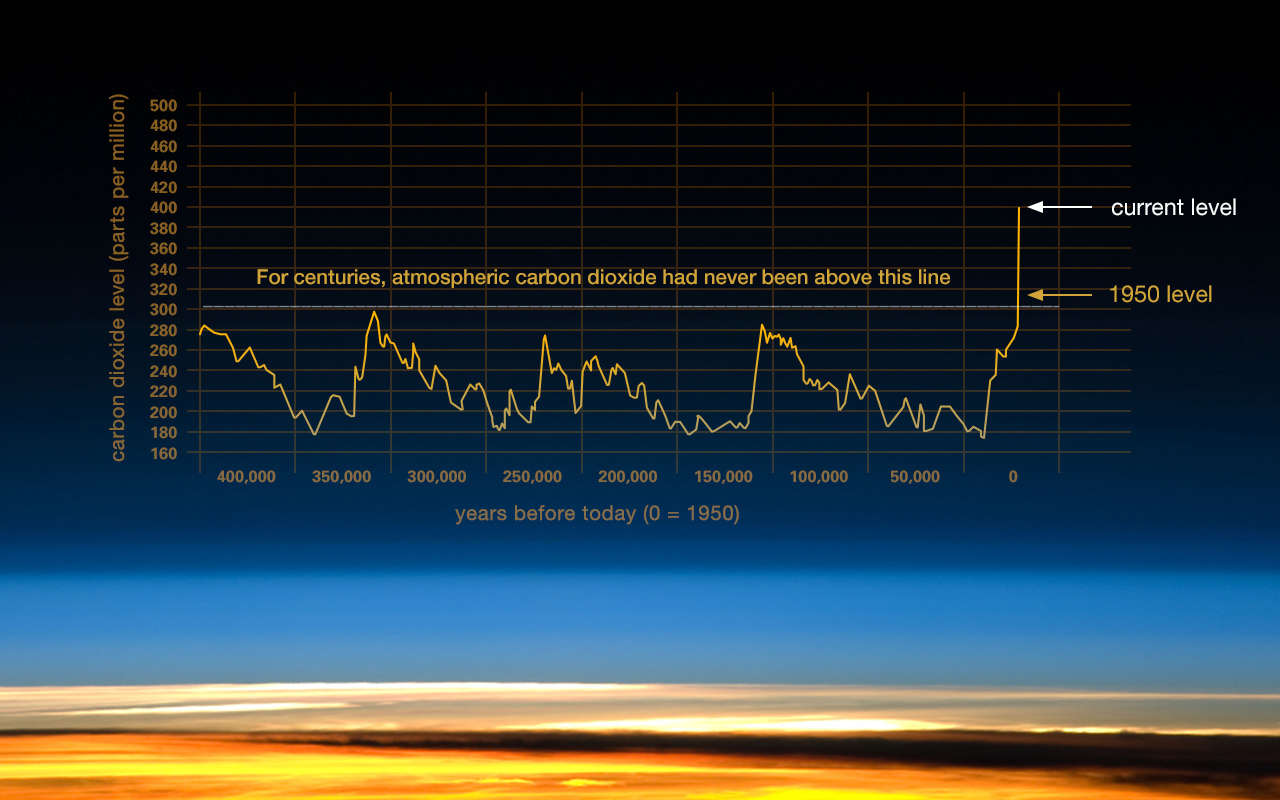
The rise in mean global temperature is caused by Green House Gases (GHGs).The GHGs are mainly carbon dioxide, methane, chlorofluorocarbon (CFC) and ozone. These gases are called GHGs because their presence in the atmosphere lends the same effect as a green house creates on its ambience— the warming by not allowing heat to escape. Deforestation and the ever rising emission by the industries and vehicles, excessive use of CFC in cold storage, refrigerators, sprays, open-air decaying of human and vegetable wastes, heavy burning of fossil fuels are some of the most important contributors to increase in the build-up of GHGs in the atmosphere and eventual global warming.
What will happen if the mean global temperature rises by a few degrees Celsius? Scientists say it would result in climate change and warn us of far reaching consequences. All aspects of life including health, sports, agriculture and even culture will be affected in some way or the other. The extremes like heat waves and storms may hit places, which have hitherto been witnessing moderate climate. The effect of global warming can be perceived more easily by assuming a rise in mean sea level by few meters due to melting of ice caps in the north. The net result would be inundation of low-lying areas all along seashores. Existence of coastal countries like Maldives, Bangladesh will be in jeopardy.
Change in soil-moisture regime will eventually lead to a change in the cropping pattern. The behaviour of monsoon will be affected to a great extent compelling the human societies living in monsoon zones to adjust their lifestyles to changed weather condition. The unusual heavy rains being witnessed lately by Mumbaikers during monsoon seasons may be nature’s response to global warming.
The climatic condition of this beautiful Capital Complex has undergone a sea change during the last few decades. Massive deforestation, earth cutting, massive landslides, shifting cultivation etc. have disturbed the ecosystem. Moreover, in absence of a waste management system, the garbage and waste collected by the urban development department are dumped along the riverbank and burnt regularly, while the costly waste management system is defunct. All these are contributing to global warming though not visible to naked eyes. Cherapunji once had the distinction of receiving the highest rainfall in the world, but its residents are facing water crisis today. Who are to be blamed?
Earth scientists have warned that dumping of huge quantities of industrial waste and garbage into ocean should be prohibited. For, the oceans are the biggest storehouse of carbonated minerals and the dumping could result in large scale chemical reaction. This in turn would release huge quantities of carbon-dioxide and water vapour which would form an impenetrable greenhouse blanket around the earth. The resultant abnormal rise in temperature will wipe out every living cell from the face of the earth forcing it to go back to the ice-age again, it is feared.
The process could be reversed only if the mankind cares for the Mother Earth, stop wanton destruction of forest, consume less fossil fuel and adopt mechanism for waste management. The sooner a golden mean between the development-triggered destruction and conservation is struck the better.
The evidences of rapid climate change are compelling:
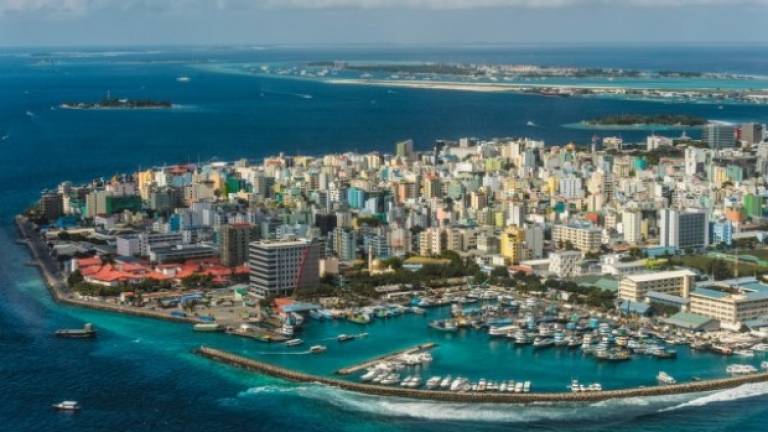
Sea level rises: Global sea level rose about 8 inches in the last century. The rate in the last two decades, however, is nearly double that of the last century. Image: Republic of Maldives: Vulnerable to sea level rise
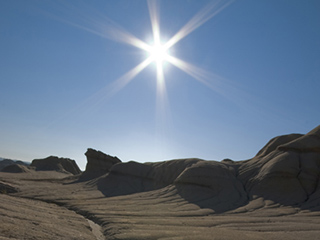
Global temperature rise: The planet’s average surface temperature has risen about 2.0 degrees Fahrenheit (1.1 degrees Celsius) since the late 19th century, a change driven largely by increased carbon dioxide and other human-made emissions into the atmosphere. Most of the warming occurred in the past 35 years, with 16 of the 17 warmest years on record occurring since 2001. Not only was 2016 the warmest year on record, but eight of the 12 months from January through September, with the exception of June — were the warmest on record for those respective months.

Warming oceans: The oceans have absorbed much of this increased heat, with the top 700 meters (about 2,300 feet) of ocean showing warming of 0.302 degrees Fahrenheit since 1969.
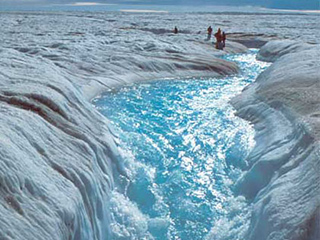
Shrinking ice sheets: The Greenland and Antarctic ice sheets have decreased in mass. Data from NASA’s Gravity Recovery and Climate Experiment show Greenland lost 150 to 250 cubic km (36 to 60 cubic miles) of ice per year between 2002 and 2006, while Antarctica lost about 152 cubic km (36 cubic miles) of ice between 2002 and 2005.
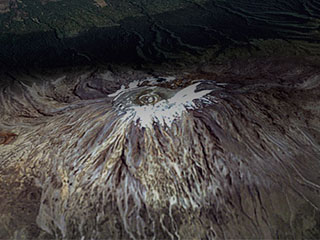
Glacial retreat: Glaciers are retreating almost everywhere around the world — including in the Alps, Himalayas, Andes, Rockies, Alaska and Africa. Image: The disappearing snowcap of Mount Kilimanjaro, from space.

Extreme events: The number of record high temperature events in the United States has been increasing, while the number of record low temperature events has been decreasing, since 1950. The U.S. has also witnessed increasing numbers of intense rainfall events.
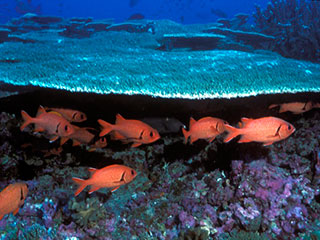
Ocean acidification: Since the beginning of the Industrial Revolution, the acidity of surface ocean waters has increased by about 30 percent. This increase is the result of humans emitting more carbon dioxide into the atmosphere and hence more being absorbed into the oceans. The amount of carbon dioxide absorbed by the upper layer of the oceans is increasing by about 2 billion tons per year.
The Earth’s climate has changed throughout history. Just in last 650,000 years there have been seven cycles of glacial advance and retreat, with the abrupt end of the last ice age about 7,000 years ago marking the beginning of the modern climate era, and of human civilization. Most of these climate changes are attributed to very small variations in Earth’s orbit that change the amount of solar energy our planet receives.
The current warming trend is of particular significance because most of it is extremely likely (greater than 95% probability) to be the result of human activities since the mid-20th century and proceeding at a rate that is unprecedented over decades to millennia.
Earth-orbiting satellites and other technological advances have enabled scientists to see the big picture, collecting information about our planet and its climate on a global scale. This body of data, collected over many years, reveals the signals of a changing climate.
The heat-trapping nature of carbon dioxide and other gases was demonstrated in the mid-19th century. Their ability to affect the transfer of infrared energy through the atmosphere is the scientific basis of many instruments flown by NASA. There is no question that increased levels of greenhouse gases (GHGs) must cause the Earth to warm in response.
Ice cores drawn from Greenland, Antarctica, and Tropical Mountain glaciers show that the Earth’s climate responds to changes in GHG levels. Ancient evidence can also be found in tree rings, ocean sediments, coral reefs, and layers of sedimentary rocks. This ancient, or paleoclimate, evidence reveals that current warming is occurring roughly ten times faster than the average rate of ice-age-recovery warming.
Arunachal custodians of Lungs of Universe: Wake up Arunachalees… wake up!
By Pradeep Kumar
ITANAGAR | Mar 18 | Climate change impacts are not only apparent in environment and ecosystem, but also in socio-economic and cultural life of the …https://t.co/0ZwJT1vi1Q— Arunachal Observer (@ArunObserver) March 19, 2018


 20