By Pradeep Kumar
The State Bank of India (SBI), ranked 236th in Fortune Global 500 list of world’s biggest corporations in 2019 and largest bank in India operates through its 24,000 branches in India, but its G-Extension branch at Naharlagun is unique.
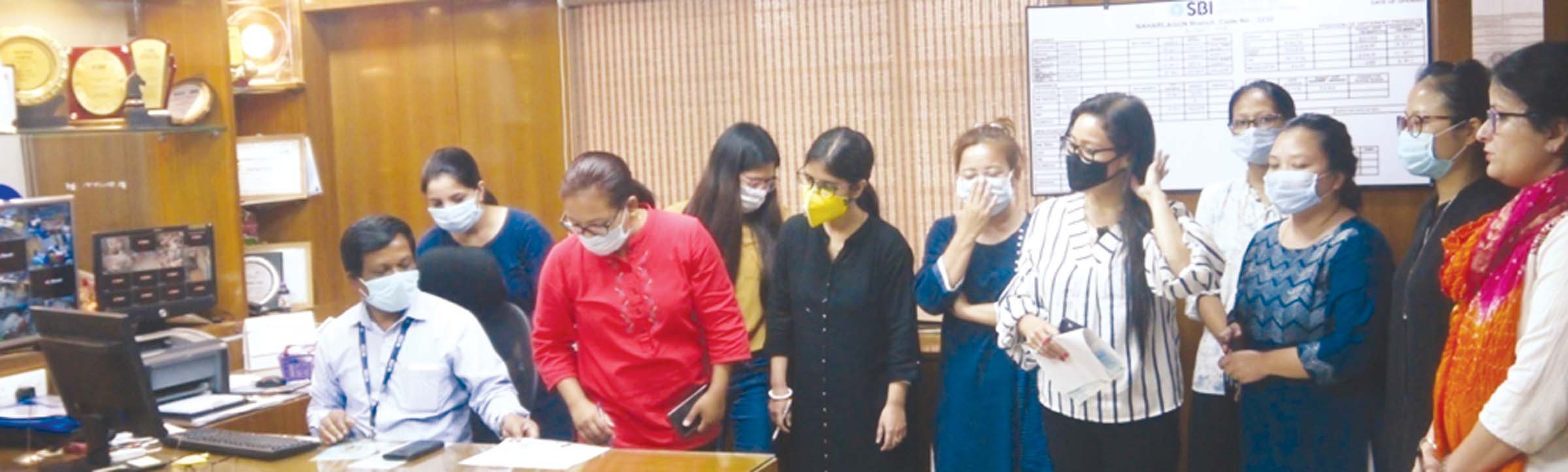
This branch with around 67,000 accounts of different categories and always records huge rush till late afternoon but boasts of winning around 27 awards for its various achievements. Interestingly, the spirit of women-centric society of Arunachal Pradesh is also clearly visible as 36 per cent of its total 33 employees belongs feminine gender.
When told that these women remain on their toes to serve all smilingly till last account holder waits in front of any counter, the AGM said that online banking transaction has brought a vast change. But I was forced to quip Bhai Sahab Nehi Lagega stands for BSNL, the master IT connectivity provider disrupts connectivity very often than not. This is continuing in Capital Complex ever after Union Minister Manoj Sinha announcing: Earlier full form of BSNL as Bhai Sahab Nehi Lagega has been successfully replaced by Behtar Seva ki Nai Lagan (Quality service with renewed efforts) during last two years in presence of Lok Sabha Speaker-cum-local MP Sumitra Mahajan at Indore on 09.05.17, reported by PTI.
It was intriguing that 12 female staffs from Bihar, West Bengal, Assam and far off districts of Tirap, Longding, Lower Subansiri, Siang, West Siang districts and Indo-China border Tuting (270-km away from Upper Siang district HQs Yingkiong) look like rainbow (indradhanush). The communication hazard of this land-locked state cannot be denied but the SBI has brought Arunaachlee women under one platform.
Describing it as women empowerment, SBI assistant general manager Dulal Roy, responding to questions said that the young women staffs mirror ‘unity in diversity’ in true sense. Roy, who had cliqued ‘Super Achiever’ honour for Haiborgaon branch in choo loo aasman campaign (housing loan in 2019) admitted that the credit for all achievements whose numerous trophies decorate his chamber equally goes to branch’s women staffs too.
Arunachal Pradesh follows treasury accounting system with RBI as its banker while the SBI with 37 of total 180 bank branches as its authorized lead bank operates all Govt transactions. Any GoAP department could open account in any nationalized bank with a special permission is a policy decision taken during time of former chief secretary Ramesh Negi. But, the SBI still holds monopoly of being the state government banker.
The state has total 180 bank branches – SBI – 57, Central Bank of India & Canara Bank – 7 each; HDFC, ICICI & Vijaya Bank -5 each; Bank of India, United Bank of India – 4 each; Axis Bank – 3, Indian Bank, Punjab Bank, Syndicate Bank & UCO Bank- 2 each; Bank of Baroda, Bank of Maharashtra, Indian Overseas Bank, Overseas Bank of C, Union Bank of India, Yes Bank, Punjab & Sind Bank & Indusind Bank, IDBI, Allahabad Bank- 1 each, Arunachal Pradesh State Cooperative Bank -37 and AP Rural Bank-28, state’s lead bank chief manager Jaspal Singh had said, adding state’s credit deposit ratio (CDR) for June-2016 was 31.42 against national average of 60.
However, the cash deposit ratio (CDR) of major banks including Canara Bank, Corporation Bank, Bank of Baroda and SBI had dipped below 60% as on June 30, 2019,Deccan Herald reported on 26.09.19.
The SBI is a multinational, public sector banking and financial services statutory body of central government with its headquarters at Mumbai. It commands 23% market share in assets, besides a share of one-fourth of total market loan and deposits. It has 191 overseas offices spread in 36 countries having the largest presence in foreign markets among Indian banks, it besides operates several foreign subsidiaries or affiliates, it operates through 16 regional hubs and 57 zonal offices.
Originating from Bank of Calcutta founded in 1806, via Imperial Bank of India (formed by merger of Bank of Madras with two “presidency banks” in British India, namely Bank of Calcutta & Bank of Bombay) when central Govt took over its control in 1955, with Reserve Bank of India taking a 60% stake and rechristening it as the State Bank of India. It is the oldest commercial bank in Indian sub-continent.


 20