By Pradeep Kumar
Come rainy days, roads and highways in Arunachal Pradesh disappear to oblivion to be developed again, a perennial problem. State capital Itanagar does not have an all-weather road even after over seven decades after India’s independence.
Itanagar located at an elevation of 750-m featuring humid subtropical climate with dry, mild winters and warm, wet summers, the state located at the foothills of Himalayan receives heavy rainfall of 2,000 to 4,100 mm annually, mostly between May and September. But why all its roads are washed away, contrary to all blacktopped roads in hilly Siliguri and Darjeeling, known as Queen of the Hills, remaining in shape without any damage?
Sikkim and Arunachal Pradesh, located in high seismic zone-V of the Himalayas with same topography have uncanny similarities to experience landslides very often. But less road blockages are reported from picturesque Darjeeling where roads are built with highly advanced architectural design. The Sikkim Road Reserve (Protection and Preservation) Act, 2009 ensure protection of roads in that state.
Siliguri in Darjeeling & Jalpaiguri districts of West Bengal, located at 125-m height along the foothills of the Himalayas on the bank of Mahananda River has warm & temperature climate. It records heavy rainfall in summer (3274 mm of precipitation annually).
Darjeeling is 80-km away from Siliguri, developed by the British in mid-19th century, located in Lesser Himalayas at an elevation of 2,042.2 m, with subtropical highland climate – wet summers caused by monsoon with average annual precipitation is 309.2 cm.
Landfall disaster mitigation is still not inbuilt into central Govt’s road development policy due to cost constraints. Darjeeling is the example by building Disaster Resilient roads in landslide prone hilly areas approved by World Bank & Asian Development Bank.
The CPWD was involved in road construction in upper Himalayas with heights ranging from 10,000 ft. to 18,000 ft, prone to landslides and rockfall by adopting various globally approved protection measures. The decision making machinery in state and central Govts need to appreciate the need for such measures and avoid half baked initiatives. There is state of the art research in permafrost engineering in places like Alaska, where frost boiling in roads have been addressed by use of specialized geo-composites.
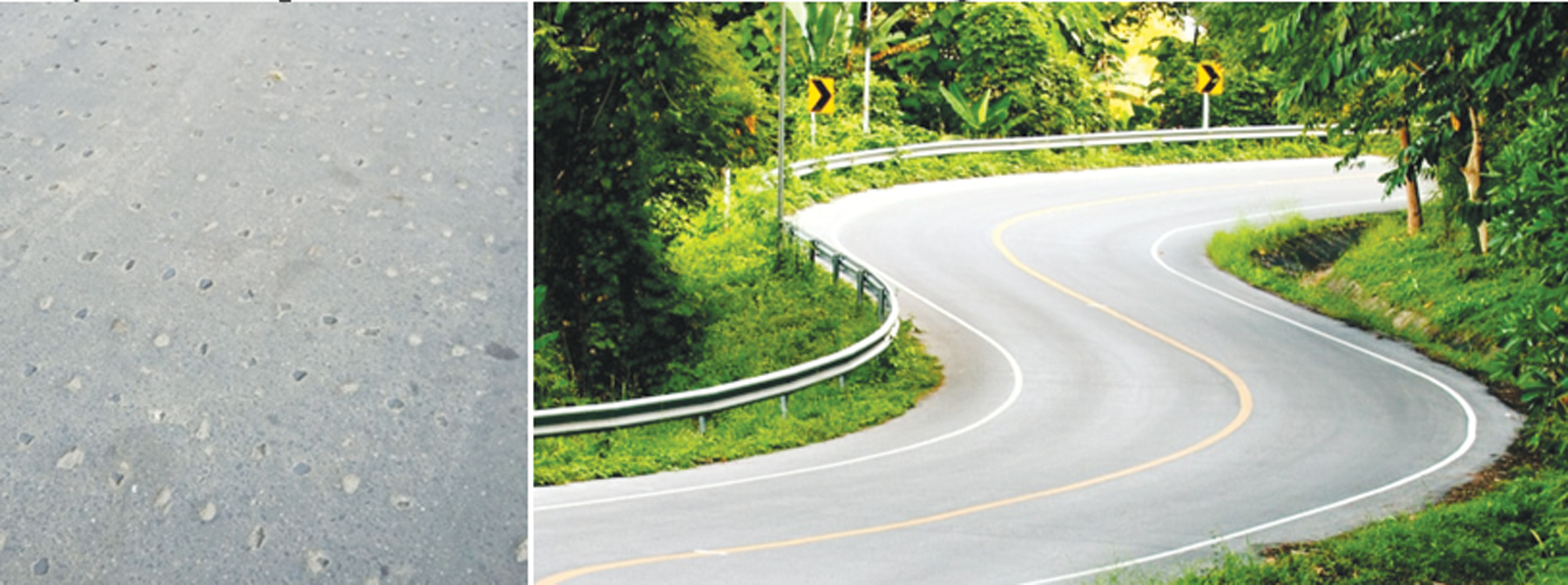
I saw Darjeeling road and searched for damaged portion but failed in three days in September 2016.
India is one of the worst affected regions in the world so far as landslide disasters are concerned. Many important highways passing through mountainous regions suffer from landslides leading to loss of connectivity, life and property.
Increasing developmental activity in mountainous areas has aggravated the landslide hazard, like falls, topples, slides, spreads and flows of rock as well as soils and mud and are triggered by geological, morphological or human interventions. Road construction by disturbing the vulnerable ecology of these areas is one of the major causes of landslide events, writes CPWD SE D Roychowdhury.
The landslide hazard zonation Atlas of India published by Building Materials and Technology Promotion Council (BMTPC) provides a good insight into various landslides-prone areas. Road construction is closely linked to development in the mountainous regions, which generally
lacks transportation infrastructure.
Thus, Roychowdhury in 1950s had designed Disaster Resilient roads to give a new direction to road building by giving serious attention to the land slide hazards which is essential for development of India’s hilly regions – NE states, mountainous NE states and Western Ghats.
As road construction is a primary development tool, his design has been widely implemented by international development agencies, like World Bank, Asian Development Bank, UNDP etc. in India and Nepal. The impact of developmental activities on landslide hazard and vice-a-versa has been well documented in Nepal.
Union MoS (MoRTH) Mansukh Mandaviya after inspecting Ziro-Potin road had announced Rs 10 crore during a press conference at Itanagar on 13.09.16 when this editor had drawn his attention to Disaster Resilient roads. While appreciating, he had assured that a high level conference involving international agencies, road researchers and state engineers will be conducted soon to discuss the issue threadbare to develop a mechanism soon. Though he is Union Health Minister now but his premise never materialized.
However, the need of the hour is to incorporate landfall disaster mitigation, technological interventions, like use of GIS for finalizing of alignment, use of geo-composites for improved drainage and rockfall protection measures, besides capacity building and documentation of experiences from early projects and monitoring of hazardous areas into road development policy to increase longevity. The sooner, the better it is!


 20