
By Pradeep Kumar
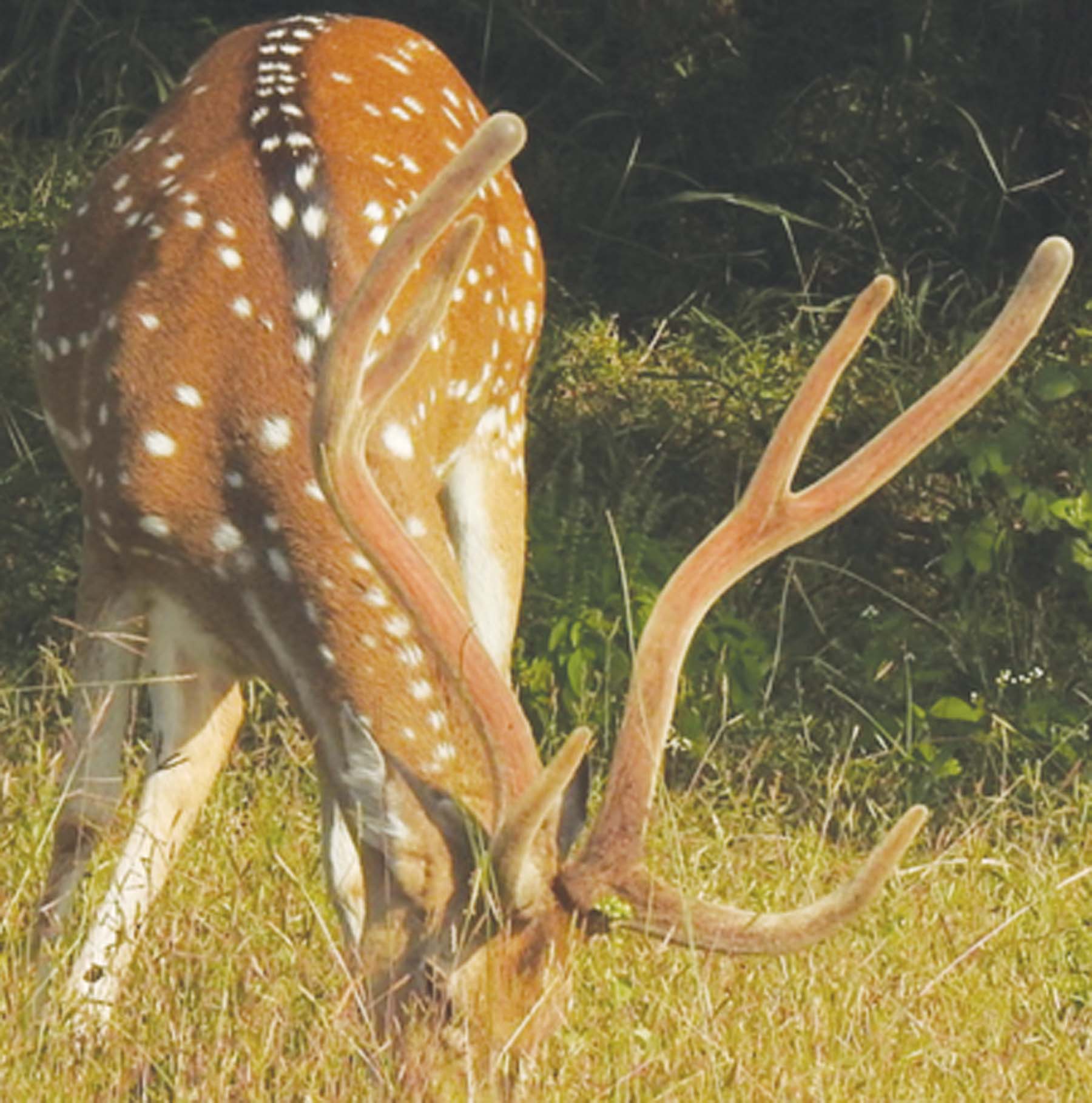
The chital deer or spotted deer of axis deer, is one of the 20 deer species native to Indian subcontinent. It was first described by German naturalist Johann Christian Polycarp Erxleben in 1777. A moderate-sized deer, male chital reaches nearly 90 cm and females 70 cm height at the shoulder. While males weigh 30–75 kg, lighter females weigh 25–45 kg. It is sexually dimorphic; males are larger than females and males only have antlers. The antlers, three-pronged, are nearly 1 m long.
The axis deer is protected under Schedule III of the Indian Wildlife Protection Act (1972). It was introduced to Andaman Islands, Argentina, Australia, Brazil, Chile, Mexico, Paraguay, Uruguay, Alabama, Point Reyes National Seashore in California, Florida, Hawai, Mississippi & Texas in the United States, in Veliki Brijun Island in Brijun Archipelago of Istrian Peninsula in Crotia.
The chital is an under-rated ecosystem engineer. Its grazing keeps small plants from growing too high and smothering jungle seedlings before they can reach their full growth. They also keep the spaces under trees clear. A jungle looks very different from a garden gone wild because of these grazers.
The sambar (Rusa unicolor) is a large deer or tag, native to Indian subcontinent, South China and Southeast Asia and listed as a vulnerable species on the IUCN Red List since 2008. Populations have declined substantially due to severe hunting, local insurgency and industrial exploitation of habitat. The name ‘sambar’ is also sometimes used as ‘Philippine sambar’ and Javan rusa, called ‘Sunda sambar’. India has the distinction of having largest deer species in the world.
Interestingly besides sambars and chital, Muntjac deer or mastreani deer, is a group of small deer found mainly in Southern Asia, was also discovered in this Himalayan state by Aparajita Datta, Japang Pansa, M. D. Madhusudan & Charudutt Mishra in 2003. The name Muntjac originates from the Sudanese “mencek”, means small deer. It is also widely known as the barking deer due its unique cry that resembles the bark of a dog. This group of deer consists of 12 known species and several subspecies, with unique features like small antlers and canine tusks. A wild muntjac deer is estimated to survive up to 10-15 years in its habitat while in captivity it is recorded to live for up to 20 years. Being very shy by nature, its wild encounters are extremely rare.
Arunachal Pradesh, being one of the 12 biodiversity hotspots of the world, is known for rich fauna species. Though hunting was very common in this hilly state, but people have been surrendering their guns after Forest Minister Mama Natung’s appeal to do which has made a difference. This Himalayan state would regain its status as treasure trove of flora and fauna soon.


 20
