
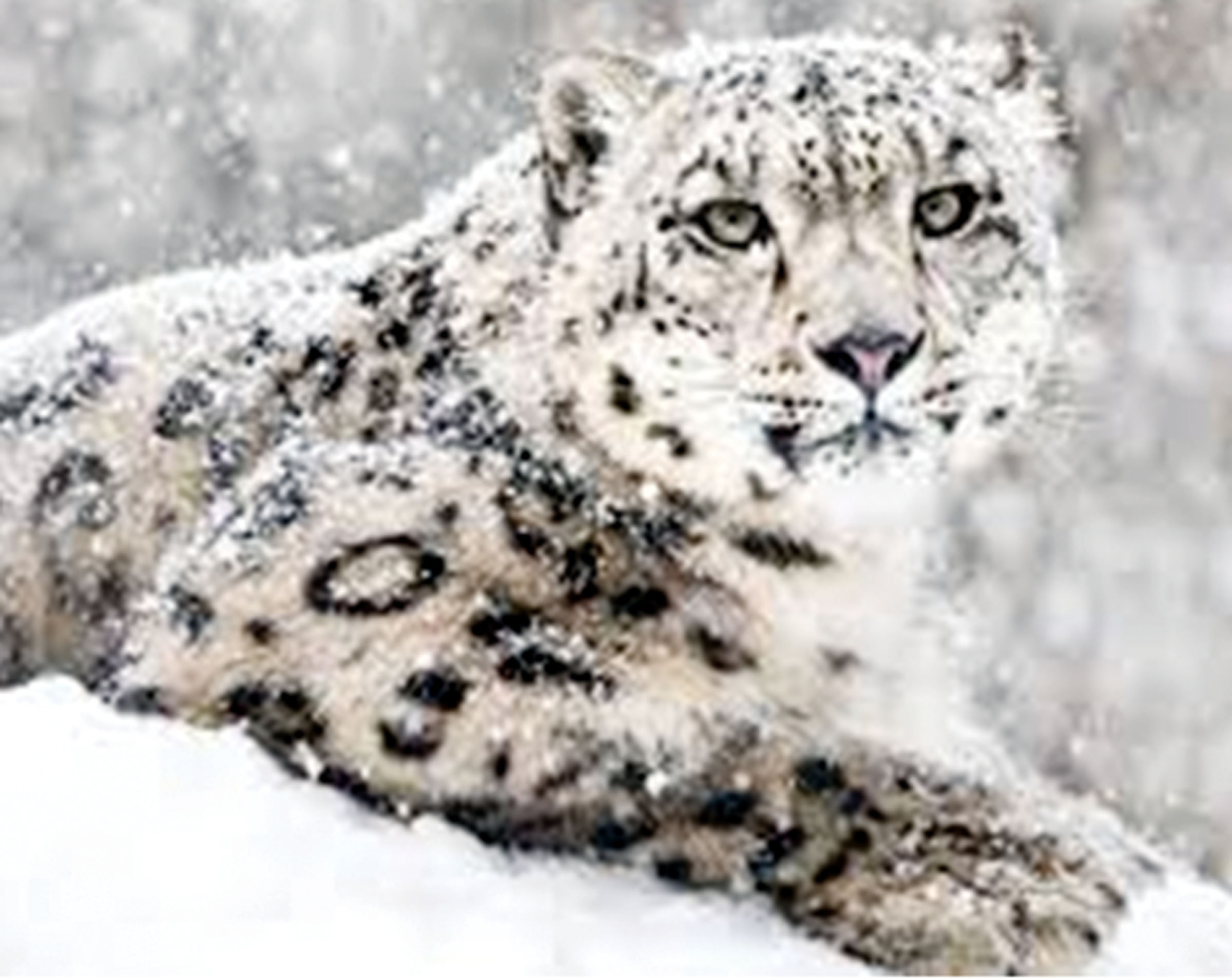
Arunachal boasts of 4 species of big cats
Arunachal Pradesh, having total forest cover of 66,430.67 sqkm (79.33% of its geographical area as per ISFR 2021, boasts of the only state in India to have all four species of big cats, i.e., tiger (panthera tigris), jaguar (panthera onca), leopard ( panthera pardus) and snow leopard (panthera uncial). However, 29 tigers were recorded during a survey in 2020.
By Pradeep Kumar
It is believed that securing the tiger’s future is so much more than just saving an iconic species. Surprisingly, tigers are found only in 13 nations, of which India is home to 70% of the population of big cats. Interestingly, as per the fourth round of national assessment of tiger numbers done in 2018, India has 2,967 tigers. The current wild cat population is 3,900, according to the WWF.
The International Union for the Conservation of Nature (IUCN) recently confirmed that the tiger has gone extinct in Cambodia, Laos and Vietnam. The reasons, according to tiger experts, are poaching and habitat loss.
Every year June 29 is celebrated under different themes, and this year the theme for Global Tiger Day is “India launches Project Tiger to revive the tiger population”. Last year, the day was celebrated under the theme of “Their survival is in our hands”.
International Tiger Day is celebrated every year to raise awareness about the conservation of tigers, which have been declared an endangered species in many parts of the world. Also known as Global Tiger Day, the special day holds immense significance, as approximately 95% of the population of tigers, as per World Wildlife Fund, has declined in the last 150 years. Therefore, this day aims to encourage all to take appropriate action to save the wild cats.
Amid the declining number of tigers, several nations have taken crucial measures towards curbing poaching, habitat loss, illegal wildlife trade, and avoiding human-animal conflicts. These measures have shown a positive result in the conservation of tigers in many countries.
Shockingly, by 2010 the tiger population declined to an all-time low. This alarmed many nations to take immediate steps toward the conservation of the big cats. Global Tiger Day was first proposed at the Saint Petersburg Tiger Summit in Russia in 2010. Many nations became signatories of an agreement to protect the tigers. These nations included 13 tiger range countries like India, Russia and China among others.
The countries agreed to a resolution at the Saint Petersburg Summit to double the number of tigers by 2022, which is also the Chinese year of Tiger. As per World Wide Fund for Nature, this project is known as TX2. As of now, this is considered the most ambitious conservation goal for any wild species.These species could be saved from extinction if all countries take action against illegal hunting, wildlife trade, human-wildlife conflict and habitat loss.
People celebrate this day by holding seminars and having more and more discussions to get more individuals involved in the cause of saving tigers. They also donate funds to organisations that work to protect tigers as tigers are considered at the top of the food chain.
A food chain is a diagram showing the linear transfer of energy between different organisms. That sounds awfully fancy. In the animal kingdom, energy flows as food; every creature gets what it needs by eating. The food chain basically shows which animals eat others in an ecosystem. The base of the food chain is always composed of producers or organisms that make their own food. These are usually green plants. Primary consumers eat the producers and are also called herbivores. Secondary consumers are carnivores also known as the meat-eaters, because they eat the primary consumers. Finally, at the top of the food chain are tertiary consumers, or the top predators. These organisms eat the primary and secondary consumers and keep the food chain in balance. Each level on the food chain is called a trophic level.
Six sub-species make up the species of tigers alive today. All tigers live in the grasslands and forests of East Asia, ranging from Southeast Asia in Malaysia up to Eastern Russia and Siberia. Weighing over 700 pounds and running speeds of 40 miles an hour, tigers are a formidable enemy and a top predator in the jungle. Their paws grow as large as dinner plates, allowing them to take down prey as large as elephants and rhinos. It is interesting to analyze food chains for two subspecies of tiger: the Bengal tiger and the Siberian tiger.
The Bengal tiger lives primarily in India. Bengal tigers are fierce predators and eat many grazing primary consumers, such as Indian bison and sambar, a large deer species native to India. However, as a tertiary consumer, they also eat secondary consumers like the wild boar. The wild boar in turn eats herbivores like small lizards, rodents, fish, and insects. The rodents eat grasses, fruits, and seeds present in the forest, which are the producers. (with inputs from various sources)


 20

