By Pradeep Kumar
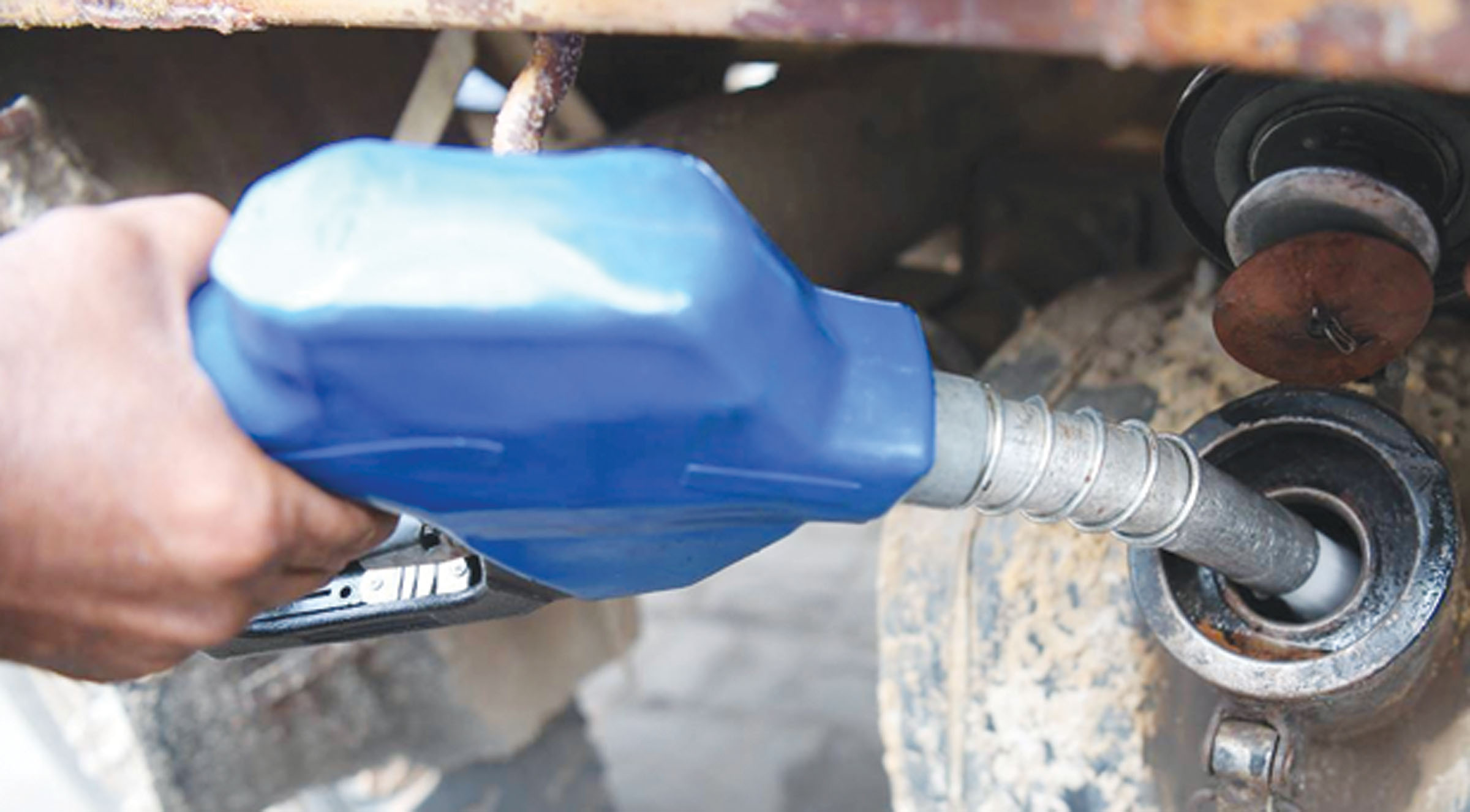
Indians have been feeling the pinch of rising fuel prices as oil manufacturing companies (OMCs) passing on the rising rate burden to the consumers. The fuel rates per litre in cities as on July 26 were:
Cities Petrol Diesel (Rs)
Delhi 96.72 89.62
Mumbai 106.31 94.27
Bengaluru 101.94 87.89
Chennai 102.63 94.24
The increasing cost of India’s crude basket has made that position untenable for the long run. The basket hit a price of $121 per barrel on June 9 matching a decade-long record that was last seen in February/March 2012, according to data from the oil ministry’s Petroleum Planning and Analysis Cell (PPAC).
International oil prices had once again risen above $115-levels since the last week of May as demand from countries surged while the continuing Russian invasion of Ukraine underpins supply fears. As India imports nearly 85% of its crude requirements, fuel prices remained almost dependent on international markets.
On 11.06.22, despite the Centre decontrolled petrol and diesel prices a while ago, OMCs have not hiked fuel prices since 06.04.22. This has caused OMCs to lose between Rs 18-Rs 21 per litre on petrol and diesel.
Petroleum and Natural Gas Minister Hardeep Singh Puri had said that the Govt was not dictating fuel prices to the OMCs as the OMCs were responsible corporate citizens. Petrol costs Rs 96.72 a litre and diesel is priced at Rs 89.62 in Delhi then.
With Goldman Sachs predicting that Brent futures will hit the $140 mark in July-September 2022, it is likely that India will be seeing hikes from OMCs once again. Further increases in the price of petrol are only expected to worsen the inflationary pressures in India, where retail inflation is at an 8-year high of 7.8%.
I recall my story – Will PM-CM rise to the occasion? – on 08.03.15 – when I had wondered -Why nature trove Arunachal Pradesh is delaying to prove it huge strength when Prime Minister Narendra Modi has advocated cooperative federalism for India with the intention of making every state self-dependant?
“From 1990 onward, former Oil India Ltd chief Chudamani Ratnam, repeatedly claimed that India had a treasure trove of shale oil in Arunachal Pradesh and other parts of the NE which could produce 140 million tonnes per year for 100 years, making India a net oil exporter. However, the deposits looked uneconomic, so he was not taken seriously. Analysts laughed when he suggested that China might one day invade Arunachal Pradesh to grab the oil.
“Suddenly, that scenario no longer looked completely crazy. New technology in the US has hugely reduced the cost of extracting shale oil. The world over, oil companies are looking afresh at shale oil. China is surely doing the same,” wrote consulting editor of The Economic Times Swaminathan S Anklesaria Aiyar in his column Swaminomics on Sept 25.09.11.
I have been highlighting this aspect as Indian geologists have identified some 28 basins for shale gas exploration. They dispute US Energy Information Administration figures, which place the reserves at 96 trillion cubic feet (tcf). One estimate by Indian scientists places potential reserves at as high as 527 tcf. Top officials said Oil India believed Dishang Shales in the 120 sqkm Deomali tract alone could prove to be a major find for the company.
State’s geology and mining department (GMD) contributed Rs 102.10 crore and Rs 136.09 crore revenue against a meager fund allocation of Rs 3.52 crore and Rs 3.48 crore during 2013-14 and 2014-15 (till Feb end) respectively though state’s huge hidden treasure remained untapped.
Minerals & Mining Minister Kamlung Mossang’s constant persuasion of the Centre to relax the law for the state to explore and exploit it minerals resources has not yielded any positive result.
Fund poor Arunachal remains dependant on central fund allocation but Delhi’s apathy reflected in its non-responsive attitude to the fact that 22,000 metric ton of coal extracted by Arunachal Pradesh Minerals Development & Trading Corporation Ltd in Namchik-Namphuk coal block were lying in open since 2012.
A huge 31,000 standard cubic metre gas has been flaring up daily since 1991 in Kumchai oil field in Changlang and Tirap districts operated by the Oil India Ltd. Why the oil giant OIL, a Navratna company, allowed this huge national loss for so long? The OIL has reportedly approached the GoAP for permission to tap the gas for captive use of gas-based thermal project to prevent loss.
The project earning would go to the national exchequer while the GoAP as usual will get only penut as royalty. This is because mining is a central subject while the Arunachalees in true sense are not land owners, as per constitutional provision enshrined in Arunachal Pradesh Statehood Act, 1987, unlike Nagaland, Meghalya and Mizoram. Is it not time for New Delhi to give a serious thought to this aspect?
Thus, then Speaker T N Thongdok on 21-10.17 had advocated khul ja sim sim as only mantra to enrich Arunachal coffer by extricating state’s huge mineral resources.
In an exclusive interview to this editor, he had disclosed that Kalaktang and Rupa areas have huge deposits of dolomite, ferrosilicon, zinc and lead, which are yet to be economically exploited. Once these are extracted, the state’s coffer would be enriched to end state’s dependence on the Centre for fund, he said with conviction.
It may be recalled that lawmaker Wanglin Lowangdong on the floor of the assembly on 16.10.17 had called for awakening ‘sleeping giant Arunachal’ as the state boasts of India’s highest graphite reserve of 43% in Taliha.
The state Govt had granted Reconnaisance Permit (RP) and Prospecting Licences (PL) to various companies for exploration of mineral resources in the state, Geology and Mining Minister Kamlung Mossang had told the assembly on 13.03.18.He said one RP and 23 PLs have been granted to various companies as per the Mines and Mineral (Development and Regulation) Act 1957.
Responding to his question on 13.03.18, Geology and Mining Minister Kamlung Mossang Mossang had said the GoAP had allocated Rs 40 lakh under State Annual Development Agenda (SADA) for detail exploration of Kalaktang Quartzite and Rupa Dolomite block in West Kameng district during 2017-18 as per the United Nation Framework Classification (UNFC).
The proposal for detailed exploration of Namchik Eastern part and western part of Namchik-Namphuk coalfield in Changlang district was considered by the Central Geological Programming Board (CGPB) under the union mines ministry, he had said, adding the Central Mine Planning and Design Institute Ltd had floated e-tender for exploration of the areas in November 2017, he said.
“Exploration of coal occurrences in Changlang, Tirap and West Kameng districts was undertaken.
Responding to a supplementary, Mossang had informed the House that the GoAP from 2002 to 05.03.18 earned revenue of Rs 336.88 crore from minor minerals, while Rs 22.38 crore was collected from mining of coal during 2001-02 to 2014-15 and Rs 601.57 crore from crude oil between 1984 to 31.12.17.
However, Lowangdong had advocated exploring and exploiting vast mineral resources that could generate 140 million ton of fuel for 100 years to not only meet India’s total fuel requirements but to yield about Rs 40,000-50,000 crore revenue per year to make the state self-reliant, he had claimed.
When the BJP is ruling at the Centre and in the state, it is time for the Environ, Forest & Climate Change Ministry to wake up from its deep slumber to take up exploitation of state’s hidden fuel in national interest.


 20