

Young damsel’e divine love for wendy andriens
Beyond the Horizon
By Pradeep Kumar
If you want others to love you, you have to love yourself first. Do you? If you desire others to appreciate you, you have to appreciate yourself first. Do you? The replies to these questions have the answers as ‘Love begets love’, goes the adage. Every change has to begin from within, why not start from within first?
We all know it, but sometimes it’s really hard to live. Like when you’re in the middle of a breakup, it doesn’t need to be an ugly one, but still it’s hard to look at the situation with love. At least this is how one feels at that moment. It’s hard to show love when one experiences sadness and emptiness. Like, if all are crying, shouting and shattered by he situation, the heart naturally breaks.
According to the Law of Attraction, the feelings one sends out eventually return as vibrations or boomerang if it is negative. Thus, to bring the desired change, it has to begin from within. One cannot change how others behave – how they react, how they feel. But certainly can change won behaviour, own reaction, own feeling. Is not it?
It is good to find own rue self, who I want to be, and then start working towards that. It’s not easy, because one faces the demon living within (we all have them), but it’s worth it. It may not save this relationship, but it will make one a stronger person. It will teach one how to do things and need to do or sacrifice something to become the desired person.
We are all living in a material world subject to daily change with new experiences And this teaches one to make changes. Changes that one desires, not just those happened withou even noticing them.
But it is easier to make those unseen changes which come with the flow of time, not thinking much about how one presents or interacts or does. It is harder when one actually tracks his/her progress.
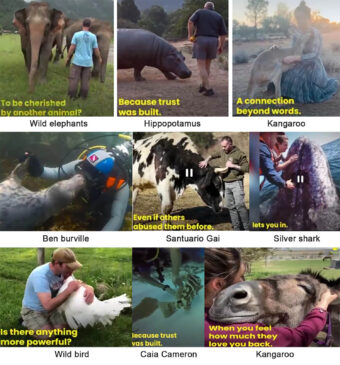
The colour wheel theory of love moving fast over the past two decades reflecting the human nature as hatred among people for petty reasons in this era has become the order of the day. However, people in some parts of the world are benefitting from human-animal bond.
The human-animal bond is a mutually beneficial and dynamic relationship between people and animals that is influenced by behaviors essential to the health and wellbeing of both. This includes, among other things, emotional, psychological, and physical interactions of people, animals and the environment.
The veterinarian’s role in the human-animal bond is to maximize the potentials of this relationship between people and animals. The American Veterinary Medical Association (AVMA), founded in 1863, recognizes: the existence of the human-animal bond and its importance to client and community health that the human-animal bond has existed for thousands of years and that the human-animal bond has major significance for veterinary medicine, because, as veterinary medicine serves society, it fulfills both human and animal needs.
The AVMA is proud to be the founding educational partner for the Human-Animal Bond Certification Programme offered through the Human Animal Bond Research Institute (HABRI) and the North American Veterinary Community (NAVC). This certificate program allows veterinary professionals to fully appreciate the science behind the human-animal bond, and its benefits for both animals and people, and get practical advice on how to ensure good bonds are built and maintained. It also demonstrates how communicating the bond’s benefits to clients can help your patients and your practice.
Love is considered to be both positive and negative, with its virtue representing human kindness, compassion and affection, as “the unselfish loyal and benevolent concern for the good of another” and its vice representing human moral flaw, akin to vanity, selfishness, amour-propre and egotism, as potentially leading people into a type of mania, obsessiveness or codependency. It may also describe compassionate and affectionate actions towards other humans, one’s self, or animals. In its various forms, love acts as a major facilitator of interpersonal relationships and, owing to its central psychological importance.
Ancient Greek philosophers identified six forms of love among human beings: essentially, familial love (in Greek Storge), friendly love or platonic love (Philia), romantic love (Eros), self-love (Philautia), guest love (Xenia) and divine love (Agape). Modern authors have distinguished further varieties of love: unrequired love, empty love, compassionate love, consummate love, infatuated love, self-love and courtly love.
But all these definitions have changed over times and present 21st century, according to me, needs through research to define it.


 20

