
‘Always consult AAPSU on
Chakma and Hajong issue’
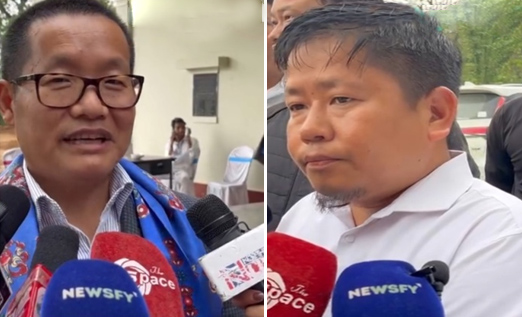
AAPSU has been spearheading the movement to remove Chakmas and Hajongs from the state since decades, its general secretary Ritum Tali, who was present with his executive body members, told media persons, adding that no one, whether Govt, any organization or individual, should talk about the refugees without consulting the apex student’s body of the state.
“We had round table meeting with the Govt of India on the issue thrice bit the issue gets ignited like a Chakma filing nomination from Bordumsa-Diyun assembly constituency. It is ok if it is in a positive way by Prof Bath, but we should have been consulted. If Chakmas are allowed to speak in RGU they would arouse the sentiment to divert the attention, but we want to suppress their voice,” he said.
“RGU faculty members and students should realize that we fighting for the indigenous people. If they get citizenship, they would snatch away our services. Who would be the losers,” Tali questioned?
“I respect the sentiment of AAPSU, but it is my mistake not to consult AAPSU as it is the initial step, I have also advocated their deportation to find an amicable solution for posterity. But who would replace them is a matter for all, including the state Govt to think”, Prof Bath added.
By A O News Service
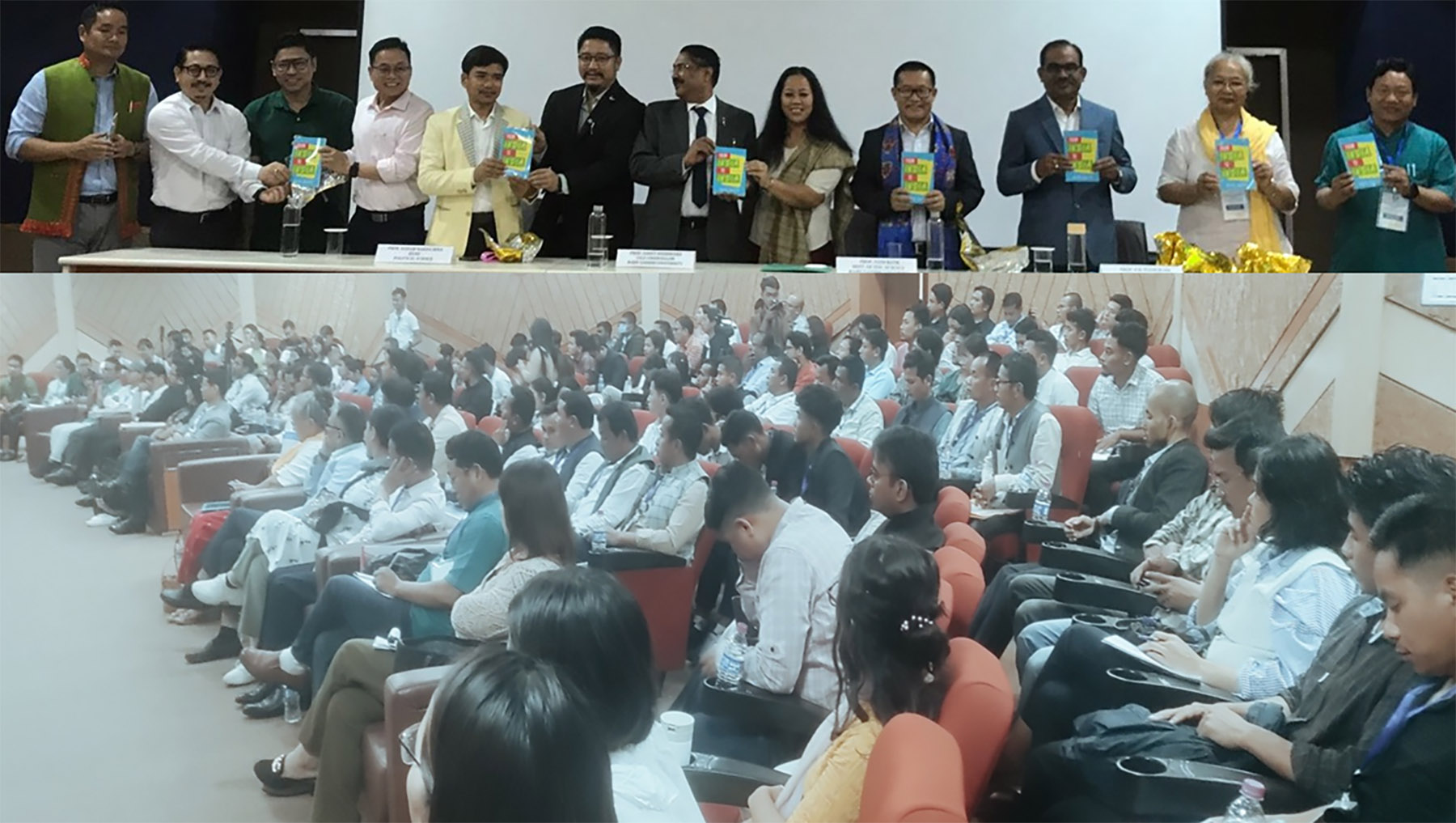
RONO HILLS, Apr 30: Rajiv Gandhi University vice chancellor Prof Saket Khuswaha, after unveiling a book “From India to India: The Chakmas and Hajongs of Arunachal Pradesh”, authored by Prof (political science) Nani Bath, here on Tuesday termed the issue very crucial.
Taking part in a dialogue on “The Chakma issue in Arunachal Pradesh: Search for a democratic solution”, he said that many issues have been cropping up across the country at various levels right since independence, like freedom fighter Bhagat Singh, 23, convicted of murdering John Saunders and Channan Singh and hanged in March 1931.
“While the role of the press is very important and reporters should be fearless, the university facilitates dialogues of numerous issues. Sometimes we try to avoid some challenging issues which prolong”, he said and called for churning them instead of allowing them to aggravate.
The basic objective is to ‘buy peace’ without breaking the inertia for every aspects of life to go well that is what the university works for, he said with conviction.
Every Arunachalee is part of the RGU as Arunachal Pradesh owns it, he said, adding the RGU takes up challenges on many issues to find solutions. Prof Khuswaha, who worked in Nigeria for 13 years, said how he maintains good relations with lower rank staff of any office who ultimately help. “I never keep any file pending on my table though it is not easy to make all happy, but we have to find a balance for all issues”, he added.
Recalling his visit to Dimpaur with Arunachal Pradesh State Human Rights Commission member Bamang Tago, Prof Bath said that they had dined with NSCN(K) leaders in greater interest of Arunachal Pradesh to end insurgency, but they had said that “Our land is our heritage not to be surrendered.”
The Chakma & Hajong issue is as old as 60 years for which two committees were set up in 2007 and 2012, which had no outcome. However, any issue should have a peaceful solution in totality toeing constitutional means, he said.
Referring to a murder case of a Chakma, he said that the local community has been painted as villains, which is wrong as the case was related to issue in Tripura. The Chakma & Hajong population differs though their population is 47,073, including 1,497‘eligible’ ones were given voting rights by the Election Commission of India. However, the People’s Referendum Rally for seeking their removal, in its 1995 memorandum had estimated their population to be over 60,000.
Giving a genesis of their migration from various states to this state for which there is no official data, he said that how to determine the genuine migrants in the state is the moot question as Bengal Eastern Frontier Regulation, 1987 still in force, he said, adding without being a citizen none could be a voter. But they have been given voting right in violation of this constitutional provision, he reasoned.
They have encroached land even in reserve forest, particularly in Dibang area, which should be prevented by the state Govt. However, these migrants in this state are economically far better than their counterparts in Tripura, Mizoram, Assam, even in Bangladesh.
If they are allowed to vote, they would have to be given 10 seats, which would be more than some minor community of the state, which would have far reaching national consequences, said Prof Bath, who also had spearheaded anti-Chakama & Hajong movement with All Arunachal Pradesh Students’ Union (AAPSU).
If this issue is not solved properly, it may create social conflict and lead to extremism, he said, and advocated resolving the issue by ourselves. Relocation may be the practical solution to the issue while considering who would replace them, he said.
The status of Chakama & Hajong, Tibetans, Bhutanese, Karbi and Mishmi has to be seriously pondered in greater interest of the state, Prof Baht added.
In 1960s, the Chakma and Hajong tribes were displaced from Chittagong Hill Tracts of East Pakistan (now Bangladesh) despite being largest indigenous population, had migrated and settled down in many NE states and Myanmar.
The event begun after deeply mourning the untimely demise of Prof A C Talukdar, one of the pioneers of Arunachal University (present RGU), by paying floral tributes to his portrait and observing one-minute silence for the departed soul to rest in eternal peace
Giving summary of the book, research scholar Moti Taki, said that it was the outcome of his in-depth research on the issue, compiling data by examining all angles and advocates democratic solution to their demand for citizenship keeping in mind the constitutional status of this state.
The event organized by political science department and hosted by Dr David Gao, was attended by HoD Prof N N Hina, senior faculties of various departments, administrative officers, research scholars & students, besides Tago, social activist Jarjum Ete, PPA secretary general Kaling Jerang, Arunachal Indigenous Tribes’ Forum vice president Getom Borang, representatives of various organizations, including Arunachal Law Academy and students’ organization.


 20
