
Beyond the Horizon
By Pradeep Kumar
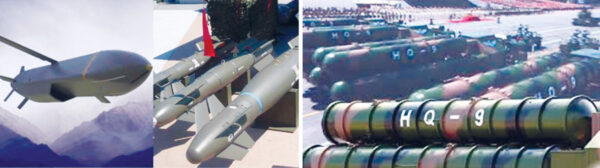
Indian Air Force used French-origin SCALP cruise missiles, launched from Rafale fighter jets under Operation Sindoor is more than a successful strike on nine identified terrorist sites clearly demonstrated India’s technological edge in stand-off precision warfare., to strike as none of these missiles were intercepted.
The stealth coating on SCALP, combined with its ability to fly at low altitudes, made it exceptionally hard for radar systems to detect. Thus, SCALP missiles exposed cracks in China’s shield over Pakistan.
The SCALP missile, known for its long range of over 500-km, stealth characteristics and terrain-hugging flight path, bypassed Pakistan’s HQ-9 and LY-80 (HQ-16) air defence systems, deployed amid rising tensions between both countries after April 22 terror attack at Pahalgam killing 26 civilian tourists, failed to detect or stop the incoming precision strikes.
These systems, supplied by China and supplemented with early warning radars and electronic jammers, were widely promoted by Islamabad as a robust shield against aerial threats.
It has delivered a devastating blow not just to terror infrastructure in Pakistan and Pakistan-Occupied Kashmir (PoK), but also to the credibility of Chinese-made air defence systems deployed across the region to justify the adage: Ek tir do sikhar (killing two birds with one stone).
The HQ-9 is a long-range semi-active radar homing (SARH) surface-to-air missile (SAM) developed by the People’s Republic of China. The naval variant is the HHQ-9.
The HQ-9 is a derivative of Russian S-300 but with radar, seeker head and C2 elements heavily influenced by American and Israeli technology.
According to a 2001 article from Defence International, the HQ-9 is 6.8 m. long with a mass of nearly two tons. The diameters of the first and second stages are 700 mm and 560 mm, respectively. The warhead mass is 180-kg and the maximum speed is Mach 4.2. The HQ-9 may use fire-control radars from other Chinese SAM systems.
The HQ-9 variants are CH-SA-9, HHQ-9 (Naval surface-launched), HQ-9A (improved & first tested in 1999, HQ-9B (Improved, range up to 260-km), HHQ-9B (Naval surface-launched since 2018) and comparable to US THAAD.
HQ-19, China’s anti-missile interceptor system, said to be used by Iran to intercept more than 90% Israeli airstrike. A Chinese military blogger with millions of followers on 12.11.24 had conducted a technical analysis of its key parameters.
China’s Air Force space defense units are even more mysterious than fifth-generation fighter jets. Not a single photo has been seen, missile defense tests can only be inferred by observing the night sky, and even the model numbers of these interceptor systems remain unknown. Lack of clarity around model numbers has led to a variety of nicknames. For example, military media in 2022 showcased a certain air-defense missile defense system of China Air Force.

The HQ-19 does not launch vertically but at a slight angle, which is a clear difference from the vertical launch of the HQ-9B. This angled launch aligns with the features observed in the 2022 video of “Capital Guardian Missile”. Given the high cost of this advanced equipment, if the interceptor missile fails to ignite after ejection, it’s crucial for it to fall safely to a designated area rather than back onto the launch vehicle, which could risk detonating the remaining interceptors onboard.
Comparison of HQ-19 and THAAD interceptor missiles: The missile body of a ballistic missile interceptor may not actually be larger than that of an air defense missile. The warheads of the two types of missiles differ. Air defense missiles often use continuous rod warheads or high-explosive fragmentation warheads, and to ensure an effective kill radius, the warhead weight can often reach around 100-kg.
Moreover, lack of spare parts and high cost of maintenance leaves Pakistan at the mercy of China. That is why Pakistan failed to detect approaching Rafale jets or approaching SCALP cruise missiles, which negates China’s claim of superiority of its system.
Thus, it has sent a louder message to India’s sworn enemy China: Dare not tinkle with India or else be ready to face the music like Pakistan. Moreover, Pakistan’s claim of downing five jets is a mockery as the operation was in Indian space. This again exposes Pakistan’s empty vassal sounds much


 20